
Andreessen Horowitz has raised $1.1 billion for its first dedicated hardware fund, betting that the physical buildout of AI infrastructure is the next great venture opportunity.
Andreessen Horowitz has raised $1.1 billion for its first dedicated hardware fund, betting that the physical buildout of AI infrastructure is the next great venture opportunity.
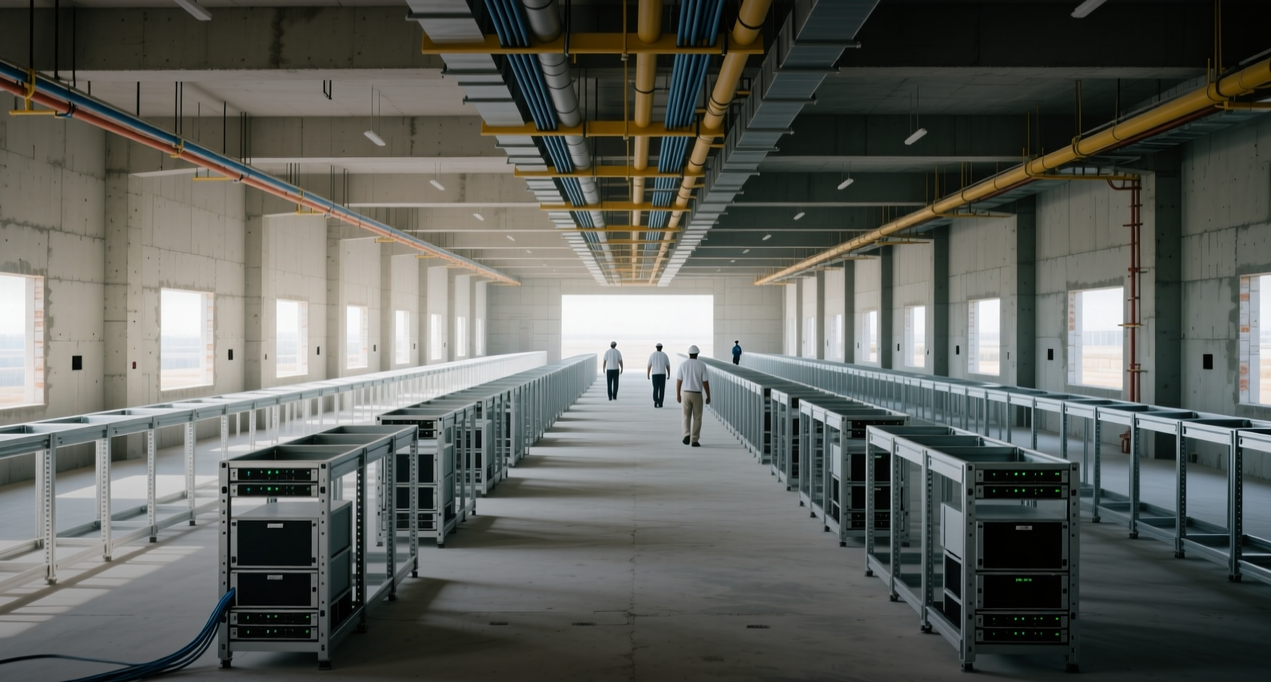
Andreessen Horowitz has raised $1.1 billion for Machine Age, its first dedicated hardware-infrastructure fund, betting that AI's physical supply chain — from chips to power — is the next great venture opportunity.
"Every aspect of the hardware supply chain is capacity constrained, from chips to memory all the way down to power," Martin Casado, general partner at Andreessen Horowitz, said.
The fund will be managed by Casado and Raghu Raghuram, the former VMware chief executive who joined the firm last year. Compute density per rack has risen 28-fold from an Nvidia H100 rack to a Rubin rack, while rack power requirements have climbed from roughly 5 to 10 kilowatts to 100 to 250 kilowatts, with projections reaching 1 megawatt within three years. Data center campuses are scaling from tens of megawatts to hundreds of megawatts, with some reaching gigawatt scale.
The fund represents a small fraction of a16z's more than $100 billion in assets under management, but it marks a strategic pivot for a firm long identified with software. Hardware startups now account for more than 20 percent of a16z's deal flow, up from a small share several years ago, and semiconductor and autonomous-machine startups have raised roughly $100 billion from investors over the past year, according to PitchBook data.
The firm said the hardware industry's supply side has historically grown 20 to 30 percent annually, far short of the triple-digit growth needed to match AI demand. The fund will target higher-bandwidth memory, faster interconnects, power-efficient edge devices, and the cooling, materials, electrical systems and real estate required to support AI infrastructure.
"Every time we have one of these technical epochs, it puts pressure on the infrastructure, but none of us have ever seen it this dramatic," Casado said.
Recent a16z hardware investments include Unconventional AI, Nexthop, Volta, Atoms, Heron Power and Mind Robotics, while earlier bets span Skydio, SpaceX, Anduril and Waymo. The firm has also backed OpenAI, Thinking Machines and Cursor, the AI coding company sold to SpaceX in a $60 billion deal.
The fund's scope extends beyond the data center. Raghuram described the mandate as covering "things that are within the four walls of the data center," including AI processors, memory chips, networking equipment, data storage and robotics. The firm also pointed to power-efficient edge devices for AI to "explore and interact with the world," suggesting the fund will back robotics and home AI appliances as well.
Raghuram framed the fund as a return to form for venture capital. "If you look at the history of Silicon Valley, the original venture capitalists were all people that came out of the original semiconductor companies and underwrote semiconductor investments for a long time," he said.
The fund launch follows a wave of hardware exits that have fueled enthusiasm for the space. Chip company Cerebras completed a blockbuster initial public offering in May, and Groq, another chip startup, licensed its technology to Nvidia in a $20 billion deal late last year.
Casado shrugged off concerns of an AI bubble, saying that while valuations in some areas are likely to come down, overall demand continues to grow. "What I view as a primary indicator of the health of the space is demand, and as far as I can tell, the demand continues," he said. "If demand continues, then of course it makes sense to invest in supply."
The Machine Age fund is part of a broader capital deployment at a16z, which raised over $15 billion in January across multiple strategies, including $6.75 billion for late-stage investments and more than $1 billion each for American Dynamism, AI applications and software infrastructure. For investors tracking the AI infrastructure trade, the fund's launch confirms that institutional capital is flowing into the physical layer of AI — a shift that could benefit public-market hardware names from Nvidia to data center operators as private capital backs the demand thesis.
This article is for informational purposes only and does not constitute investment advice.
