
Bessent unveils the "greatest coordinated economic isolation" in history Monday — but oil markets have already priced the squeeze.
Bessent unveils the "greatest coordinated economic isolation" in history Monday — but oil markets have already priced the squeeze.
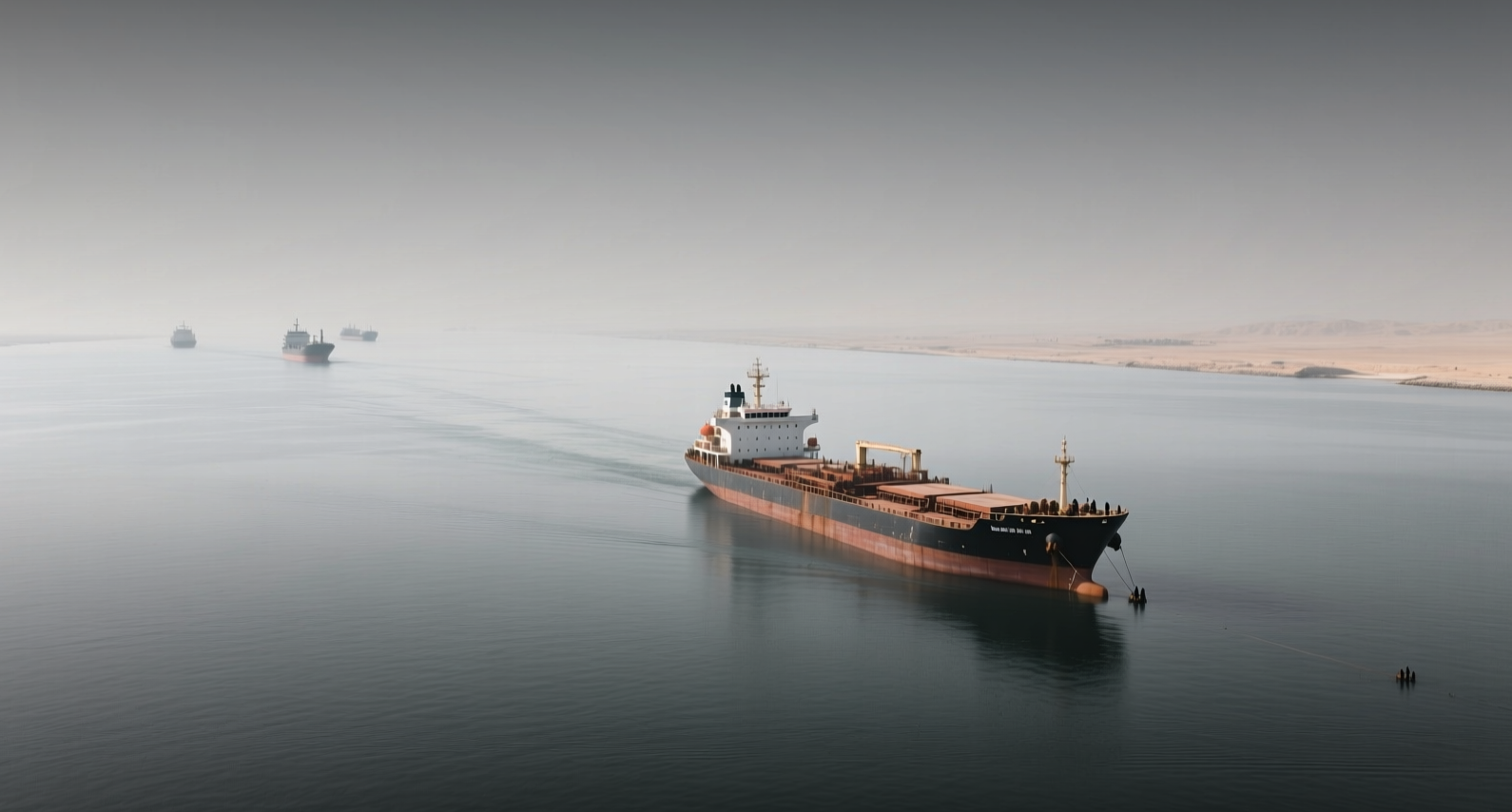
Treasury Secretary Scott Bessent will detail the US plan to economically isolate Iran and its trading partners Monday, after nearly six months of war that has already driven Iranian oil cargoes to a $4-per-barrel premium over global benchmarks.
"This is an economic D-Day — the single greatest financial offensive ever marshalled against an adversary," Bessent wrote in a Financial Times op-ed, calling the campaign the "greatest coordinated economic isolation in the history of the world."
Iran's oil shipments to Asia have all but dried up, with China's private refiners — historically the largest buyers of Iranian crude — facing offers that flipped from discounts to global benchmarks to premiums of around $4 a barrel, according to traders involved in negotiations. Trade intelligence firm Kpler recorded just 10 vessel crossings through the Strait of Hormuz on one recent Monday and two on the following Sunday, a fraction of pre-war levels.
The announcement lands as the Trump administration demands global compliance, with Bessent warning that "you are either with us or against us" and President Donald Trump vowing the "most crushing economic operation ever taken against any country." The question is whether additional sanctions can move an economy already among the most sanctioned on Earth — and whether Tehran's retaliation risks further disruption to the 21 percent of global oil that transits the Strait of Hormuz.
The plan extends beyond Iran itself to any government or company that continues doing business with the Islamic Republic. Bessent said the US will use its "full might" against entities that help Iran evade restrictions, a direct warning to China and Russia — both key economic partners for Tehran. Vice President JD Vance called economic pressure the United States' "most effective tool" against Iran, describing the standoff as "a delicate dance."
Iran's response has been defiant. The Islamic Revolutionary Guard Corps said the shift to economic pressure "amounts to an implicit admission of the enemy's humiliating defeat in the military arena," according to Iranian state media. Foreign Ministry spokesman Esmaeil Baqaei called the sanctions "unlawful economic warfare" and an assertion of extraterritorial sovereignty over every independent UN member state.
Helima Croft, head of global commodity strategy at RBC Capital Markets, questioned how much additional leverage Washington retains. Iran is already one of the most sanctioned countries in the world, she told CNBC, and Tehran appears to believe it can outlast a Trump administration eager to bring the broader conflict to a close. Croft warned that Iran "still has significant disruptive capabilities," including the ability to strike ships in the Strait of Hormuz and infrastructure across the Middle East.
The last time Washington pursued a maximum-pressure campaign against Tehran — the 2018 sanctions reimposition under Trump's first term — Iranian crude exports fell from roughly 2.5 million barrels per day to under 500,000 barrels per day within a year, according to tanker tracking data. Oil prices spiked more than 20 percent in the months following the announcement before retreating as other producers filled the gap.
The current situation differs in one critical respect: the war has already disrupted supply. With talks to fully reopen the Strait of Hormuz stalled, the risk premium embedded in crude prices reflects not just the threat of new sanctions but the physical reality of reduced flows. If the US follows through on secondary sanctions against China's private refiners, the impact could ripple through Asian demand for non-Iranian grades as well.
For global markets, the stakes extend beyond crude. A sustained squeeze on Iranian exports would tighten the global supply picture just as the US Energy Information Administration projects supply disruptions could last through 2027. Asian refiners that have relied on discounted Iranian barrels face higher input costs, while European buyers already navigating the aftermath of the Russia-Ukraine conflict face another source of supply uncertainty. The coming weeks will show whether Bessent's economic offensive can achieve what six months of military pressure could not — or whether it simply hardens Tehran's resolve.
This article is for informational purposes only and does not constitute investment advice.
