
Canada matched US tariffs dollar-for-dollar on roughly $20 billion of American goods, doubling duties on steel and aluminum to 50%.
Canada matched US tariffs dollar-for-dollar on roughly $20 billion of American goods, doubling duties on steel and aluminum to 50%.
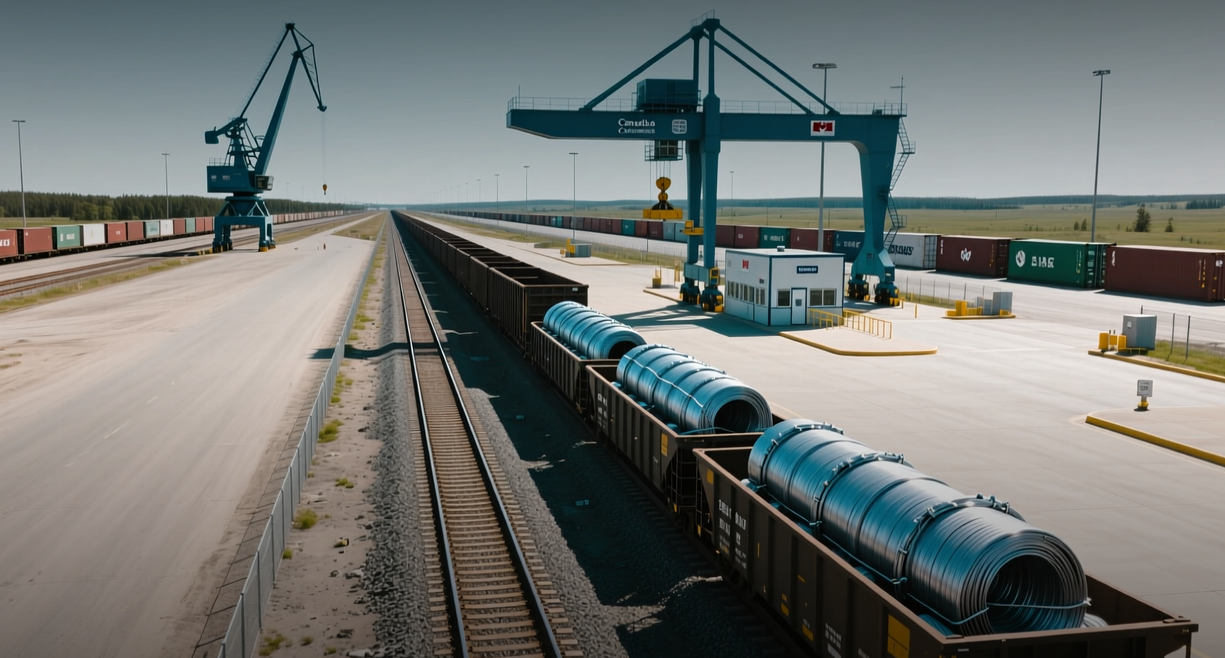
Canada matched US tariffs dollar-for-dollar on roughly $20 billion of American goods, doubling duties on steel and aluminum to 50%.
Canada imposed counter-tariffs of up to 50% on roughly $20 billion of American goods Tuesday, matching US levies dollar-for-dollar after trade talks collapsed and Washington hit Canadian steel and autos with new duties.
"We did not choose this conflict, but when our economic integration is used as a weapon rather than the foundation for a win-win partnership, we need to stand up," Finance Minister François-Philippe Champagne said, calling the situation "an unprecedented challenge imposed on Canada."
The tariffs take effect Sept. 8 at rates of 15%, 25%, and 50%, covering more than 700 products including steel, aluminum, seafood, clothing, pulp and paper, and electronics. Duties on steel and aluminum double to 50%, while motorcycles over 800cc, trailers, and rail locomotives face new levies. Canada kept its 25% counter-tariff on non-CUSMA-compliant US vehicles in place since April 2025.
The escalation threatens one of the world's largest trading relationships. Canada and the US have deeply integrated supply chains across autos, energy, agriculture, and manufacturing, making a prolonged fight costly for businesses on both sides of the border. Ottawa paired the tariffs with a C$7.5 billion support package for workers and businesses.
The retaliation follows the collapse of trade negotiations last week, driven largely by a last-minute dispute over tariff relief for medium- and heavy-duty vehicles. The US had offered to cut its auto tariff from 25% to 15% but excluded larger pickups and medium- and heavy-duty trucks. Prime Minister Mark Carney walked away from the deal, saying US demands showed Washington wanted to "destroy our major industries."
Canadian officials said the goal is not to raise revenue but to protect domestic companies and reduce US imports. US steel imports have already fallen 30 percent since Canada imposed a 25 percent tariff, and the new 50 percent rate is expected to cut them further.
Ontario Premier Doug Ford, whose province is the heart of Canada's manufacturing industry, urged a hard line after talks collapsed, calling President Trump a "dictator," a "loser," and the "king of bankruptcies." He told The Wall Street Journal his anger registered "110" on a scale of one to 100. A day later, Ford softened his tone after Trump mocked him on social media as the "less charismatic, intelligent, and overall unimpressive brother of the late, great Rob Ford" and threatened to rename Lake Ontario "Lake America."
"Things got a little heated, it got a little personal yesterday between the president and myself," Ford said on CNN, adding that he wants to "make a deal."
Ford has backed provincial bans on US alcohol in government-run liquor stores, an irritant for the Trump administration. His approval rating stood at 21 percent in June, the lowest of any Canadian premier, according to the Angus Reid Institute.
UAW President Shawn Fain rejected further escalation with Canada, calling it "a country with strong unions and labor standards." The union said it continues to support "strategic tariffs, including the 232 tariffs on auto and heavy truck," but called for a rewrite of the USMCA and other trade deals rather than more tariffs on Canada.
Canada has provided more than C$30 billion in tariff-related support since the start of 2025, far more than it has collected in retaliatory duties. Champagne said the dollar-for-dollar counter-tariffs and the support package will "protect workers, farmers, families, and businesses as we build a stronger, more resilient, and more diversified Canadian economy."
Carney said Monday that Canada may shift from matching US tariffs dollar-for-dollar toward more targeted retaliation aimed at protecting Canadian workers. "An attitude at the negotiation table that Canada is a subsidiary of the United States is not something we're going to accept," he said.
This article is for informational purposes only and does not constitute investment advice.
