
The Canadian dollar fell against major currencies Monday as Washington's 50% tariffs on $20 billion of imports pushed the two allies toward an all-out trade war.
The Canadian dollar fell against major currencies Monday as Washington's 50% tariffs on $20 billion of imports pushed the two allies toward an all-out trade war.
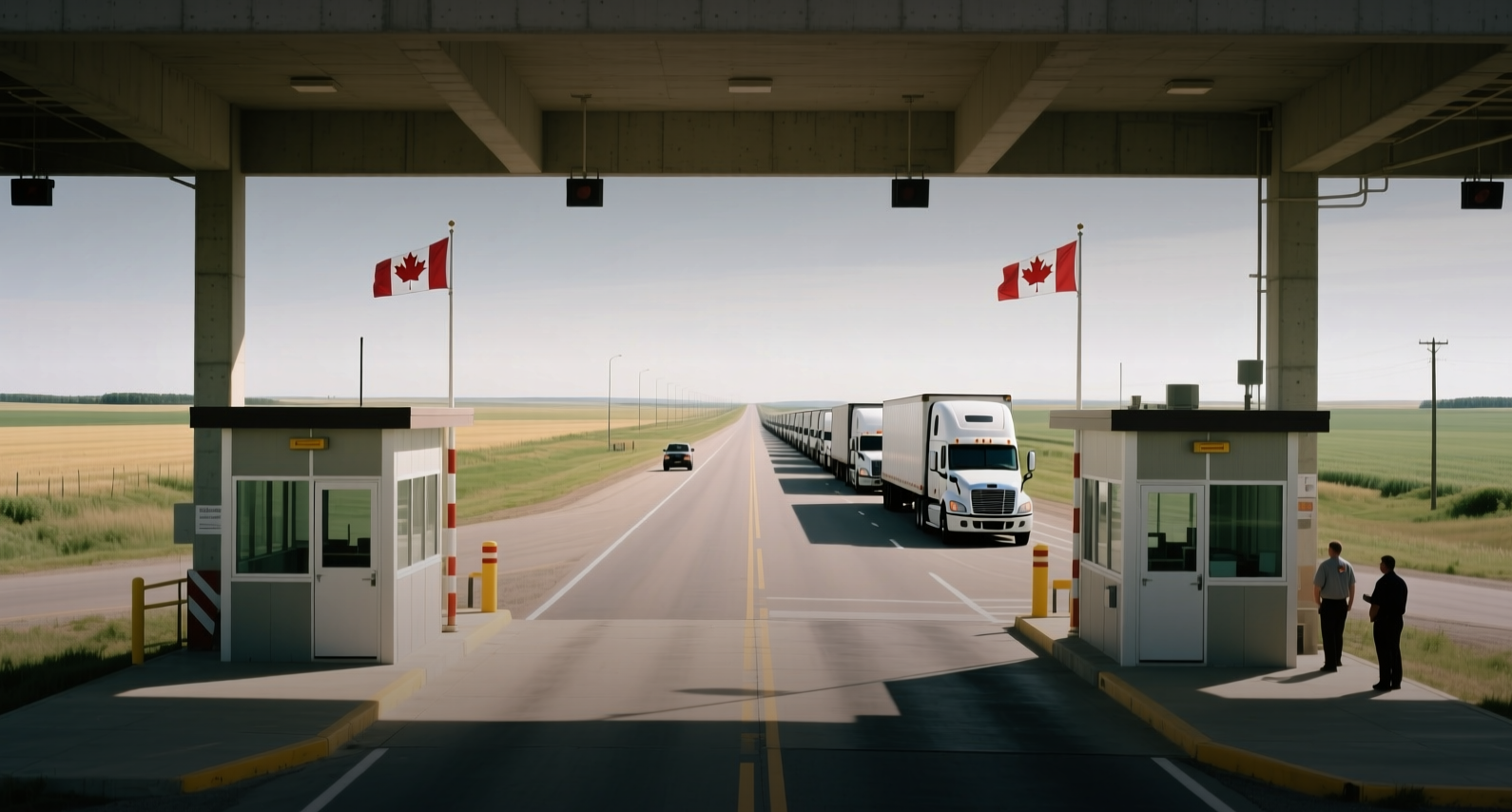
The Canadian dollar weakened against a basket of major currencies Monday after the U.S. imposed 50% tariffs on roughly $20 billion of Canadian imports, escalating a dispute that Ottawa has pledged to match dollar for dollar.
"As a smaller, more open economy, Canada has more to lose from this," strategists at ING said Monday.
The tariffs, effective Saturday under Section 338 of the Tariff Act of 1930, hit about 5 percent of Canada's annual exports to the U.S., covering alcohol, dairy, hockey sticks, cement, steel and aluminum. Canada responded by announcing matching duties on U.S. steel and dairy products, scheduled to take effect Sept. 8.
The breakdown threatens the $880 billion in annual two-way goods and services trade between the allies, with nearly 72 percent of Canada's goods exports destined for the U.S. market. The 5,525-mile border remains undefended, with roughly 330,000 people and $2 billion worth of goods crossing it daily, and 800,000 Canadians living in the United States.
Trade talks collapse after last-minute demands
Canadian Prime Minister Mark Carney suspended negotiations Friday night, saying "last-minute changes in the U.S. proposed terms were unfair, uneconomic, and called into question the reliability of any deal." U.S. Trade Representative Jamieson Greer countered that Canada declined to finalize terms agreed "earlier this week," despite an offer of "the best treatment of any major exporter to our market."
The collapse marked a sharp reversal from Wednesday, when President Donald Trump paused the tariffs for three days to allow talks to continue. Trump had initially set the duties to take effect at 12:01 a.m. Wednesday before extending the deadline. Ontario Premier Doug Ford said he fully supports Carney's "tariff for tariff, dollar for dollar" approach, adding "everything needs to be on the table."
Escalation risks deepen as both sides dig in
U.S. Transportation Secretary Sean Duffy warned Sunday that Canada would suffer greater economic consequences from a prolonged confrontation, predicting Carney would return to negotiations "very, very quickly" once the effects become apparent. Trump, meanwhile, wrote on Truth Social that "Canada wants the benefits of being a State, without being one!!!"
Carney has described the two countries as "at war" over trade and accused Washington of attempting to "hurt and divide" Canada. The Canadian public has responded in kind: a petition to expel U.S. Ambassador Pete Hoekstra has collected nearly 248,000 signatures since July 21.
The last comparable escalation came in 2025, when Trump imposed tariffs on Canadian goods under the International Emergency Economic Powers Act. The Supreme Court struck those down in February 2026, ruling the law does not give the president authority to impose tariffs on Canada — a decision that pushed the administration to revive the Depression-era Section 338 instead.
With no further talks planned, the immediate risk is a prolonged standoff that raises costs for U.S. importers and consumers ahead of November's midterm elections. Dan Kelly, president of the Canadian Federation of Independent Business, told CNBC that a 50 percent tariff "essentially makes a product uneconomic to sell into a particular market," with some U.S. buyers already halting future orders. For Canada, the stakes are existential for its export sector: the U.S. absorbs roughly 70 percent of Canadian shipments, leaving Ottawa with limited alternative markets in the near term.
This article is for informational purposes only and does not constitute investment advice.
