
Beijing acknowledged discussions for a potential high-stakes presidential visit but deflected questions on whether the world’s two largest economies will formally tackle artificial intelligence.
Beijing acknowledged discussions for a potential high-stakes presidential visit but deflected questions on whether the world’s two largest economies will formally tackle artificial intelligence.
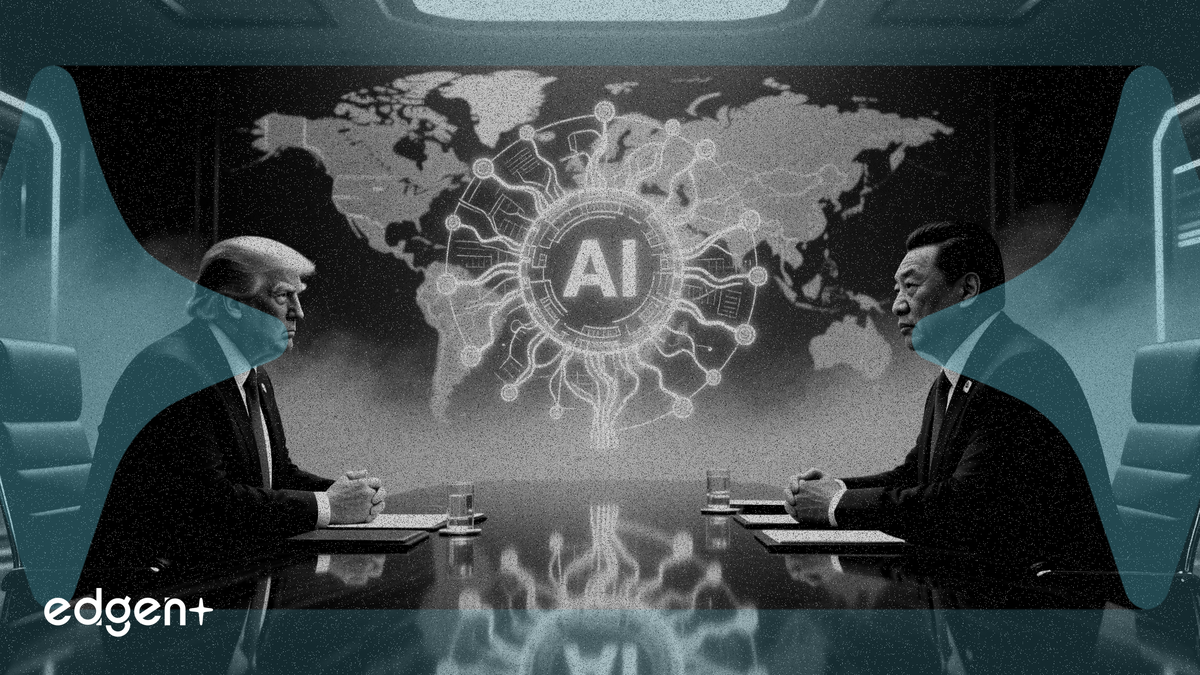
China confirmed it is in communication with the US regarding a visit by President Trump, a foreign ministry spokesperson said Wednesday, injecting a fresh wave of uncertainty into the fragile relationship between the two global powers.
"The two sides are maintaining communication regarding President Trump's visit to China," Foreign Ministry spokesperson Lin Jian said at a regular press conference in Beijing, in response to a question about a Wall Street Journal report.
While confirming the high-level communication, Lin Jian declined to provide details on a key element of the report: that the two nations were set to launch official discussions on artificial intelligence next week, a dialogue reportedly to be led by US Treasury Secretary Besant. "Regarding the specific question you mentioned, I currently have no information to provide," Lin said.
The dual-track message from Beijing—open to presidential-level talks but opaque on the agenda—highlights the immense strategic importance and sensitivity of AI competition. For investors, this ambiguity adds a new layer of policy risk to a technology sector already caught in the crossfire of US-China trade tensions, with the global AI market projected to exceed $1 trillion by 2030.
Beijing's reticence on the subject of AI talks comes as the technology emerges as a central battleground in the broader US-China strategic competition. The United States has implemented a series of export controls aimed at restricting China's access to advanced semiconductor technology, a critical component for developing sophisticated AI models. Any official dialogue on the topic would be a significant development, potentially signaling a new phase of either managed competition or intensified rivalry.
A potential visit by President Trump would be his first to China in eight years and would occur against a backdrop of continued trade friction and geopolitical maneuvering. The last series of high-level trade negotiations in 2019 ultimately failed to produce a comprehensive agreement, leading to several years of escalating tariffs that have impacted global supply chains. The confirmation of active discussions for a summit suggests a mutual desire to establish a new baseline for the relationship, though the agenda remains a critical and contentious point.
The lack of clarity from Beijing leaves markets to grapple with uncertainty. The prospect of a presidential summit could be seen as a positive, potentially leading to a de-escalation of tensions. However, the silence on AI—a sector with some of the market's highest valuations—could also be interpreted as a sign of a deepening divide. Companies with significant exposure to both the US and Chinese tech markets, from semiconductor giants like Nvidia and TSMC to software firms, will be closely watching for any further signals.
This article is for informational purposes only and does not constitute investment advice.

