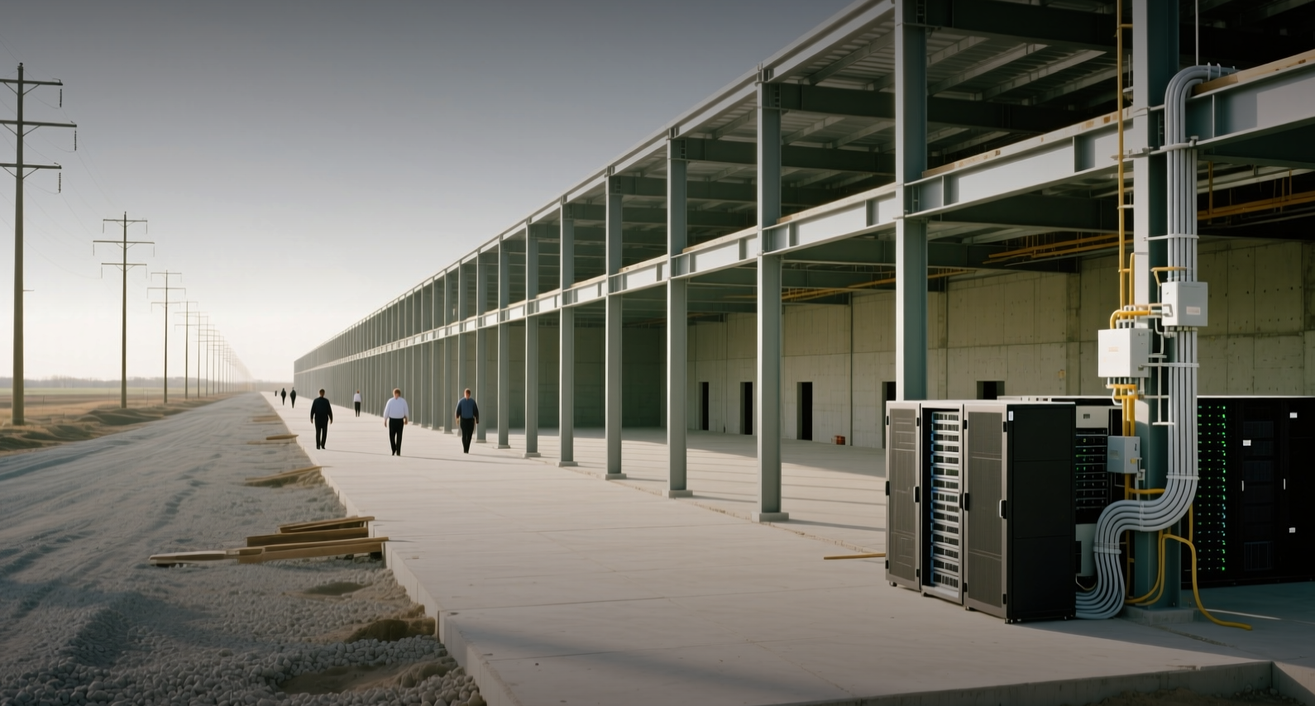
CoinShares reported $2 billion in crypto ETP inflows as AI could drive up to 70 percent of Bitcoin miner revenue by year-end.
"Publicly listed miners could generate as much as 70 percent of total revenue from AI by year-end," CoinShares said in an analysis published Aug. 28, citing power-grid bottlenecks in the U.S. data center industry as a key driver.
The cumulative value of AI- and high-performance computing-related contracts announced by publicly traded Bitcoin miners has exceeded $70 billion. Core Scientific, TeraWulf, Cipher Mining and Hut 8 are expanding AI data center operations using existing mining infrastructure. Bitcoin mining profitability remains weak, while AI infrastructure offers structurally higher and more stable returns, the firm said.
For operators with scalable power capacity and existing data center infrastructure, reallocating capital and electricity to AI and HPC is an economically rational choice, CoinShares said. The pivot comes as Bitcoin's total hashrate has fallen to 892.35 EH/s from above 1,000 EH/s at the start of 2026, with the U.S. share slipping to 36.7 percent from 37.5 percent, according to hashrateindex.com data.
Miners Outperform AI Stocks on Bitcoin Rally
Bitcoin's roughly 23 percent rally over the past week has revived some of the mining sector's most beaten-down stocks, reversing a trend that favored miners pivoting toward AI. Canaan, American Bitcoin and Cango gained between 41 percent and 67 percent, according to BlocksBridge Consulting's Miner Weekly newsletter. By comparison, CoreWeave rose about 21 percent, Nebius gained 17 percent and IREN advanced 15 percent, while some miners with heavier AI and HPC exposure were flat or declined.
Three factors drove Bitcoin's rally: the U.S. Treasury Department's Aug. 19 announcement to at least double the size of its liquidity-support buybacks for longer-dated Treasury securities, renewed regulatory optimism after a White House meeting with crypto executives, and a sharp short squeeze that liquidated more than $1.6 billion in crypto positions over 24 hours.
The gains show how strongly Bitcoin's price can still influence mining stocks, even as many miners have shifted focus toward AI infrastructure. Separate BlocksBridge analysis found that publicly traded Bitcoin miners have invested roughly $15 in AI data centers for every $1 in AI-related revenue generated. Nine public miners generated $341.2 million in AI and HPC revenue so far in 2026, compared with $5.11 billion in capital expenditures on the technology.
Hashprice Gains Could Reshuffle Global Mining Map
Hashprice, or the revenue miners earn per unit of computational power, has risen 27.42 percent over the past 30 days to $40.34 per petahash per second, potentially attracting new entrants. The U.S. has seen its share of Bitcoin's hashrate slide nearly a percentage point since the start of the year, while Russia's share rose to 17.2 percent from 16.4 percent and China's to 12.2 percent from 11.3 percent. Paraguay bucked the trend, gaining 1 EH/s of hashrate and lifting its global share to 4.7 percent from 4.0 percent.
IREN Limited, meanwhile, is transitioning from Bitcoin mining to AI cloud computing, reporting revenue declines and large net losses in Q4 2026 due to mining asset impairments and upfront AI hiring costs, despite securing $4 billion in contracts targeting 2027 growth.
The strategic pivot carries execution risk. IREN's losses highlight the gap between AI revenue potential and near-term profitability, while the $15-to-$1 investment-to-revenue ratio across public miners suggests the AI transition will take time to pay off. For investors, the question is whether mining companies can bridge that gap before Bitcoin's price volatility and rising hashrate competition erode their core business.
This article is for informational purposes only and does not constitute investment advice.