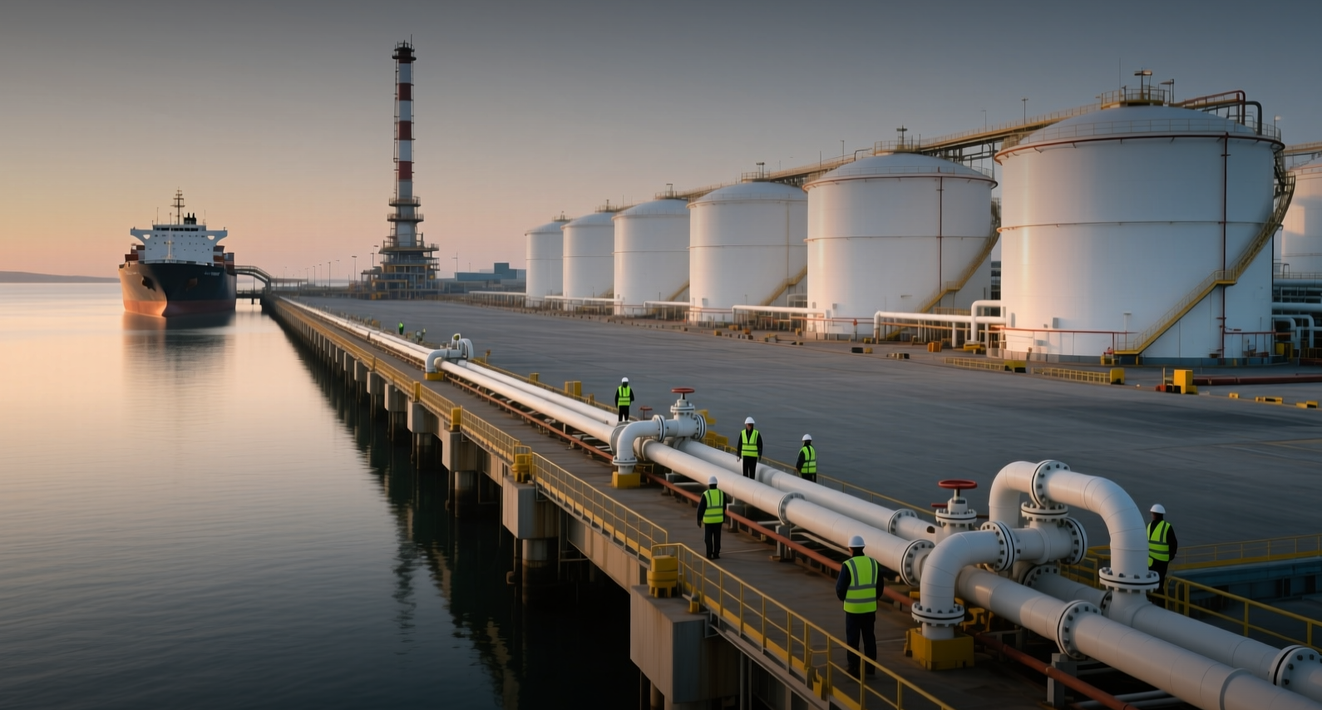
Dutch TTF front-month futures climbed as much as 6.8% to €80.99 ($94.60) per megawatt hour on Wednesday, the highest since January 2023, as Middle East attacks cut liquefied natural gas shipments ahead of the winter heating season.
"Unlike with oil, there are no alternative export routes [for the LNG market], such as the Bab el-Mandeb Strait on the Red Sea or pipelines leading directly to the Gulf of Oman," Norman Liebke, commodity analyst at Commerzbank, said in a note.
The benchmark contract in Amsterdam settled 4.5% higher at €79.32/MWh, extending September gains to 40%. Qatar, the world's second-largest LNG exporter, was forced in March to curb production after Iranian missile strikes damaged two LNG trains at Ras Laffan, the largest LNG export facility globally, and state-owned QatarEnergy extended force majeure on contracted supplies for some buyers into early November. Gas storage across the European Union is only about 67% full, below the seasonal average and 13 percentage points lower than a year ago.
The margin math runs through the U.S. Gulf Coast. Venture Global, Cheniere Energy, Shell and Equinor sell cargoes at prices linked to European and Asian benchmarks while buying feedgas at U.S. Henry Hub rates, so a sustained TTF premium widens the spread they capture per cargo. U.S. gas producers capture the upstream half of the same trade as export volumes pull domestic supply toward the coast.
Storage at 67% leaves little room for a cold snap
The supply cushion is thinner than the headline price implies. If the Strait of Hormuz stays shut for the rest of the year, European storage could sink as low as 14% by April 1, according to consultant Wood Mackenzie, which would leave importers paying to refill nearly empty tanks in a market with no spare cargoes. The European Union tried last week to ease concerns over low stockpiles, saying less inventory is needed after the bloc diversified away from Russian gas following the 2022 energy shock.
The last time TTF traded near these levels, in August 2022, the contract briefly exceeded €300/MWh after Russia curtailed pipeline flows, and European industrial production fell 2.3% over the following two quarters as utilities passed costs through. Current pricing sits roughly a quarter of that peak, but the direction of travel matters more than the level for buyers who have not yet hedged winter volumes.
A strong El Niño weather system is expected to keep regional winter temperatures above normal, which would depress heating demand and buy the EU time to wait for LNG flows to normalize. Commerzbank's Liebke expects the opposite pressure in Asia, where a colder winter could lift LNG demand and force European importers to bid more aggressively for the same cargoes.
The inflation channel runs back through Brussels
Sustained gas costs feed directly into European headline inflation, and the timing is awkward. German annual inflation rose to 2.9% in August, and energy base effects that had been flattering the index are now reversing as wholesale gas reprices. That constrains how quickly the European Central Bank can ease, keeping borrowing costs elevated for the industrial users already squeezed by energy bills.
For the exporters, the trade is duration, not direction. A spike that fades by December leaves 2027 contract economics largely intact; a Hormuz closure that persists into the first quarter would reset the earnings base for Cheniere, Venture Global, Shell and Equinor and pull U.S. Henry Hub higher in the same move. Brent crude cleared $100 a barrel in the same session, and the correlation between the two benchmarks has tightened as traders treat both as the same geopolitical trade.
This article is for informational purposes only and does not constitute investment advice.