

Trump said ExxonMobil is among companies planning to enter Venezuela, but analysts warn the 65 billion-barrel deal faces years of legal and operational hurdles.
Trump said ExxonMobil is among companies planning to enter Venezuela, but analysts warn the 65 billion-barrel deal faces years of legal and operational hurdles.
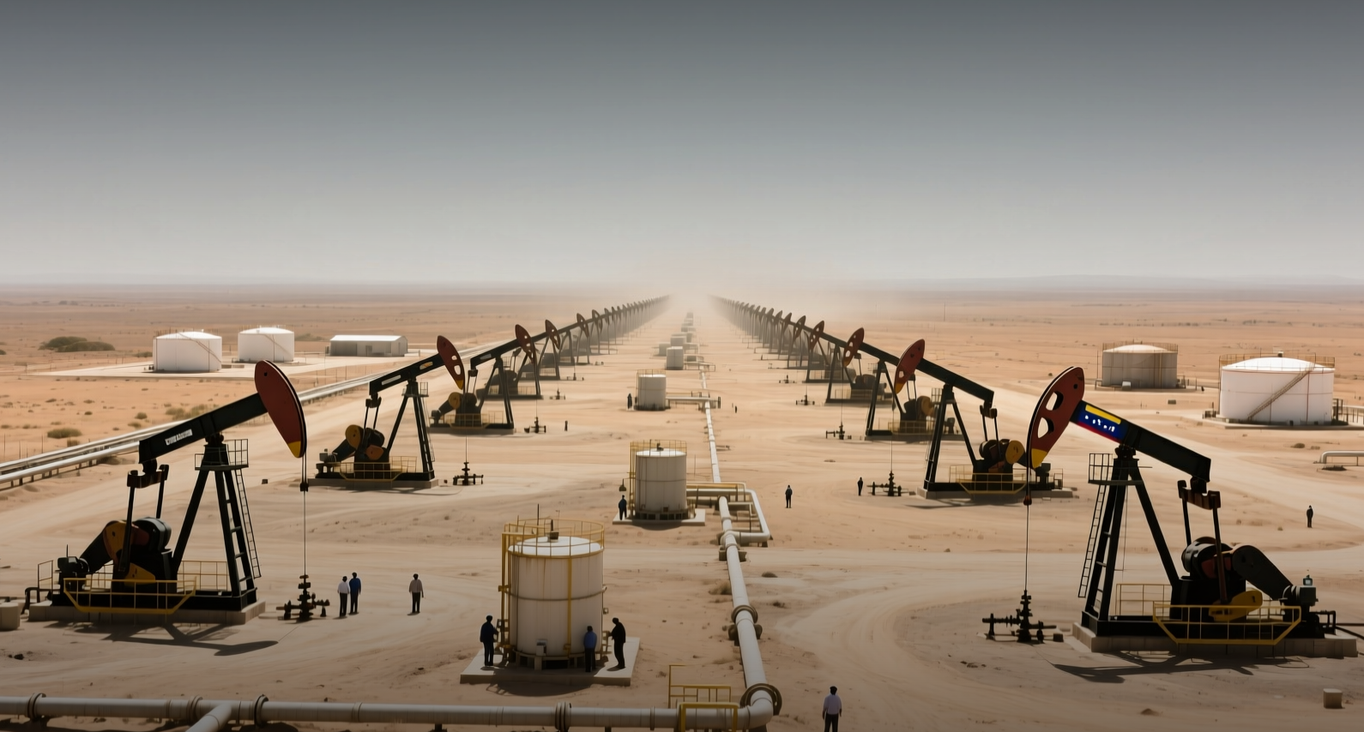
Trump said Monday that ExxonMobil is among companies planning to enter Venezuela, as Washington pushes a deal to develop 65 billion barrels of crude that faces years of legal and operational hurdles.
"From a US oil company's perspective, any significant investment in Venezuela would generally need to be accompanied by a legal framework that could survive a change in leadership in both the US and Venezuela," UBS analysts wrote in an Aug. 31 report. "Companies such as ExxonMobil and ConocoPhillips are still owed significant amounts under legal judgments related to assets previously expropriated in Venezuela."
The agreement, announced Friday, gives the US government 55 percent control of a joint venture operating 17 oil fields in Venezuela. The country holds the world's largest proven oil reserves at just over 300 billion barrels, according to the US Energy Information Administration, compared with less than 50 billion barrels in the US. Venezuela pumped about 1.1 million barrels a day in the second quarter, up from 941,000 barrels a day in 2025, per OPEC data. Experts estimate at least $100 billion is needed to restore the fields to full capacity.
The announcement comes as the Iran war pushes oil prices higher — WTI crude rose $2.42, or 2.9 percent, to $85.78 a barrel Monday after US strikes on Iranian rocket launchers in the Strait of Hormuz. Even if the Venezuela deal succeeds, new fields can take 15 years after discovery to begin producing, according to Global Energy Monitor, meaning any impact on US gasoline prices — which averaged $4.08 a gallon nationally, per AAA — is years away.
ExxonMobil and ConocoPhillips, whose assets were expropriated by Venezuela's government under Hugo Chávez, have been wary of re-entering the country. ExxonMobil CEO Darren Woods earlier this year called Venezuela "uninvestable" without major legal reforms and durable investment protections. The deal's structure — a 100-year concession granted by interim President Delcy Rodríguez, a former Maduro ally — has drawn criticism from both parties in Washington, with lawmakers questioning whether Rodríguez has the authority to make such a long-term commitment.
Rep. Maria Elvira Salazar, R-Fla., said she supports taking Venezuelan oil "out of China's hands" but warned that "Delcy Rodríguez and the remnants of Maduro's regime cannot be Venezuela's future." Sen. Tim Kaine, D-Va., called the agreement a "private oil grab." Harvard economist Ricardo Hausmann, a former Venezuelan planning minister, accused Secretary of State Marco Rubio of pursuing "an asset grab, an unconstitutional deal with an illegitimate oppressive government."
The project is expected to attract nearly $100 billion in private investment and support thousands of jobs, Rubio said. But the deal does not require the US to invest any money in rebuilding Venezuela's oil industry; instead, it relies on granting American companies licenses to invest, produce, and trade oil. Chevron remains the only major US producer currently operating there.
GasBuddy petroleum analyst Patrick De Haan said the deal "sounds promising" but "it still will take billions of investment to get that oil." Tracy Shuchart, CEO of commodity analytics firm Hilltower Resource Advisors, estimated five to 15 years before enough Venezuelan oil flows to the US to affect domestic gas prices. "Changes to fuel prices won't happen overnight or even in months," De Haan said.
Trump is scheduled to meet with US energy refiners and distributors Tuesday to discuss the deal, White House spokeswoman Taylor Rogers said. For now, the Iran war is having a greater impact on gas prices than the Venezuela agreement, with Brent crude trading at $90.27 a barrel.
The deal's success hinges on whether US oil companies accept the political risk of operating in Venezuela and whether the legal framework survives a change in leadership in either country. With the US Strategic Petroleum Reserve at 289.7 million barrels and gasoline prices above $4 a gallon, the administration is betting that Venezuela's reserves can eventually ease supply pressure — but the timeline stretches well beyond the current political cycle.
This article is for informational purposes only and does not constitute investment advice.
