


The September Fed rate decision will determine whether Amazon and Oracle can finance their trillion-dollar AI buildouts after both posted record cloud backlogs while free cash flow turned negative.
The September Fed rate decision will determine whether Amazon and Oracle can finance their trillion-dollar AI buildouts after both posted record cloud backlogs while free cash flow turned negative.
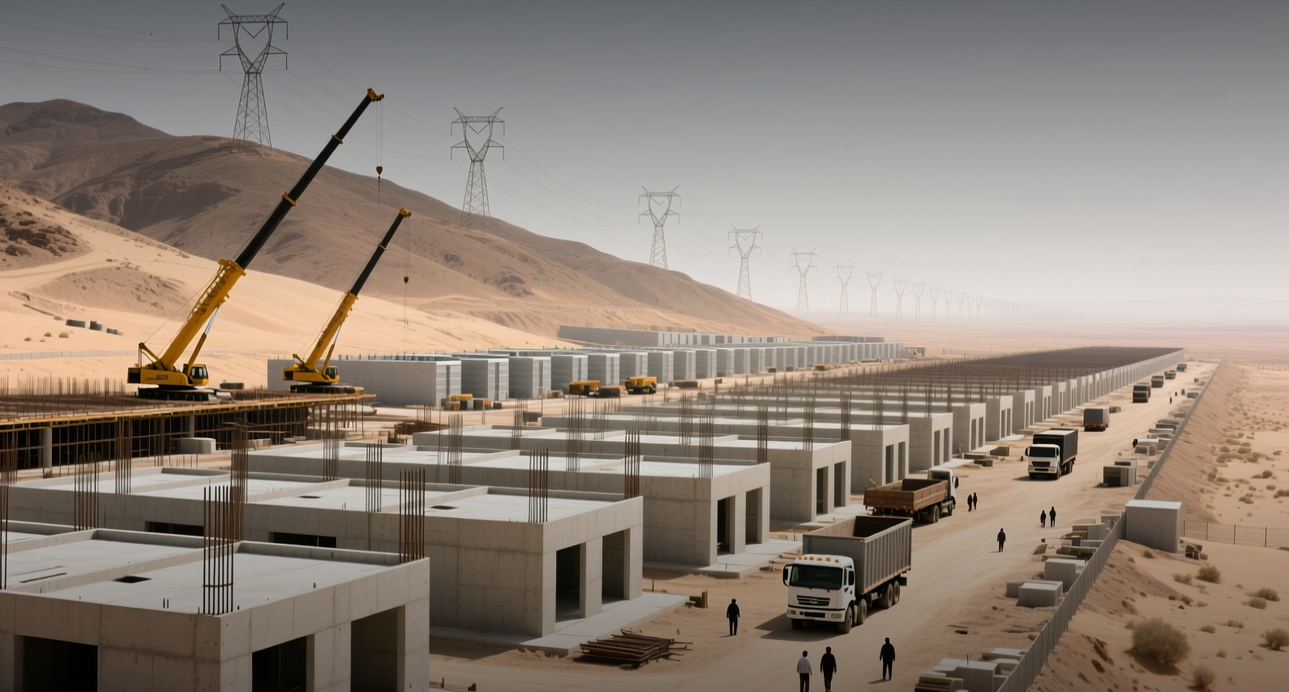
A single Federal Reserve meeting this month now governs whether Amazon.com Inc. and Oracle Corp. can keep funding their trillion-dollar AI infrastructure buildouts. Both hyperscalers just reported record cloud backlogs even as free cash flow swung negative, leaving roughly $250 billion in combined 2026 capital spending exposed to the cost of borrowed money. A rate cut would ease that debt burden; holding rates elevated would tighten credit just as both lean harder on financing.
"The 80 is a change from a positive narrative surrounding building AI infrastructure to a negative — folks are rattling the cages about we're not going to be able to monetize this," Paul Meeks, head of technology research at Freedom Capital Markets, said. "But the 20 is you're dealing with OpenAI."
Amazon's AWS backlog stands at $496 billion, with cash capital expenditures hitting $53.1 billion in the June quarter alone. Oracle carries more than $600 billion in remaining performance obligations, roughly half tied to OpenAI, and has leaned most heavily on debt among the major hyperscalers to fund its buildout. Goldman Sachs strategist Amanda Lynam estimates $489 billion of AI-related debt has been issued this year, up from $322 billion in 2025, with about 40 percent sold directly by hyperscalers.
The stakes concentrate in a single meeting. If the Fed holds rates elevated, refinancing costs climb just as negative free cash flow forces both companies to tap debt markets for the next leg of capex. Amazon trades at 36 times earnings; Oracle's valuation leaves little room for a financing shock.
Record backlogs, negative cash flow
The divergence between demand and cash generation defines the risk. Amazon guided roughly $200 billion in total 2026 capital spending, and chief executive Andy Jassy said AWS could "very possibly be a trillion dollar annual revenue business for us in time." AWS revenue rose 36.7 percent year over year to $42.2 billion in the June quarter, the fastest growth in 18 quarters, with an annualized run rate of $169 billion.
Oracle, projecting about $50 billion in cloud and server expansion, holds the thinnest cushion. Its dependence on OpenAI, which accounts for roughly half of its RPO, concentrates the payoff in a single customer whose own financing needs remain unresolved. Meeks said regaining investor confidence will require evidence that infrastructure spending translates into returns while OpenAI executes.
Debt is the quiet variable
The broader market has shifted from asking how large the AI opportunity is to where the money comes from. JPMorgan Asset Management estimates AI contributes roughly 1.1 percent to U.S. gross domestic product, while Gartner forecasts total global AI spending of $2.59 trillion. Hyperscalers are projected to spend $690 billion to $725 billion on capital expenditures in 2026, with Alphabet Inc., Microsoft Corp. and Meta Platforms Inc. adding roughly $440 billion to $470 billion on top of Amazon and Oracle.
Much of that expansion is now debt-funded through bond issuance, structured leases and private credit. Goldman's Lynam noted the $489 billion of AI-related debt this year already exceeds last year's total. A growing share of deals also carries circular-financing traits, where chipmakers and cloud providers fund customers that in turn commit to buying their hardware — a structure that can inflate demand visibility without creating durable end-market cash flow.
For investors, the September decision is the near-term trigger. A cut would lower the cost of the debt underwriting Amazon and Oracle's buildouts and buy time for monetization to catch up with spending. A hold or hike would test whether record backlogs can justify negative free cash flow at two of the market's most heavily valued AI names. Amazon shares are up 11 percent year to date; Oracle trades near $160.
This article is for informational purposes only and does not constitute investment advice.
