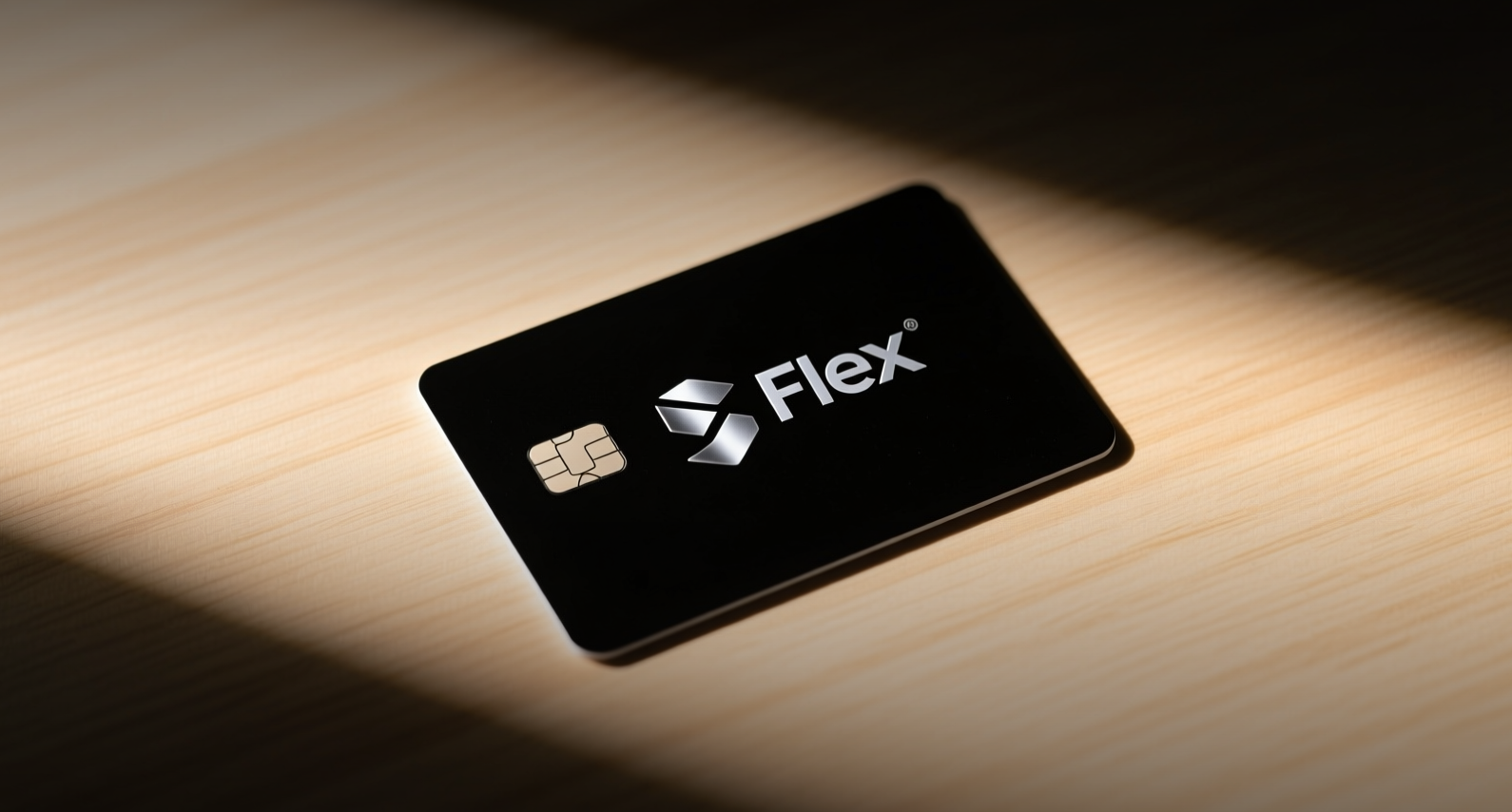
Flex's $70 million Series B1 round doubles its valuation to $1.2 billion, as the fintech uses stablecoins and AI to serve mid-market businesses neglected by Square and Ramp.
Flex, the California-based fintech often described as "Brex for business owners," raised $70 million in a Series B1 round led by Halo Fund, doubling its valuation to about $1.2 billion.
"About 350,000 business owners in the U.S. manage 40% of American payroll," founder and CEO Zaid Rahman said in an interview. "About three million business owners manage 50% of the global economy."
Flex's core customers generate between $3 million and $200 million in annual revenue, primarily in construction, wholesale and import-export. More than half send over $1 million in international wires every month. The company's annualized payment volume has reached $10 billion, with $1 billion-plus running on stablecoin rails that settle in minutes rather than the one to five business days typical of traditional cross-border payments.
The funding round comes as stablecoin infrastructure gains mainstream traction. Mastercard agreed in March to acquire BVNK for up to $1.8 billion, and Stripe completed its $1.1 billion acquisition of Bridge in 2025. The GENIUS Act, signed a year ago, created a federal framework for payment stablecoin issuers in the U.S., while the European Union's MiCA stablecoin provisions are now in force.
Flex targets what Rahman calls the "middle market" — businesses that have outgrown Square and Toast but lack the scale for enterprise platforms like Ramp. Many operate across multiple entities, currencies and jurisdictions, making cross-border money movement part of their daily operations. Flex's platform offers multi-currency accounts in 32 currencies across 170 countries, consolidating what Rahman said was often twenty-odd separate tools into a single dashboard.
The company's most popular U.S. product is a net-60 card that gives owners 60 days of interest-free float, aimed at businesses like construction firms whose clients pay late. Underwriting that middle market has historically been slow — banks average 90 days for credit decisions, and Flex itself took 40 to 50. By using AI to read financials, bank accounts, ERP systems and vertical tools like Procore, the company now turns credit decisions around in two days.
Stablecoins function as a backend technology that customers never see, buried under an interface that looks like ordinary banking. "We don't really care about any one payment rail," Rahman said. "Stablecoins are just another payment rail for us. What we care about is user experiences for customers to do business faster, cheaper, better."
Traditional cross-border payments cost 1% to 6% all-in and take one to five business days. Stablecoin rails settle in minutes at a fraction of a percent. But faster settlement does not eliminate every layer. Julia Demidova, head of digital currencies and strategy at FIS, said the transfer itself is the easy part. "Most businesses do not only need a token transfer," she said. "They need FX, reconciliation, sanctions screening, transaction monitoring, wallet controls, accounting treatment, refund and exception handling, reporting and integration into bank systems."
The sharper differentiator for Flex may be credit. Using AI to underwrite the middle market in two days, compared with 90 days at traditional banks, creates a structural advantage that stablecoin rails alone cannot replicate. Citi projects the stablecoin market could swell into the trillions by 2030, though in a 2025 EY-Parthenon survey only 13% of companies had used stablecoins for payments or treasury.
Flex competes in a crowded fintech field that includes Brex, Ramp, Mercury and Revolut, the London-based digital bank that already offers zero-fee stablecoin conversion in some markets. Rahman argues the rails are beside the point. "Fintech in itself is a commodity," he said. "Every single payment rail is commoditized, including stablecoins, including ACH, including wires." What matters, he argues, is rebundling — consolidating business banking, personal finance, payments and credit into a single financial home for business owners.
This article is for informational purposes only and does not constitute investment advice.