

Beijing is funneling RMB100 billion into ICBC's core tier-1 capital through a Ministry of Finance-led placement, part of a wider state push to fortify China's biggest banks.
Beijing is funneling RMB100 billion into ICBC's core tier-1 capital through a Ministry of Finance-led placement, part of a wider state push to fortify China's biggest banks.
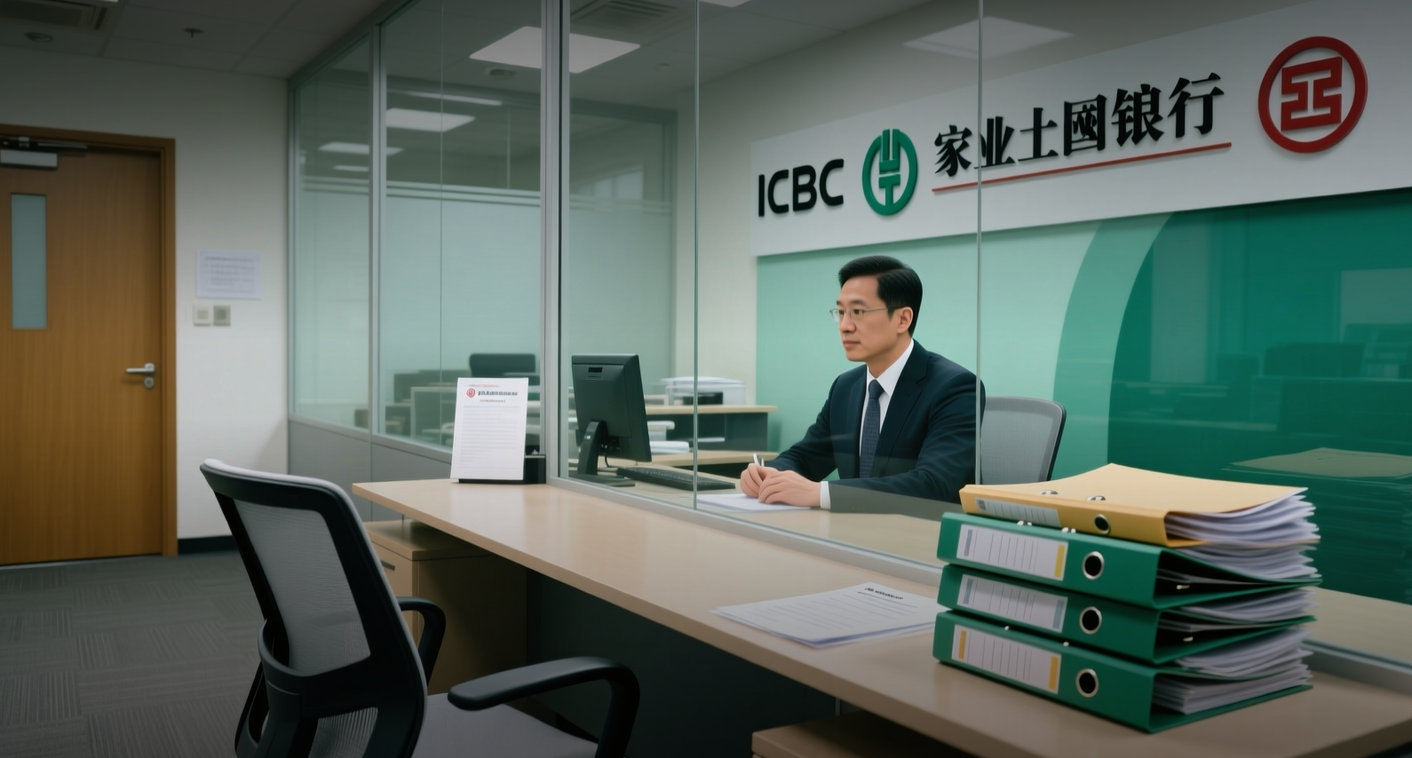
ICBC plans to raise up to RMB100 billion from the Ministry of Finance and tobacco companies, deepening a state-led push to rebuild bank capital as net interest margins sit at record lows.
"'ICBC and AgBank could see about 3.5% and 6.3% annualized EPS dilution from plans to raise 100 billion yuan and 160 billion yuan of core Tier 1 capital through A-share placements,' Bloomberg Intelligence analysts Francis Chan and Nicholas Ng wrote."
The world's largest lender by assets said it will issue A-shares under a general mandate to the Ministry of Finance, which intends to subscribe RMB70 billion, and to China Tobacco and its units — Shanghai Tobacco Group, China Tobacco Yunnan, China Tobacco Hunan and China National Tobacco Corporation Hunan — which together would take RMB30 billion. All shares carry a five-year lock-up, and net proceeds will go entirely to core tier-1 capital. Agricultural Bank of China separately announced plans to raise up to RMB160 billion in a parallel placement, bringing the two lenders' combined haul to RMB260 billion, or about $38.4 billion.
The placements mark the second round of sovereign-backed recapitalization in under two years, after four lenders including Bank of China and Postal Savings Bank received a combined $69 billion backed by special treasury notes in early 2025. Beijing has earmarked RMB300 billion of special treasury bonds this year to replenish big state-owned commercial banks, per the government work report, with the Ministry of Finance shouldering more than four-fifths of the roughly RMB360 billion that at least eight banks and insurers are seeking.
The capital injections come as the sector's net interest margin — the spread between what banks earn on loans and pay on deposits — has slid to record lows, limiting how much capital lenders can rebuild through retained profit. That leaves thin buffers to absorb credit losses tied to property developers and local-government debt, so the raises look designed less to plug an immediate hole than to add shock absorbers and headroom to grow loan books, including extra provisions for potential bad loans.
The state's willingness to write large checks directly — the Ministry of Finance alone is committing RMB70 billion to ICBC — reflects the priority Beijing places on financial stability. Official data show the number of high-risk financial institutions has nearly halved from its peak to 312 by mid-2025, evidence the cleanup is gaining ground even as the economy contends with a drawn-out trade standoff with the United States.
For shareholders, the cost is dilution. Beyond the EPS drag Bloomberg Intelligence estimates, the five-year lock-up ties up the new capital with no near-term exit. Yet the sovereign backing also removes the tail risk of a distressed recapitalization, and JPMorgan this month upgraded Postal Savings Bank to overweight after state-owned lenders' second-quarter results beat expectations and raised their regular payout ratio for the first time. ICBC's Hong Kong-listed shares fell 1.5 percent on the announcement, with short selling at $280 million, or 13.2 percent of turnover, according to exchange data.
What happens next hinges on regulatory approval. The final fundraising amount is subject to issuance plans approved by authorities, and the capital increase will be implemented only after internal and external approval procedures are completed. If the RMB100 billion placement clears, it would set a template for further state-led injections across the sector, reinforcing that Beijing stands behind its biggest banks as credit demand stays soft and margins compress further.
This article is for informational purposes only and does not constitute investment advice.
