
Key Takeaways: Israel's 1,234-unit E1 tender bypassed its own legal team, triggering court challenges and sanctions threats from 18 Western governments.
Key Takeaways: Israel's 1,234-unit E1 tender bypassed its own legal team, triggering court challenges and sanctions threats from 18 Western governments.
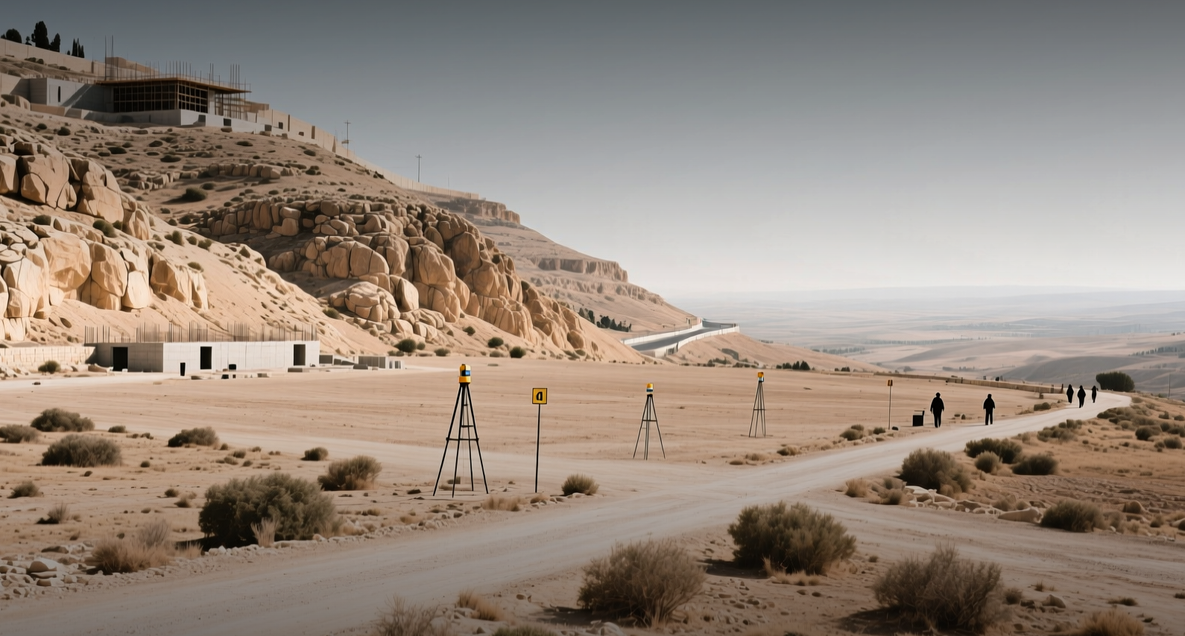
Israel's Housing Ministry opened a tender for 1,234 settlement units in the E1 corridor on 18 August without notifying the state's own legal team, triggering a court challenge and coordinated sanctions threats from 18 Western governments.
"The government is executing a last-minute maneuver to lock in construction contracts before the elections," said Peace Now, the Israeli settlement watchdog, which described the move as a "scorched-earth policy."
The tender covers roughly one-third of the 3,401 units approved under the broader E1 project spanning 12 square kilometers between Jerusalem and Ma'ale Adumim. Bids close 19 October, one week before Israel's 27 October general election.
The UK, France, Germany, Italy, Netherlands, Norway and Canada warned of "serious breaches of international law," with the UK planning sanctions and a Dutch boycott set to begin next month. The ICJ's July 2024 advisory opinion declared the occupation unlawful, yet no enforcement mechanism has followed.
The procedural breach compounds the substantive dispute. Haaretz revealed on 24 August that lawyers in the Israeli State Attorney's Office representing the government in pending litigation were not informed the tender would be opened, despite a 19 July commitment to notify petitioners in advance. The State Attorney's Office had told petitioners on 19 July that no E1-related tender was expected within the following two or three months. Roughly one month later, the tender was opened without notice — petitioners learned about it from the official public announcement celebrating its publication rather than through the promised legal notification.
The Jerusalem District Court had ordered the state to submit a detailed response by 1 September in a case filed by Palestinian Bedouin communities and three Israeli organizations — Peace Now, Ir Amim and Bimkom — represented by attorney Michael Sfard. The court rejected the state's request to dismiss the petition on 15 June. The procedural contradiction is striking: the tender was opened before the state submitted the detailed response ordered by the court.
The 1,234 units represent only part of the E1 project. The broader plan includes 1,228 units under Plan 420/4/7 and 2,173 units under Plan 420/4/10, plus a 1,355-dunam employment and commercial zone east of Anata and al-Za'im. Peace Now warns the combination of housing, road infrastructure and the so-called "Sovereignty Road" could close approximately 3 percent of the West Bank to Palestinians, severing the territorial corridor connecting Ramallah, East Jerusalem and Bethlehem. The project is also closely tied to the future of Palestinian Bedouin communities, most prominently Khan al-Ahmar, whose potential evacuation Peace Now links to reshaping the geographic space surrounding E1.
Human Rights Watch added a commercial dimension on 19 August, warning that companies bidding in the tender may face complicity risks and legal consequences. This follows May warnings from Canada, Australia and Germany about "legal and reputational consequences" for firms participating in E1 construction. More than 100 former diplomats from the UK and France signed a joint letter urging both governments to suspend the EU-Israel Association Agreement and Britain's trade agreement with Israel, ban settlement trade, and criminalize the purchase of homes in illegal settlements.
The sanctions threat carries real economic weight. The UK said it will soon impose sanctions, and a Dutch boycott begins next month. European Commission President Ursula von der Leyen called the measure "unacceptable," while UK Foreign Secretary Ed Miliband described it as an "unacceptable and destructive act." Israeli Foreign Minister Gideon Saar rejected the criticism, arguing Britain has no basis to dictate where Jews can live. Palestinian Ambassador to the UN Riyad Mansour labeled the decision "extremely dangerous, irresponsible, and threatening."
The timing is deliberate. Peace Now believes the government split the tender — issuing a new one for 1,234 units rather than reopening the previous tender covering all 3,401 — to allow contracts to be awarded before the elections, making it harder for a future government to reverse the project. Finance Minister Bezalel Smotrich said last year that "the Palestinian state is being erased from the table, not with slogans, but with actions."
The last time settlement expansion drew this level of coordinated Western response was the 2020 annexation push, which triggered similar joint statements but ultimately stalled. The difference now is the ICJ's 2024 advisory opinion declaring the occupation unlawful, which has given European governments legal cover for sanctions that previously lacked a firm basis. Whether the UK and Dutch measures materialize before the 1 September court deadline will test whether legal rulings can translate into economic consequences.
This article is for informational purposes only and does not constitute investment advice.
