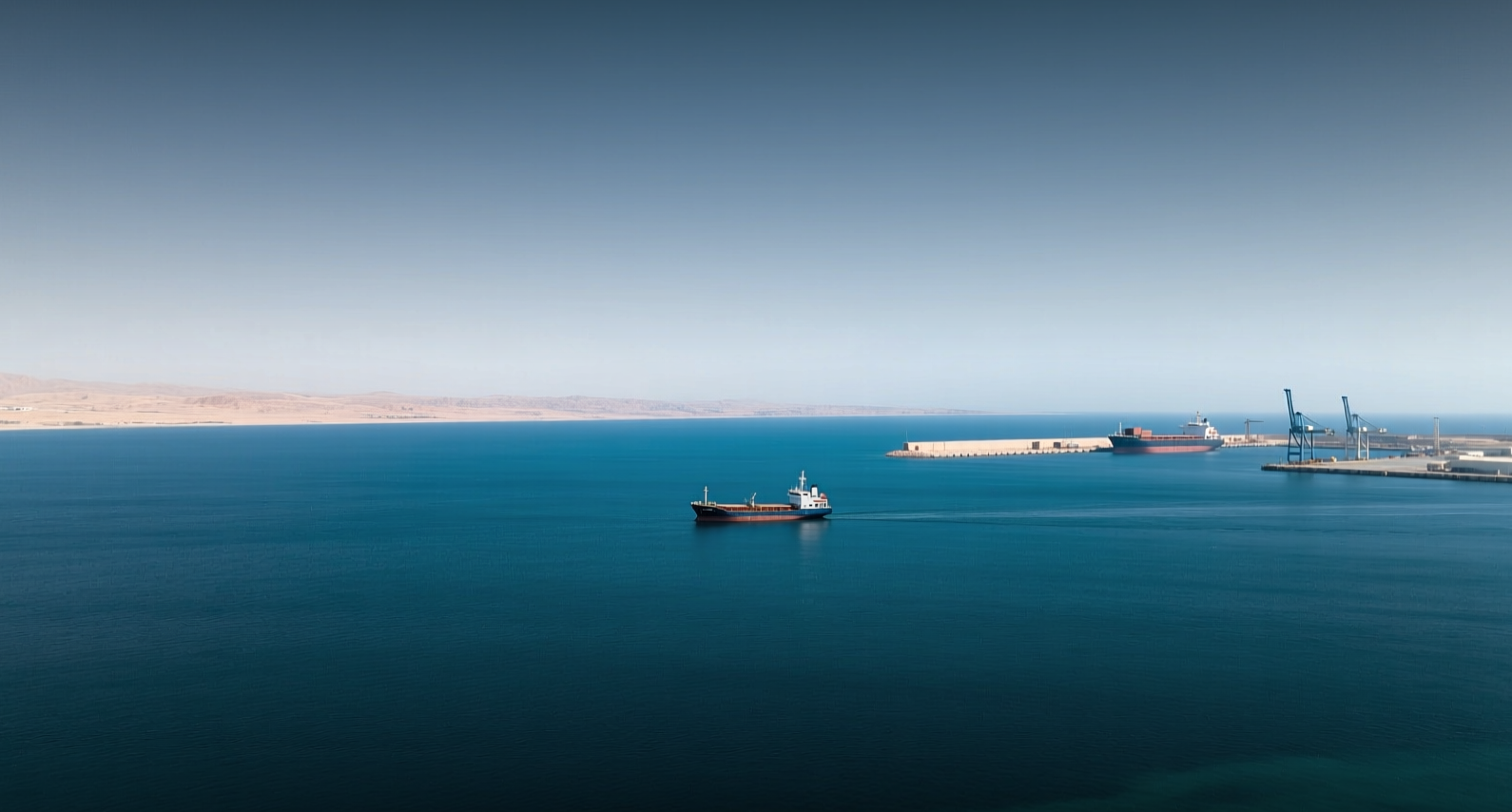
Air defense sirens in Jordan's Aqaba and Mafraq on Sept. 1 signal the Middle East conflict is spreading to the Red Sea corridor, where alternative oil export routes have become the region's lifeline since the Strait of Hormuz disruption.
Air defense sirens sounded in Jordan's Aqaba and Mafraq on Sept. 1, widening the Middle East conflict toward the Red Sea corridor and threatening alternative crude routes that carry up to 7 million barrels a day.
"The disruption is the largest on record," the International Energy Agency said in its latest oil market report, calling the loss of Hormuz flows bigger than the oil shocks of the 1970s and the loss of Russian pipeline gas combined. The Jordan alert extends that supply risk to the Red Sea, where Saudi Arabia's East-West pipeline delivers crude to the port of Yanbu.
The sirens, reported by Jordanian state broadcaster Almamlaka, came as the U.S.-Israeli war with Iran has already shut down most shipping through the Strait of Hormuz, the world's most important oil chokepoint. Saudi Arabia's 1,200-kilometer East-West pipeline can move up to 7 million barrels per day to the Red Sea port of Yanbu, with effective exports estimated at around 4.5 million barrels per day. The UAE's Habshan-Fujairah pipeline, commissioned in 2012, adds 1.5 million to 1.8 million barrels per day of capacity outside Hormuz, though loadings at Fujairah have been hit by drone attacks since the war began in late February.
Aqaba sits at the northern tip of the Red Sea, a chokepoint for crude moving from Yanbu toward the Suez Canal and Europe. Any disruption there would compound the largest supply shock on record, pushing Brent crude higher and accelerating flows into safe-haven assets. The proposed 1 million barrel-per-day Iraq-Jordan pipeline, which would ship Basra crude to Aqaba, remains stalled by cost and security hurdles — a reminder that the Red Sea route is both the region's backup and its most exposed flank.
Red Sea Route Becomes the Region's Lifeline
The Jordan alert comes at a moment when the region's alternative export routes are already under strain. Two tankers carrying Saudi oil were attacked in the Strait of Hormuz, and oil prices have climbed repeatedly as U.S.-Iran fighting raises fresh supply fears. The Kirkuk-Ceyhan pipeline, Iraq's main northern export route, restarted last September after a two-and-a-half-year shutdown and is pumping 170,000 barrels per day, with plans to reach 250,000 barrels per day.
Iran's Goreh-Jask pipeline, with 1 million barrels per day of capacity, offers Tehran a bypass of the Strait, though the Jask terminal is not fully complete. The IEA noted that a loading from Jask was tested in 2024. A proposed Iraq-Oman pipeline from Basra to the port of Duqm remains at an early conceptual stage, with routes under study including an overland line or a costly subsea option. A canal bypassing Hormuz through the Hajar Mountains toward Fujairah remains purely conceptual, with engineering challenges that could cost hundreds of billions of dollars.
Markets Price a Wider War
The escalation in Jordan adds a new dimension to the conflict. Aqaba is Jordan's only port and a key entry point for the country's imports, including fuel. The last time the Red Sea corridor faced sustained attacks was during the Gaza war, when Houthi militants targeted tankers transiting the Bab el-Mandeb strait, forcing shipping companies to reroute around the Cape of Good Hope and adding weeks to transit times.
For markets, the Jordan alert reinforces the bearish sentiment already priced into crude. Brent crude has climbed as the Hormuz disruption tightened supply, and any further escalation toward the Red Sea would push prices higher. Safe-haven assets including gold and the U.S. dollar have drawn inflows as investors hedge against a wider regional war. Regional equities and airlines face the most direct exposure, with carriers already rerouting flights away from Middle East airspace.
The question now is whether the Jordan sirens represent a one-off incident or the beginning of a broader campaign. If the conflict spreads to the Red Sea corridor, the region's backup export routes — already stretched by the Hormuz closure — would face a second front of disruption. If the alert proves isolated, markets may treat it as noise in an already volatile environment.
This article is for informational purposes only and does not constitute investment advice.