


New US tariffs on high-bandwidth memory chips are redrawing the map of global semiconductor trade, pushing South Korean producers closer to Taiwan while China's share of chip exports shrinks.
New US tariffs on high-bandwidth memory chips are redrawing the map of global semiconductor trade, pushing South Korean producers closer to Taiwan while China's share of chip exports shrinks.
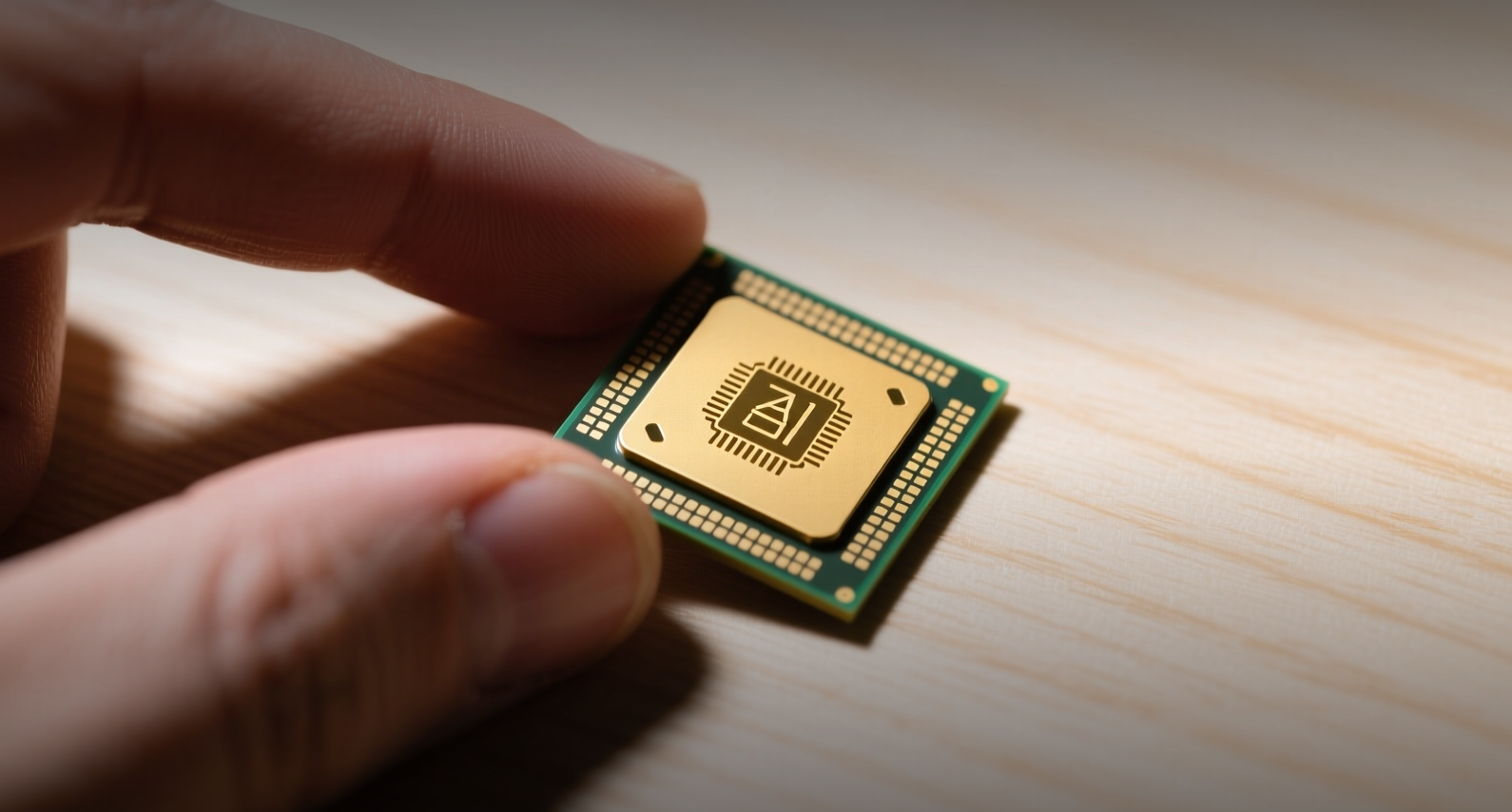
New US tariffs on high-bandwidth memory chips are accelerating a geographic realignment of the $143 billion South Korean semiconductor industry, with Taiwan supplanting China as the second-largest export destination for Korean memory producers.
"The AI supply chain is creating new trade corridors that bypass traditional tariff barriers," said a Bank of Korea economist involved in the central bank's July 27 report on manufacturing supply chains. "Memory chips now flow through Taiwan en route to US AI data centers rather than directly to Chinese device assemblers."
South Korean semiconductor exports to Taiwan nearly tripled to $36.77 billion in 2025 from $12.78 billion in 2022, boosting Taiwan's share of total Korean chip exports to 19.9% from 9%, according to the Bank of Korea. China's share fell to 40.3% from 53.1% over the same period. Domestic semiconductor production rose to 210.8 trillion won ($143.6 billion) in 2024, doubling its share of total manufacturing output to 10.1% from 5% a decade earlier.
The tariff-driven restructuring threatens to compress margins for downstream technology companies that lack pricing power, while benefiting domestic and non-tariffed memory producers such as Samsung Electronics and SK hynix. US export controls announced in December 2024 already restricted shipments of high-bandwidth memory 2 and above to China, with Samsung generating about 30% of its HBM chip sales to the country, according to Reuters.
Supply Chains Reshape Around AI Demand
The shift reflects a fundamental change in how memory chips move through global supply chains. Traditional dynamic random-access memory destined for Chinese consumer electronics factories is giving way to high-bandwidth memory and graphics processing units bound for US AI data centers. The AI semiconductor supply chain typically involves US-based Nvidia designing processors, Taiwan Semiconductor Manufacturing Co. producing and packaging them, and Samsung and SK hynix supplying the high-bandwidth memory.
This triangular flow — Korean memory to Taiwan for packaging, then to US hyperscalers — has insulated Taiwanese intermediaries from direct tariff exposure while concentrating trade volumes through a narrower set of chokepoints. The Bank of Korea report noted that greater Seoul area facilities, including Samsung plants in Hwaseong, Pyeongtaek and Giheung and SK hynix's Icheon facility, accounted for 82.3% of national semiconductor production.
Tariff Exposure Extends Beyond Memory
The trade policy shift is not confined to semiconductors. Chinese-made vehicles accounted for about 70% of South Korea's electric vehicle imports by value in 2025, up from 3.5% of total vehicle imports in 2022, as China's price competitiveness and integrated supply chain captured market share. Meanwhile, US tariffs and local production requirements pushed South Korean EV exports to the US down to 5.2% of total EV exports in 2025 from 33.6% in 2022, prompting automakers to expand US factory operations and increase hybrid vehicle exports, which rose to 20.4% of finished-vehicle exports from 11.6%.
The last time the US imposed broad semiconductor-related tariffs on Chinese-linked trade in 2022, South Korean chip exports to China fell 15% over the following 12 months while shipments to Taiwan rose 22%, according to Korea Customs Service data. The current escalation, layered on top of December 2024 Entity List restrictions covering 140 companies and HBM2+ memory, suggests the geographic rebalancing will accelerate further.
For investors, the key question is which companies command pricing power in this environment. Samsung and SK hynix, as near-duopolists in high-bandwidth memory, are well-positioned to pass through costs. Downstream hardware makers and cloud service providers face margin compression unless they can shift procurement to non-tariffed sources or pass costs to end customers. AMD's July 28 partnership with Core Scientific to secure up to 2.5 gigawatts of US data center capacity signals that major chip designers are already investing in tariff-resistant domestic infrastructure.
This article is for informational purposes only and does not constitute investment advice.
