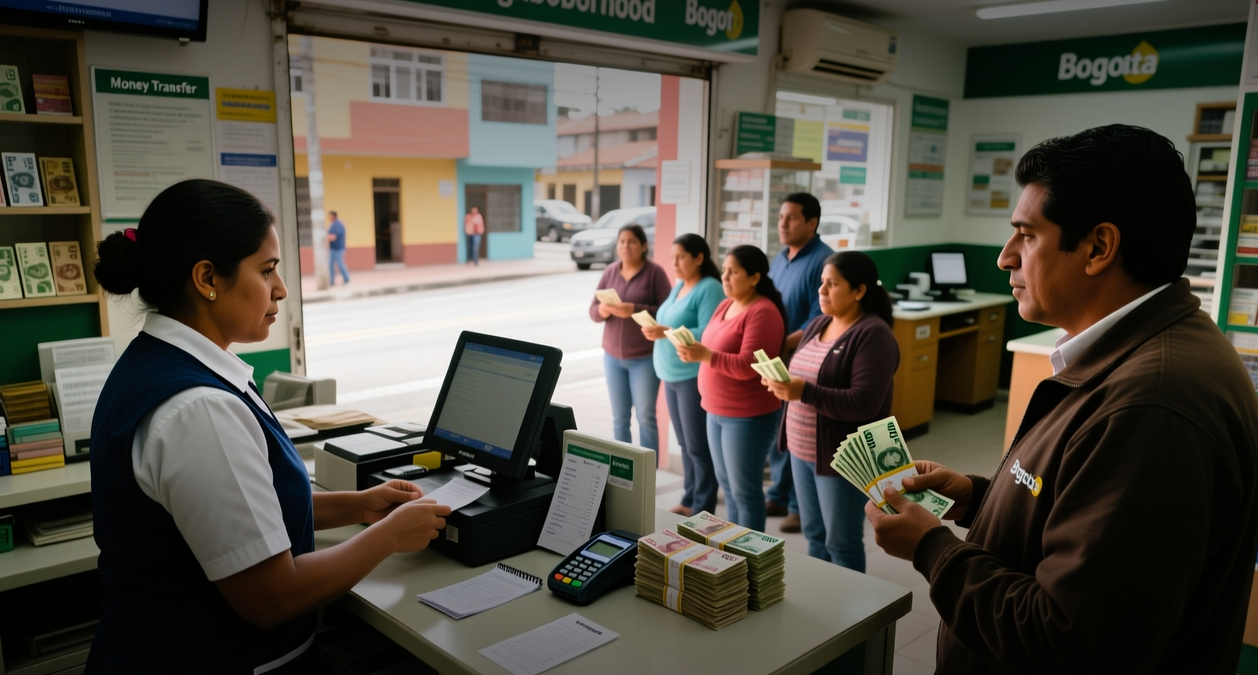
MoneyGram began rolling out a Visa card that lets customers hold a dollar-denominated balance backed by Circle's USDC and spend it at any merchant accepting Visa, with Colombia as the first market and a physical version planned for later this year.
The MoneyGram Card is issued as a virtual card that customers can add to Apple Wallet or Google Wallet after signing up through the MoneyGram app, the company said. Users can spend online or in stores, or send funds to themselves and collect the equivalent in local currency at MoneyGram locations. MoneyGram said it will add support for its own MGUSD token after the USDC launch and expand the card to additional markets over the coming months.
"We're giving customers more freedom and control to manage their money, all in one place," Anthony Soohoo, chairman and chief executive of MoneyGram, said.
The card was built with stablecoin payments firm Rain, wallet provider Crossmint and the Stellar blockchain. Rain is also the infrastructure provider behind Stablecard, the competing product Western Union announced last month, putting the two largest remittance networks on the same rails. MoneyGram's network spans more than 60 million active customers across over 200 countries and territories and nearly 500,000 retail locations, according to company figures.
Stablecoin card spending surpassed $1.1 billion in August, according to PaymentScan data cited by CoinDesk. That figure covers a market that barely existed three years ago and remains a rounding error against the roughly $150 billion in USDC in circulation, which is the gap MoneyGram's distribution is meant to close.
The cash-to-card bridge is the part that matters
MoneyGram's differentiator is not the card itself but the cash endpoints attached to it. A customer in Bogota can receive a remittance into a USDC balance, hold it in dollars rather than converting immediately to pesos, and then either spend it on Visa's network or withdraw physical cash at a MoneyGram agent. That two-way link between digital dollars and banknotes is what most stablecoin card programs lack, and it is the reason the World Bank has flagged stablecoins as a tool for cutting remittance costs.
The economics favor cards on the receiving end. The World Bank's September 2025 analysis of remittance price trends found debit cards were the cheapest instrument for receiving remittances, at 3.61% of the amount transmitted, below bank deposits and well under cash pickup. For MoneyGram, the card also shifts revenue mix away from one-time transfer fees toward interchange and float income on balances customers leave parked in dollars.
USDC's position in the arrangement is structural rather than incidental. Circle earns reserve income on every dollar backing the token, so balances held by MoneyGram customers rather than converted at the counter translate into a larger float. The card also deepens USDC's presence on Stellar, the chain MoneyGram selected for MGUSD, which Bridge — the stablecoin infrastructure company owned by Stripe — issues. MoneyGram is separately listed as a partner in Open USD, the Stripe-led stablecoin consortium that shares revenue among backers.
What to watch
The physical card, promised for later this year, adds ATM withdrawals and is the milestone that determines whether the product reaches customers who do not use mobile wallets. Market expansion beyond Colombia is the second test: MoneyGram has not disclosed which countries come next, nor transaction volumes for the card, leaving the revenue contribution unquantified for now.
Competitive pressure runs in both directions. Western Union's parallel launch with Rain means the two remittance leaders are racing to convert the same corridor flows, while Visa and Mastercard both continue to build stablecoin settlement capabilities that could eventually disintermediate the card issuers themselves. Circle's USDC traded at $1.0008 as of Sept. 10, holding its peg.
This article is for informational purposes only and does not constitute investment advice.