

Nvidia is paying $6 billion to license Poolside AI's model software and hiring 109 of its employees, in a deal that sidesteps a traditional acquisition.
Nvidia is paying $6 billion to license Poolside AI's model software and hiring 109 of its employees, in a deal that sidesteps a traditional acquisition.
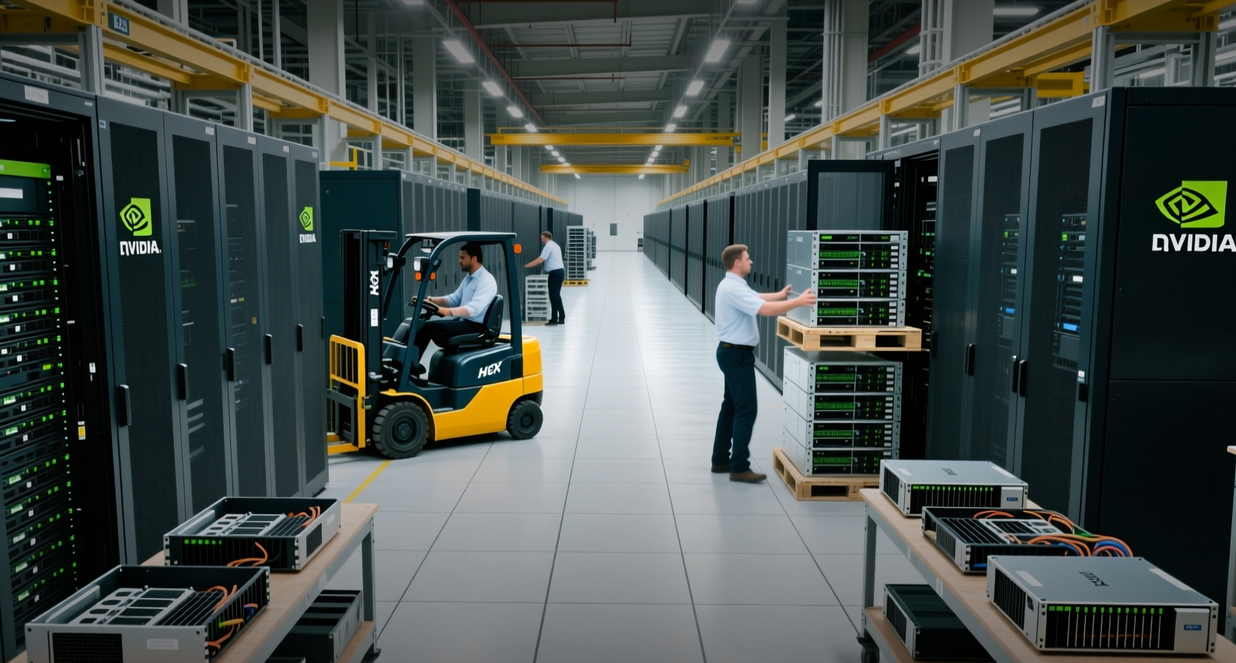
Nvidia will pay $6 billion to license Poolside AI's model-development software and invest $1 billion in the startup, locking in access to open-weight coding models as it deepens its push into AI software.
The arrangement is not an acquisition or an acquihire, Poolside said in a letter to investors, adding that its three co-founders will remain with the company.
The $6 billion licensing fee and the $1 billion investment are separate, according to people familiar with the matter. Nvidia will make job offers to 109 Poolside employees involved in developing Laguna, the startup's open-weight agentic coding model, and will license its Model Factory software. Poolside, which has offices in the US and Paris, builds AI models for computer-programming automation, with a focus on government and defense software.
Nvidia, the world's most valuable company, is accelerating capital deployment into AI to secure demand for its chips and computing systems. The deal follows similar license-and-hire structures with Groq and Enfabrica, drawing criticism from legislators who say such arrangements bypass merger antitrust review.
Nvidia has used the structure repeatedly. It reportedly paid about $20 billion for a non-exclusive license to Groq's chip design and hired the startup's founder and most of its team, while Groq continued to operate independently. It spent more than $900 million to license technology from AI hardware startup Enfabrica and hire its CEO and other employees. In June it acquired predictive AI software startup Kumo AI for $400 million, and in December 2025 it bought SchedMD, the developer of the open-source Slurm workload-management software.
The $6 billion license is among the largest such arrangements Nvidia has struck, exceeding the roughly $900 million it paid for Enfabrica's technology and the $400 million for Kumo AI. Poolside said it needed more access to Nvidia hardware than was possible on its own to keep competing in open-source model development, according to the investor letter. The startup raised a $500 million Series B in October 2024 led by Bain Capital Ventures.
The deal gives Nvidia a foothold in agentic coding models, a slice of the AI market where startups such as OpenAI and Anthropic also compete. Poolside's Laguna family targets software developers, and its focus on government and defense applications aligns with Nvidia's push to expand AI beyond consumer and enterprise use. By licensing rather than acquiring, Nvidia keeps Poolside independent while securing the software and the engineers who built it.
The $1 billion investment at a $12 billion pre-money valuation marks a sharp step up from Poolside's prior funding, reflecting surging demand for coding automation tools. Existing Poolside shareholders will receive a dividend from the Nvidia proceeds, according to the investor letter.
The deal structure has drawn questions from lawmakers who argue that licensing agreements in place of direct acquisitions let companies avoid antitrust review. As Nvidia's deals of this type multiply, the regulatory pressure is likely to grow.
For investors, the $7 billion combined commitment shows Nvidia's willingness to pay up for AI software and talent rather than build in-house. Nvidia's strategy of supporting open-source models aims to spread AI adoption across the economy and avoid concentrating AI products in a few large companies. The company, based in Santa Clara, California, offers a portfolio spanning AI models, data, and proprietary software beyond its chips.
This article is for informational purposes only and does not constitute investment advice.
