
A Bavarian Supreme Court hearing on tent-bidding rules and a grassroots brewery petition are converging on Munich's festival vendor policy just days before the gates open.
A Bavarian Supreme Court hearing on tent-bidding rules and a grassroots brewery petition are converging on Munich's festival vendor policy just days before the gates open.
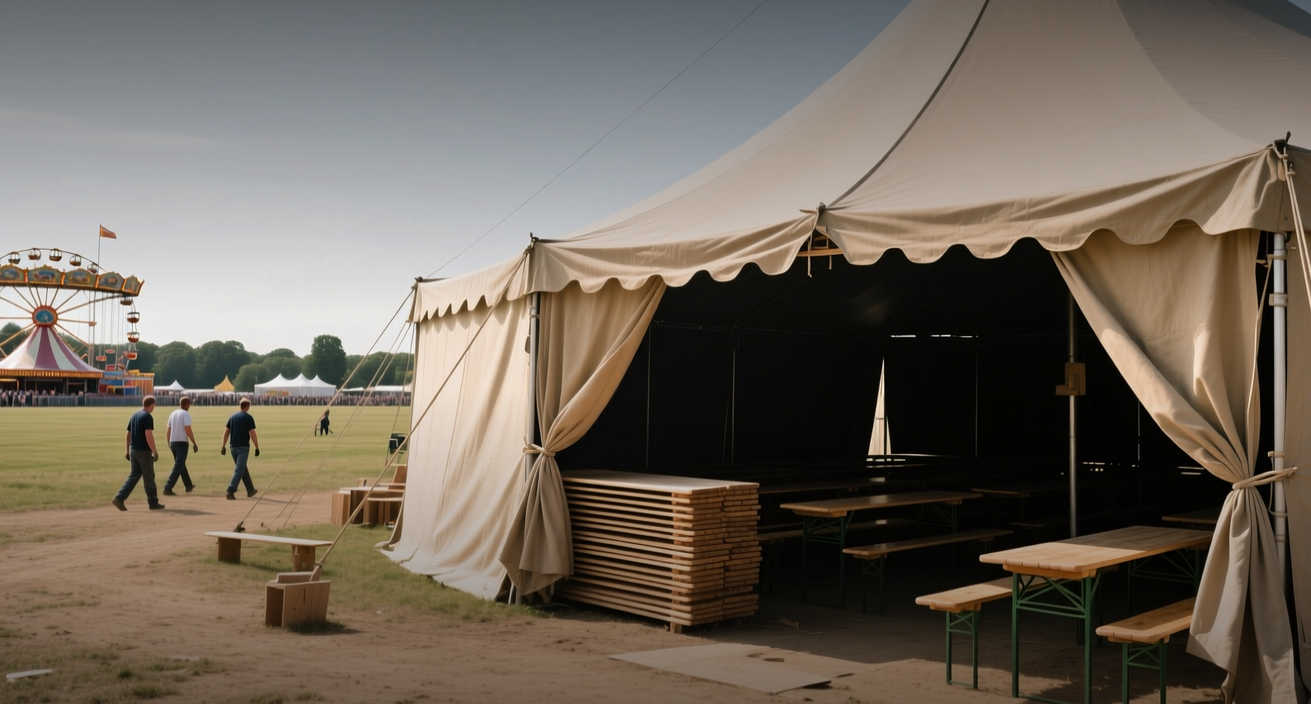
Eight days before 6.7 million visitors and an estimated $1.8 billion arrive on the Theresienwiese, Munich's six-brewer Oktoberfest beer monopoly faces a Sept 11 court ruling on tent bidding and a referendum at 21,000 of 35,000 signatures.
"It's the hardest battle you can fight in Munich," said Steffen Marx, founder of Giesinger Bräu, who raised €12.4 million to dig a well on his brewery lot next to a BMW battery research facility so his beer could qualify under the city's 1487 purity law.
The festival pours roughly €101 million of beer across 6.5 million liters at an average €15.61 per Maß — about 6 percent of the $1.8 billion economic impact. Volume has fallen 12 percent in two years, from 7.4 million liters in 2023 to 6.5 million in 2025, with price doing the work volume used to do.
The court case and referendum attack the same structure from different angles: a vendor-selection policy that awards tent access on tradition points and beer access on local ownership, shutting out newcomers even when they meet the purity standard. A ruling against the city, or a successful referendum, would crack open a market closed for decades.
Munich permits only "established and reputable" breweries that source barley, hops and water from within city limits under a purity standard traced to 1487. Of the six that qualify, only Augustiner — privately held by the Wagner family since 1829 — matches the local-ownership postcard. Spaten and Löwenbräu belong to AB InBev through Interbrew's 2003 purchase of the Spaten-Franziskaner-Löwenbräu group. Paulaner and Hacker-Pschorr sit inside the Paulaner Brauerei Gruppe, 70 percent Schörghuber and 30 percent Heineken. Hofbräu has been owned outright by the state of Bavaria since 1939.
German antitrust lawyer Fabian Vetter called the arrangement a "sketchy syndicate," noting the Bavarian state itself participates because it owns Hofbräu. The precedent for challengers is brutal. Prince Luitpold of Bavaria, whose family invented Oktoberfest for a royal wedding in 1810, sued alleging a cartel after the city refused his portable brewery and then his permanent Munich park brewery. A court ruled against him in 1990.
The tent tender is where exclusivity becomes legally binding. Structures larger than a football field, several stories tall and seating 8,000 people are awarded through a scoring process that grants points for how long a family has run a tent. Münchner Stubn, a local restaurant, sued the city in May after losing bids on the larger tents, alleging the process favors incumbents. The Bavarian Supreme Court hears the case Sept 11.
Alexander Egger, Münchner Stubn's CEO, wants bidding opened to vendors across the European Union, arguing it would increase competition and lower prices. Last year some tents including his charged €15.80 for a liter — about 30 percent more than typical Munich city-center prices, or roughly €20 million of location premium on 2025 volumes.
The suit has stoked fears among incumbent operators that foreign management could bring foreign beer and food. "Wouldn't it be a horror vision if we had to drink little glasses of Kölsch, or if döner kebab and pizza were on every corner of the festival grounds?" Christian Schottenhamel, whose family has operated Oktoberfest's oldest tent since 1867, asked in a May Instagram video.
Christian Scharpf, Munich's head of labor and economic affairs who oversees the festival, said the beer rules and bidding process have both been upheld in court before. German antitrust lawyer Lukas Kestler said Munich is entitled to set rules for its own festival and pick suppliers who comply, and it is not a cartel when participants did not write the rules.
The tradition being defended is younger than it looks. Beer from outside Munich was welcome for much of the 19th century, and dirndls and lederhosen only became the dress code in the 1990s, said Andreas Krennmair, an Austrian beer historian.
Marx knows that winning access could cost Giesinger its identity. "If we reach our goal to go to Oktoberfest, it's not the rebel brand anymore," he said. "Maybe people won't like us anymore."
The Sept 11 ruling and the referendum drive will determine whether Munich's vendor-selection model survives. If the court strikes down tradition-weighted bidding, or voters approve Giesinger's entry, the six-brewer cartel loses its legal shield — and the festival's economics shift from access rents to open competition.
This article is for informational purposes only and does not constitute investment advice.
