

Ray Dalio's 1% Bitcoin allocation sits at the conservative end of a Wall Street spectrum that now runs from 1% to 100%.
Ray Dalio's 1% Bitcoin allocation sits at the conservative end of a Wall Street spectrum that now runs from 1% to 100%.
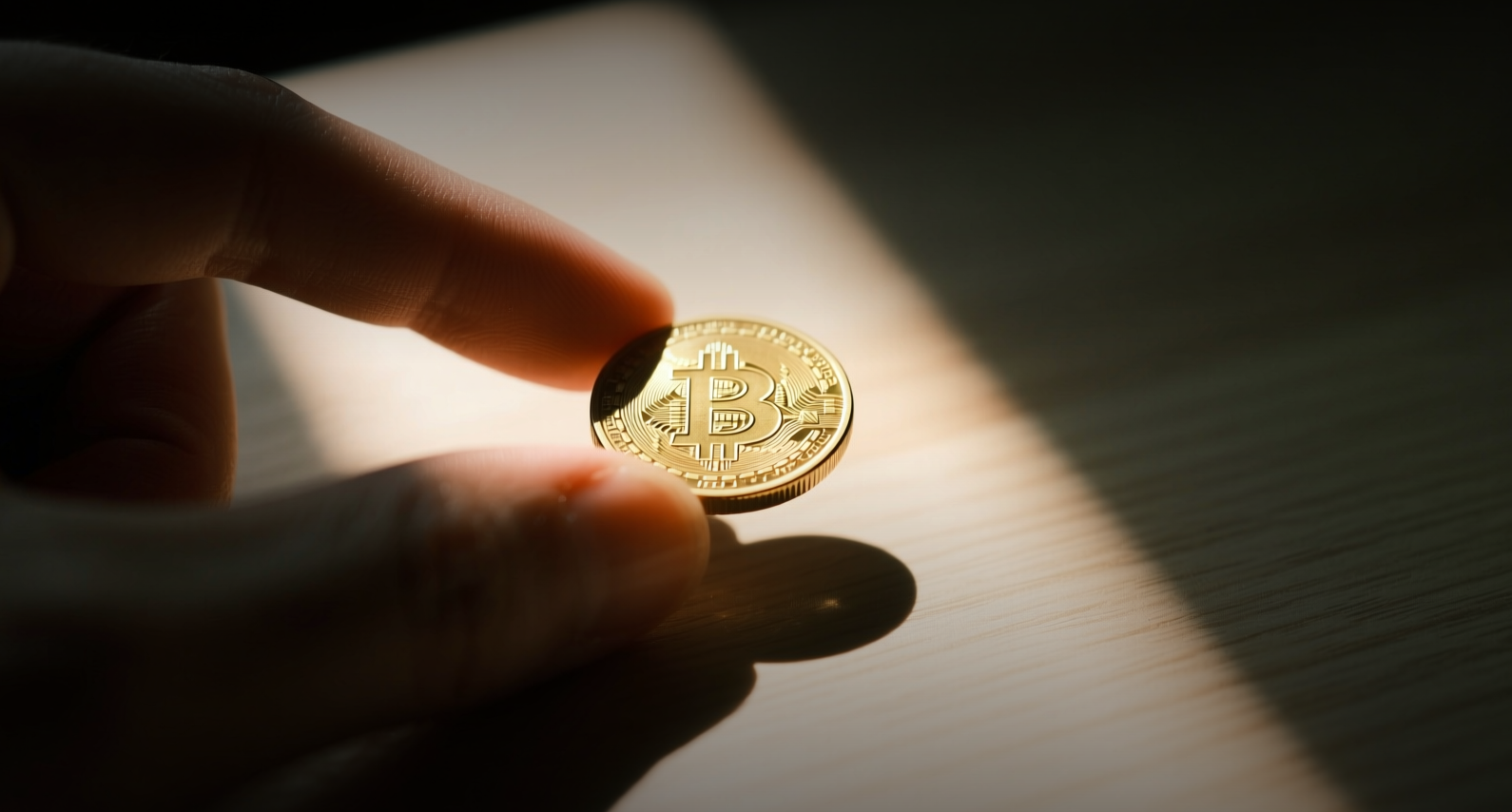
Billionaire hedge fund founder Ray Dalio holds 1% of his portfolio in Bitcoin, citing its fixed 21 million-coin supply as protection against sovereign money printing.
"There's no sovereign government that can inflate away the value of Bitcoin," Dalio said in a recent interview, while still preferring physical gold as the safer hedge.
The Bridgewater Associates founder's stake lands at the low end of a debate that has split Wall Street. BlackRock's Investment Institute recommends 1% to 2% of a multi-asset portfolio, JPMorgan endorses up to 1%, Fidelity's research suggests 2% to 5%, and ARK Invest's Cathie Wood has modeled an optimal 19.4%.
The stakes are large: the four largest U.S. wealth platforms — Morgan Stanley, Wells Fargo, UBS and BofA Securities — manage roughly $20 trillion, and a 1% to 2% crypto allocation in their model portfolios would channel hundreds of billions into the asset.
The 1% to 5% consensus
Dalio's 1% stake aligns with the floor set by the world's largest asset managers. BlackRock's December 2024 paper "Sizing Bitcoin in Portfolios" found that at 1% to 2%, Bitcoin's share of portfolio risk lands between 2% and 5%, comparable to an average "Magnificent Seven" tech stock. Push the allocation to 4%, and Bitcoin suddenly accounts for roughly 14% of total portfolio risk.
JPMorgan's research team formally endorsed up to 1% as providing an efficiency gain in risk-adjusted returns, while its Private Bank calls Bitcoin suitable only as a "satellite allocation" for aggressive investors.
Multiple independent analyses from Fidelity, Bitwise, Grayscale and VanEck converge on the 2% to 5% range, with 5% frequently identified as the point where risk-adjusted returns peak before diminishing. Fidelity's institutional research, updated in August 2025, recommends 2% to 5%, with an allowance up to 7.5% for younger investors. Bitwise CIO Matt Hougan identifies 5% as optimal, noting that "something notable happens at around that level" — crypto becomes the primary driver of the portfolio's maximum drawdown.
The aggressive camp
At the far end sits Michael Saylor, whose Strategy has converted its entire corporate treasury to Bitcoin. The company holds 761,068 BTC worth roughly $55 billion, purchased at an average cost of $66,385 and funded in part by $8.2 billion in debt. Saylor's effective recommendation for corporate treasuries is 100% of excess cash.
Ric Edelman, founder of Edelman Financial Engines, recommends 10% for conservative investors, 25% for moderate investors and up to 40% for aggressive investors, projecting $500,000 Bitcoin by the end of the decade. ARK Invest's mean-variance optimization found the optimal allocation was 19.4% in 2023, up from 6.2% in 2022.
Bitcoin's quantitative profile explains both the enthusiasm and the caution. From 2015 through mid-2025, the asset returned a cumulative 33,858% versus 264% for the S&P 500 and 114% for gold. But its four major peak-to-trough declines have averaged roughly 85%, and annualized volatility sits near 52% to 54%, roughly 3.5 to 5 times that of the S&P 500.
The Bitcoin-gold correlation remains structurally low at around 0.06, suggesting the two assets are complementary rather than substitutes. During S&P 500 drawdowns exceeding 12%, gold has averaged a positive 4.7% return while Bitcoin has averaged negative 35.3%.
Dalio himself warns of the "quantum threat" to Bitcoin if quantum computers ever break its cryptography, one reason he still prefers physical gold. For investors weighing an allocation, the asymmetry of regret cuts both ways: at 1% to 3%, a total loss barely registers, while a tenfold gain captures meaningful upside. At 20% or more, an 80% drawdown devastates wealth.
This article is for informational purposes only and does not constitute investment advice.
