
Water levels at Kaub, the Rhine's shallowest point, have fallen to their lowest since records began in 1880, halting most sailings through Germany's industrial heartland.
Water levels at Kaub, the Rhine's shallowest point, have fallen to their lowest since records began in 1880, halting most sailings through Germany's industrial heartland.
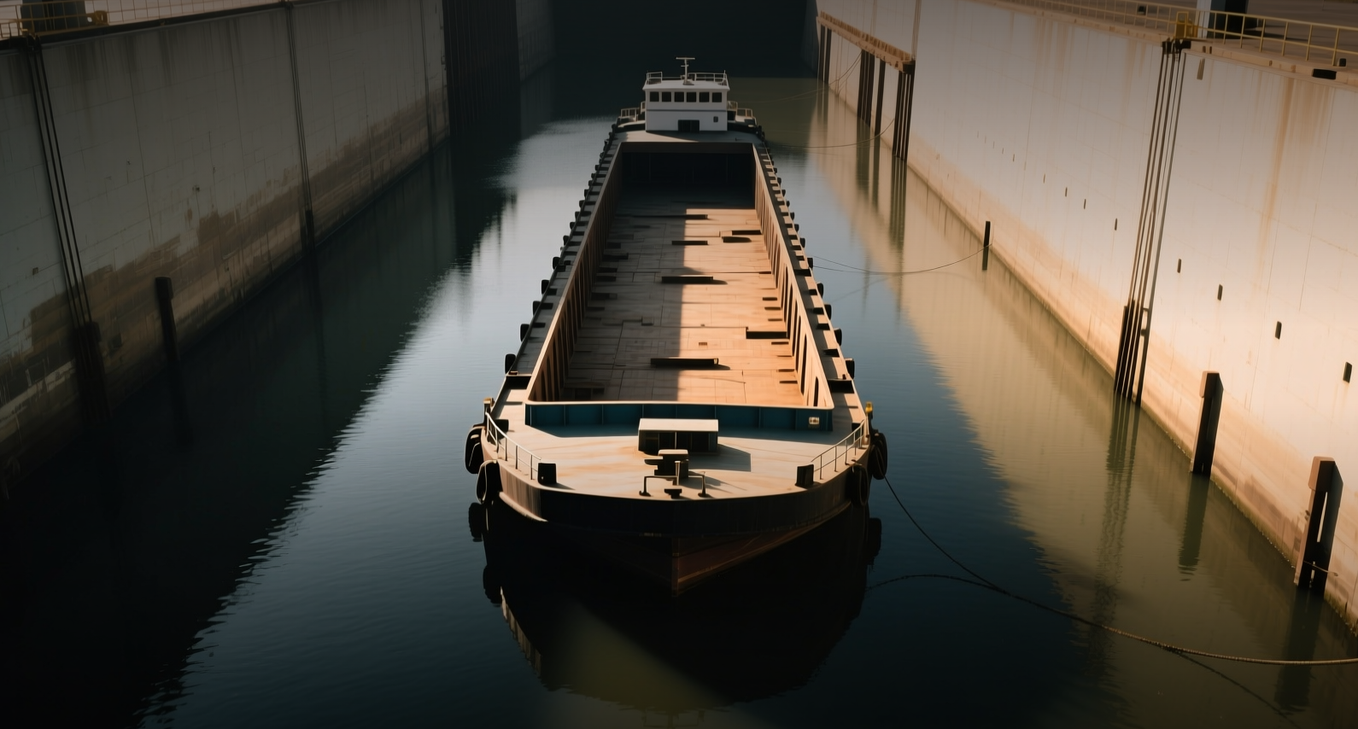
Water levels at Kaub, the Rhine's shallowest point, have fallen to a record low since 1880, forcing cargo vessels to cut loads by about 80 percent and halting most sailings through Europe's industrial heartland.
"Barges positioned on the Upper Rhine are unable to return to the ARA region, and barges from the ARA are unable to proceed further upstream," Riverlake, a shipping broker, said in a note Tuesday, referring to the Antwerp-Rotterdam-Amsterdam hub.
The gauge at Kaub fell to 14 centimeters, corresponding to a navigable fairway depth of about 1.27 meters, and forecasts from the Federal Waterways and Shipping Administration show it could drop to 9 centimeters by Friday. The previous record low was 25 centimeters on Oct. 22, 2018.
If water remains critically low through mid-September, it would shave about 0.35 percentage point from Germany's gross domestic product this quarter, Commerzbank estimated. Forecasters say it would take weeks of sustained rain to lift the river, meaning the crisis could drag into October.
The Rhine connects Switzerland to Rotterdam, the continent's busiest port, and carries commodities from diesel, heating oil and coal to grains and cocoa. The disruption is forcing companies from steelmaker Thyssenkrupp AG to chemicals makers BASF SE, Lanxess AG and Evonik Industries AG to shift freight to rail and road.
"Shipments by ship are severely restricted, with vessels carrying significantly lighter loads than usual," Lanxess said Tuesday. "As certain loading and unloading points are no longer accessible, we are switching to rail and road transport where possible."
Trucking can only partly replace the lost capacity. Covestro AG, a maker of polymers and high-performance plastics, said it takes 60 trucks to replace a single barge with a load capacity of 1,500 metric tonnes, and the shortfalls are already affecting raw material supplies and production at individual sites. German utility EnBW estimated the disruption will reduce its earnings by a low double-digit-million-euro figure.
Sunday Trucking Ban Lifted as Rail, Road Strain
To ease bottlenecks, German states including Schleswig-Holstein, Hesse, North Rhine-Westphalia and Rhineland-Palatinate have temporarily lifted a ban on trucking on Sundays and public holidays. The ADAC motoring club said the low water is pushing up fuel prices at the pumps because barges are well suited to moving oil, gasoline and diesel, with logistics costs for fuel transport rising "drastically in some cases," according to fuel market expert Christian Laberer.
Fifth Heat Wave Deepens Drought Across Europe
Sparse rainfall and unrelenting heat have strangled the basin that feeds the Rhine, depleted by reduced runoff from Alpine snow and glaciers, said David Hannah, a professor of hydrology at the University of Birmingham. Europe is bracing for its fifth heat wave of the summer, with temperatures forecast to peak over the weekend in France, Germany and Poland.
The Danube is battling similar conditions. A rebound from record lows allowed Hungary to slightly increase electricity production at its Paks nuclear plant Monday, though Prime Minister Peter Magyar warned engineers were ready to wind down turbines again if needed.
The last time the Rhine fell to such critical levels was in 2018, when a prolonged drought cut German industrial output and cost the economy an estimated 0.4 percent of GDP. With no meaningful rain forecast before October, companies face weeks of elevated transport costs and potential production cuts, Thomas Puls, transport expert at the German Economic Institute, told the Rheinische Post.
This article is for informational purposes only and does not constitute investment advice.
