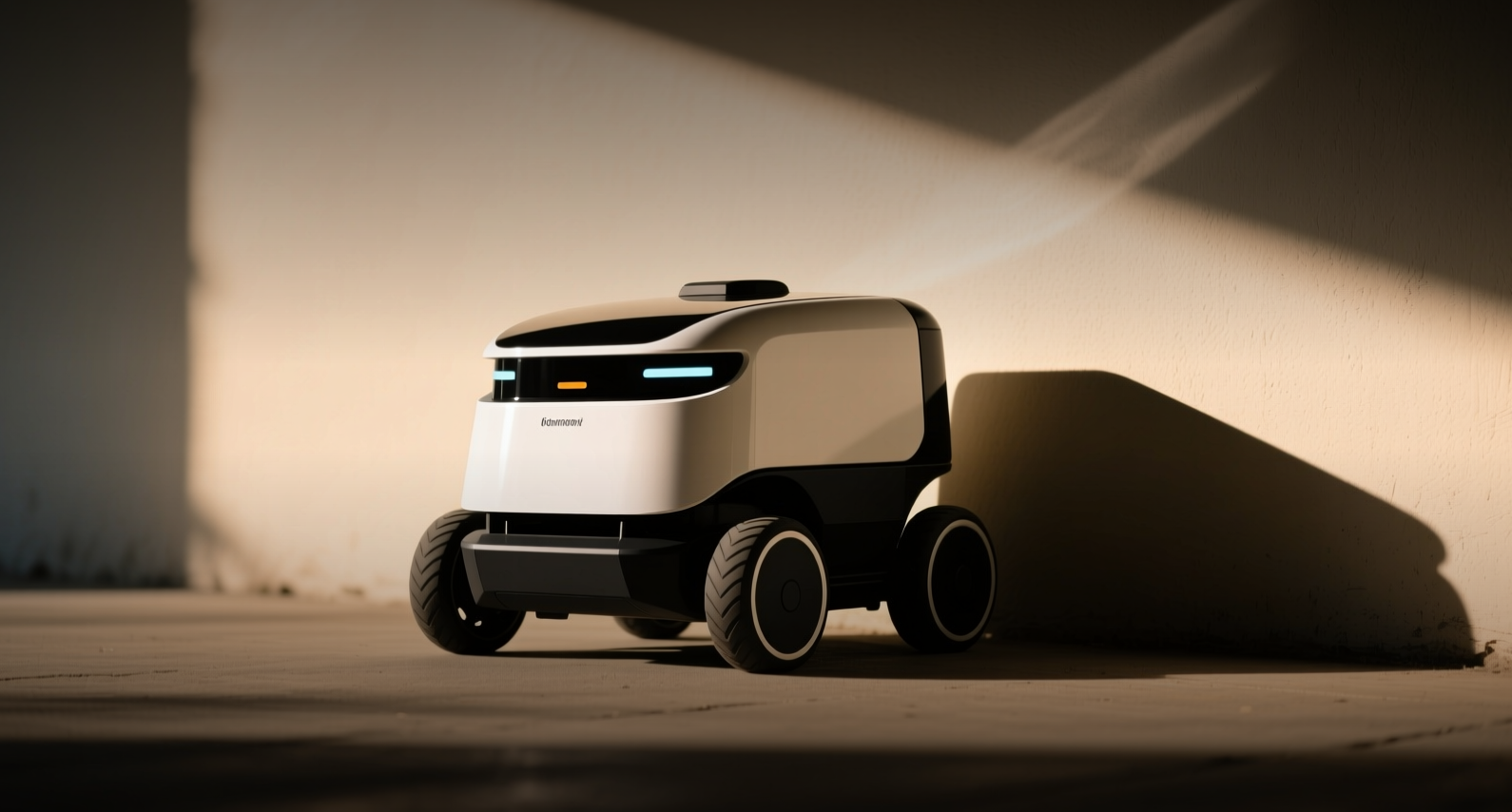
Serve Robotics cut its 2026 revenue guidance to $9-10 million from $26 million after Uber delivery volume fell for the first time in 17 quarters.
"Based on the volume decline and our recent discussions with Uber, we don't currently expect that it would make sense to renew our agreements when it expires in early 2027," Chief Executive Officer Ali Kashani said on the earnings call.
Second-quarter revenue was $3.2 million, up 404 percent year over year and 9 percent sequentially, but missed the $3.54 million consensus. The non-GAAP net loss widened to $47.1 million, or 59 cents a share, from $20.9 million a year earlier, while the reported loss of 80 cents a share came in wider than the 69-cent estimate. The company also cut its non-GAAP operating expense outlook to $140-150 million from $160-170 million and trimmed planned capital expenditures to $15-17 million from $25 million.
Shares fell 13.9 percent after the report. Serve ended the quarter with $240.4 million in cash and marketable securities and said it will announce a new delivery marketplace partner on Aug. 17 as it shifts fleet capacity toward DoorDash, advertising and hospital robotics.
Uber volume reversal drives the reset
Kashani attributed the first quarterly decline in Uber delivery volume since the first quarter of 2022 to lower-than-expected robot utilization, citing differing views on fleet coordination and merchant integration rather than weaker customer demand. Chief Financial Officer Brian Read said the decline "was a real in-quarter decline, not just a slower future ramp," which led to the removal of the second-half ramp assumed in the prior outlook.
The company is reallocating capacity to channels with clearer demand. DoorDash delivery volume grew nearly 50 percent sequentially in the second quarter, with another 50 percent growth between June and July. Advertising accounted for nearly half of robotic food-delivery revenue, and recurring revenue exceeded 50 percent of total revenue, supported by seven multiyear hospital contract extensions and two new hospital contracts signed in the first half.
Serve introduced Beacon, a cellular countertop device that connects restaurants directly to its network without requiring internet or point-of-sale integration, targeting the roughly two-thirds of delivery orders currently blocked by back-of-house barriers. The fleet stands at 2,000 robots across more than 40 cities, with daily active robots averaging 792 in the quarter, down from 812 in the first quarter.
The guidance cut signals management expects the Uber channel to keep shrinking as the agreement winds toward its early-2027 expiry. Investors will watch the Aug. 17 summer announcement for the new marketplace partner and two market launches that will test whether diversified channels can offset the lost Uber volume.
This article is for informational purposes only and does not constitute investment advice.