


SpaceX, AST SpaceMobile, and Rocket Lab all slipped Monday as investors priced execution risk over policy optimism from Trump's 1,000-launch-by-2030 memo.
SpaceX, AST SpaceMobile, and Rocket Lab all slipped Monday as investors priced execution risk over policy optimism from Trump's 1,000-launch-by-2030 memo.
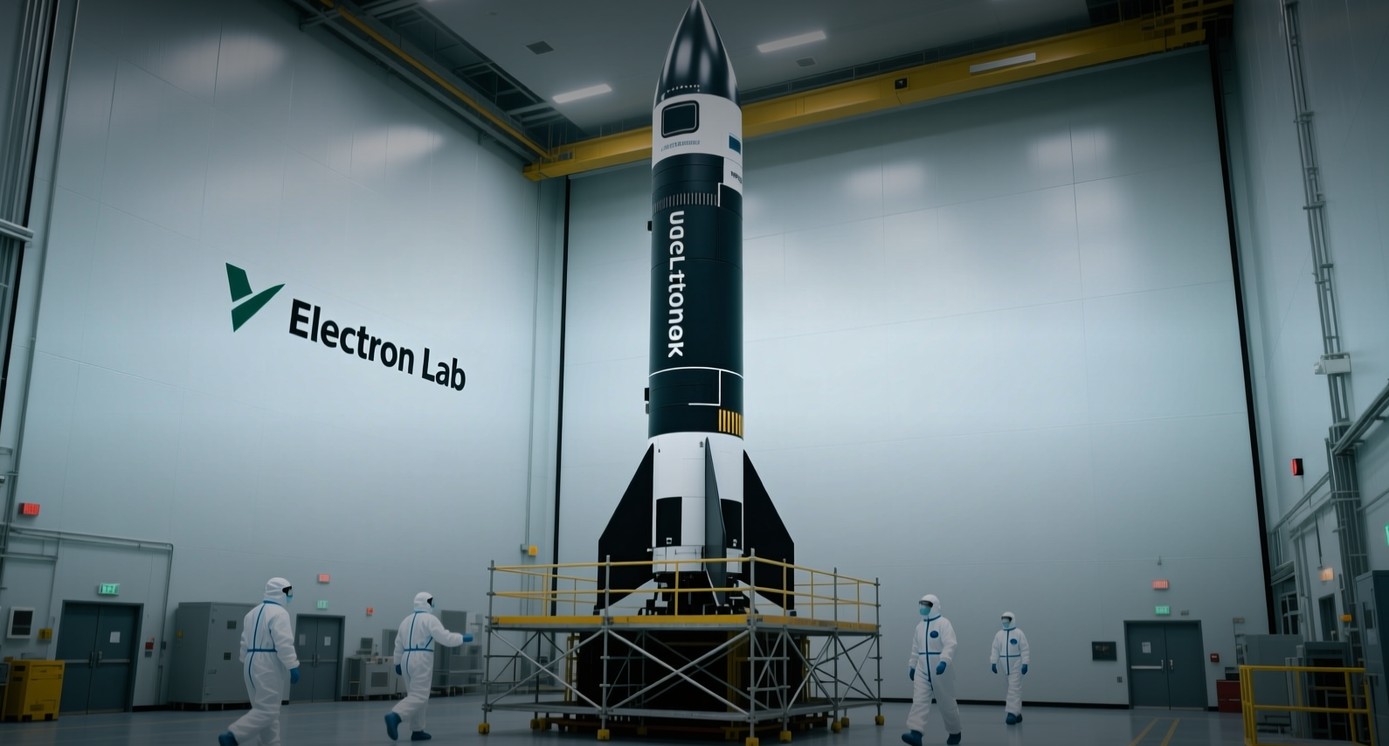
Space equities slipped Monday as SpaceX fell 3% to $133.48 and Rocket Lab slid 2% to $71.22, despite Trump's 1,000-launch order.
"The path to positive EBITDA is very clear. It's really getting that first Neutron launch off," said Adam Spice, chief financial officer at Rocket Lab.
AST SpaceMobile dropped 3% to $66.85, extending a slide that has surprised bulls counting on federal launch policy to lift the group. The Procure Space ETF (UFO) fell just 0.4% to $45.75, showing broader satellite and defense holdings cushioned the sector while pure-play launch names took the hit. Intuitive Machines dropped 2% to $17.93, Planet Labs fell 2% to $21.94, and Virgin Galactic slipped 0.7% to $3.05. The S&P 500 was down 0.38% to 7,644.90, placing the space sector's decline within a broader market pullback.
The setup is a policy tailwind that doesn't take effect for years running into a hardware schedule that matters this quarter. A slip of Rocket Lab's Neutron test into 2027 would delay the company's cash-flow inflection and pressure a stock trading at 60.33 times sales.
President Donald Trump signed a memo Thursday directing federal agencies to target at least 1,000 launches and re-entries annually by 2030, per Reuters. The memo directs agencies to identify federal land for new launch and re-entry sites, name a new federal re-entry site within 90 days, expedite permitting, speed environmental reviews, and secure wireless spectrum. White House Office of Science and Technology Policy Director Michael Kratsios called it a commercial-first approach.
The angle bulls expected was a straight-line bid for launch and satellite equities. However, the market is pricing execution schedule over demand, and the 2030 target sits well beyond the near-term events investors care about today. SpaceX carried out 170 launches in 2025, illustrating how large the gap is between current industry throughput and the new 1,000-launch target. SpaceX completed two Starlink missions over the weekend, including a Falcon 9 from Vandenberg Space Force Base carrying 27 Starlink satellites, and is preparing its 14th Starship test.
Rocket Lab CFO Adam Spice said a successful Neutron test launch would flip the company meaningfully adjusted EBITDA positive the following quarter. CEO Peter Beck cautioned that "the window for an end-of-year launch is narrowing," with Neutron still targeted for fourth-quarter pad delivery.
Rocket Lab stock fell for a fourth consecutive session Friday, and Stocktwits retail positioning flipped to bearish from bullish a week earlier. Meanwhile, Rocket Lab completed Electron's 93rd flight last week, was selected by Viasat for its Lightning-GEO anti-jam Space Force communications satellite, and joined the $981 million-ceiling NITE-STAR program. None of that changes the calendar risk on Neutron, which is the event investors are actually trading around. Rocket Lab stock was up 75% over the past year through Friday's close, so a modest cooldown fits a stretched tape running into a critical hardware milestone.
Investors should consider keeping position sizes modest in the pure-play launch names until Neutron's test window firms up. Watch for Neutron pad-delivery confirmation from Rocket Lab and any near-term federal re-entry site designation, both of which would put real dates behind the launch memo. Traders may want to track whether SpaceX stock reclaims its recent range or continues to unwind post-IPO enthusiasm as retail positioning cools across the launch complex.
This article is for informational purposes only and does not constitute investment advice.
