

Tesla's two China recalls cover 5.7 million vehicles — its largest-ever action in the market — as regulators force camera-based driver monitoring and prepare to ban concealed door handles.
Tesla's two China recalls cover 5.7 million vehicles — its largest-ever action in the market — as regulators force camera-based driver monitoring and prepare to ban concealed door handles.
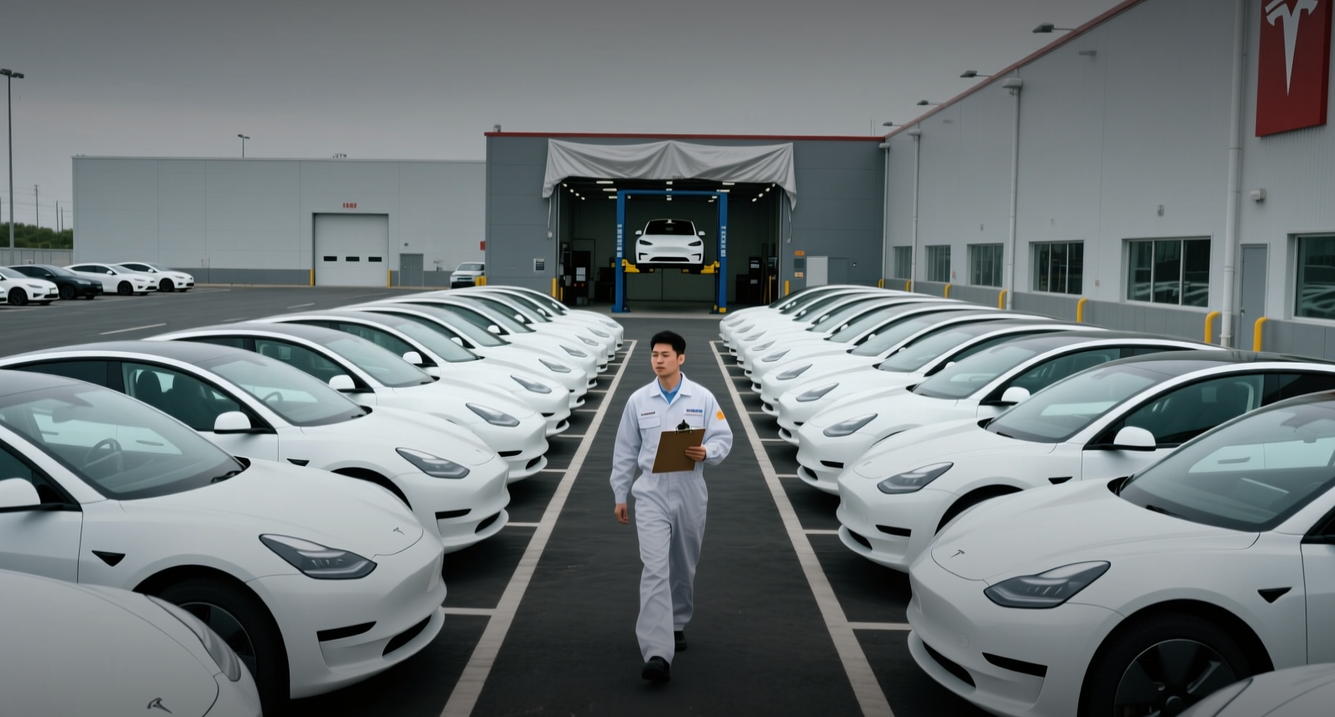
Tesla is recalling nearly 3 million vehicles in China over emergency door handles and driver-monitoring gaps, its biggest recall ever in the world's largest auto market, as Beijing tightens electric-vehicle safety rules.
The State Administration for Market Regulation said Tesla's "existing attention-monitoring mechanism is insufficient to provide the driver with alerts when their gaze leaves the road," according to a filing published Friday. The finding pushes Tesla to add cabin-camera monitoring on top of the steering-wheel torque sensors it has relied on to confirm drivers are engaged while Autosteer is active.
The doorhandle action covers 973,156 China-made Model 3s built between March 2019 and April 2026, plus 1.96 million Model Ys, 35,590 imported Model 3s, 8,328 Model Xs and 2,123 Model Ss. Tesla will affix warning labels identifying the emergency release and push an over-the-air update that automatically lowers windows after a collision, so occupants and rescuers can reach the doors even if the low-voltage system fails. A separate recall of 2.74 million China-made Model 3 and Y vehicles addresses the driver-monitoring gap.
The flush doorhandles Tesla popularized are now a liability across the industry. Nine automakers, including Xiaomi, Leapmotor, Xpeng, Zeekr and Lynk & Co, joined Tesla in the doorhandle campaign, with at least six brands announcing their largest recalls on record. China plans to ban concealed door handles from 2027, becoming the first country to phase out a design that regulators say can trap occupants after a severe crash disables the electrical system. The U.S. National Highway Traffic Safety Administration said in July it would begin drafting a federal rule to mandate a "robust and obvious door egress system" in all vehicles.
The driver-monitoring recall mirrors what U.S. regulators forced in December 2023, when NHTSA's Autopilot recall of roughly 2 million vehicles pushed Tesla to adopt cabin-camera monitoring in North America. Tesla long resisted turning on the interior camera in China, saying in 2021 that its China-market vehicles had "not turned on their in-vehicle cameras" over privacy and data concerns. The new requirement extends camera-based attention checks across its entire assisted-driving fleet in the country — a system Chinese drivers were recently caught defeating with $20 plastic doll heads mounted near the rearview mirror. The shift also erases a cost advantage Tesla had preserved by relying on torque sensors rather than the more expensive camera hardware.
The compliance burden is uneven across the industry. Tesla's 5.7 million affected vehicles dwarf the recalls of rivals, and the physical inspection and labeling of millions of cars could strain its service network in a market where it is already losing ground. Model Y deliveries in China fell 18 percent in July to 25,158 units from 30,766 a year earlier, according to China Passenger Car Association data, as BYD and Xiaomi undercut Tesla on price in a market gripped by a price war.
TSLA shares edged 1 percent higher after the announcement but remain down 21 percent in 2026, the biggest laggard among the Magnificent Seven. The recall adds to a year of regulatory friction in the U.S., where Tesla has announced four recalls covering 253,965 vehicles, including 218,868 with delayed rearview camera images and 173 Cybertrucks facing a wheel-separation risk. For investors, the China action raises compliance costs and reputational risk in a market central to Tesla's volume ambitions, even as the 2027 door-handle ban forces a redesign that could reshape EV design trends globally.
This article is for informational purposes only and does not constitute investment advice.
