

Key Takeaways:
- Bridge v3 at bridge-v3.ton.org closes permanently Sept 1, 2026.
- 11.48 million Wrapped TON, worth about 13.7 million euros, remain outstanding.
- Holders must repatriate Wrapped TON and j-tokens before the deadline.
Key Takeaways:
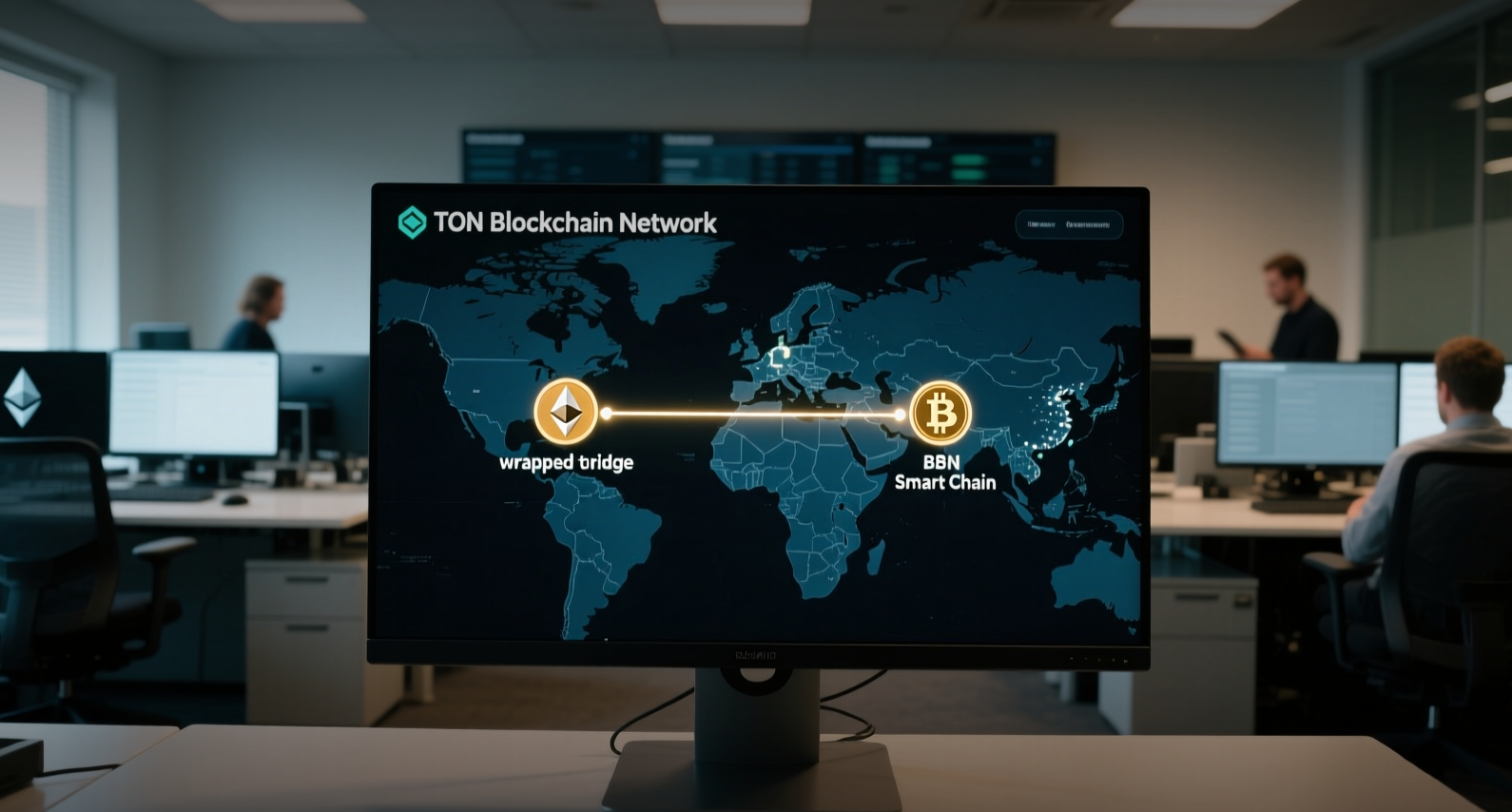
11.48 million Wrapped TON, worth about 13.7 million euros, must return to TON before bridge-v3.ton.org shuts permanently Sept 1, 2026.
The operator side is retiring the bridge because newer transfer routes run over messaging protocols such as LayerZero, Stargate, Symbiosis and Rhino.fi, according to Cryptopolitan, which counted 31,893 transfers totaling more than 101 million TON over the bridge's lifetime without a successful attack.
On Aug 21 at 01:00 UTC, 9,410,992.06 Wrapped TON sat on Ethereum and 2,065,163.78 on BNB Smart Chain, both contracts working to nine decimal places, cryptoticker.io's own on-chain analysis shows. The j-token side on TON — jUSDT, jUSDC, jDAI and jWBTC — could not be counted the same way because TON lacks an EVM-compatible interface.
After Sept 1 the bridge accepts no further transfers, leaving any wrapped balance with no mechanism to convert back to native Toncoin. The operator has suspended percentage transfer fees until the shutdown, making the final days the cheapest window to repatriate.
The deadline, fixed since May 23, affects two directions. Wrapped TON on Ethereum and BNB Smart Chain must move back into the TON network; j-tokens on TON must return to Ethereum, where jUSDT becomes USDT again. Holders who used both directions face two separate jobs, often in different wallet apps.
A j-token is identified by its contract address: it comes from the bridge contract, while a native stablecoin on TON comes from the issuer itself. In a TON explorer, the issuer address settles the question.
The return swap runs through the same bridge screen with fields swapped. Three points decide whether it goes smoothly: the destination address must be a TON address you control, the source chain needs network currency for gas (ETH on Ethereum, BNB on BNB Smart Chain), and the contract requires a token approval before transfer. A small test amount first is the calmer variant for larger positions.
Where the holding sits changes the route. In a self-custody wallet, the steps above apply directly. In an exchange account, the venue decides whether it swaps for customers or sets its own withdrawal deadline. In a liquidity pool or lending protocol, the position must be unwound before the return swap — the case needing the most lead time.
The distinction between the legacy bridge and Bridge v3 matters. The older Toncoin bridge was decommissioned in 2025; the Sept 1 date concerns its successor at bridge-v3.ton.org. TON's developer documentation lists the early 2021-2023 bridges as legacy whose discontinuation is possible at any time.
For German holders, whether retrieving a wrapped token is a tax-relevant event depends on whether the wrapper counts as the same asset — a question not conclusively settled. Documenting date, amount, addresses and network fee on the day of the return swap costs two minutes and cannot be made up later.
After the shutdown, the proxy token remains visible in the wallet, but the mechanism that turns it back into native Toncoin is gone. Such a token stays tradable only while someone accepts it, and that willingness tends to disappear quickly once the equivalent value is no longer secured. A parallel case is running now: the ICX-to-SODA migration also has a staggered deadline after which the swap runs one direction only.
This article is for informational purposes only and does not constitute investment advice.
