
Trump's latest attempt to end the Iran war rests on a deal whose terms remain unverified, even as crude prices fall on diplomatic hopes.
Trump's latest attempt to end the Iran war rests on a deal whose terms remain unverified, even as crude prices fall on diplomatic hopes.
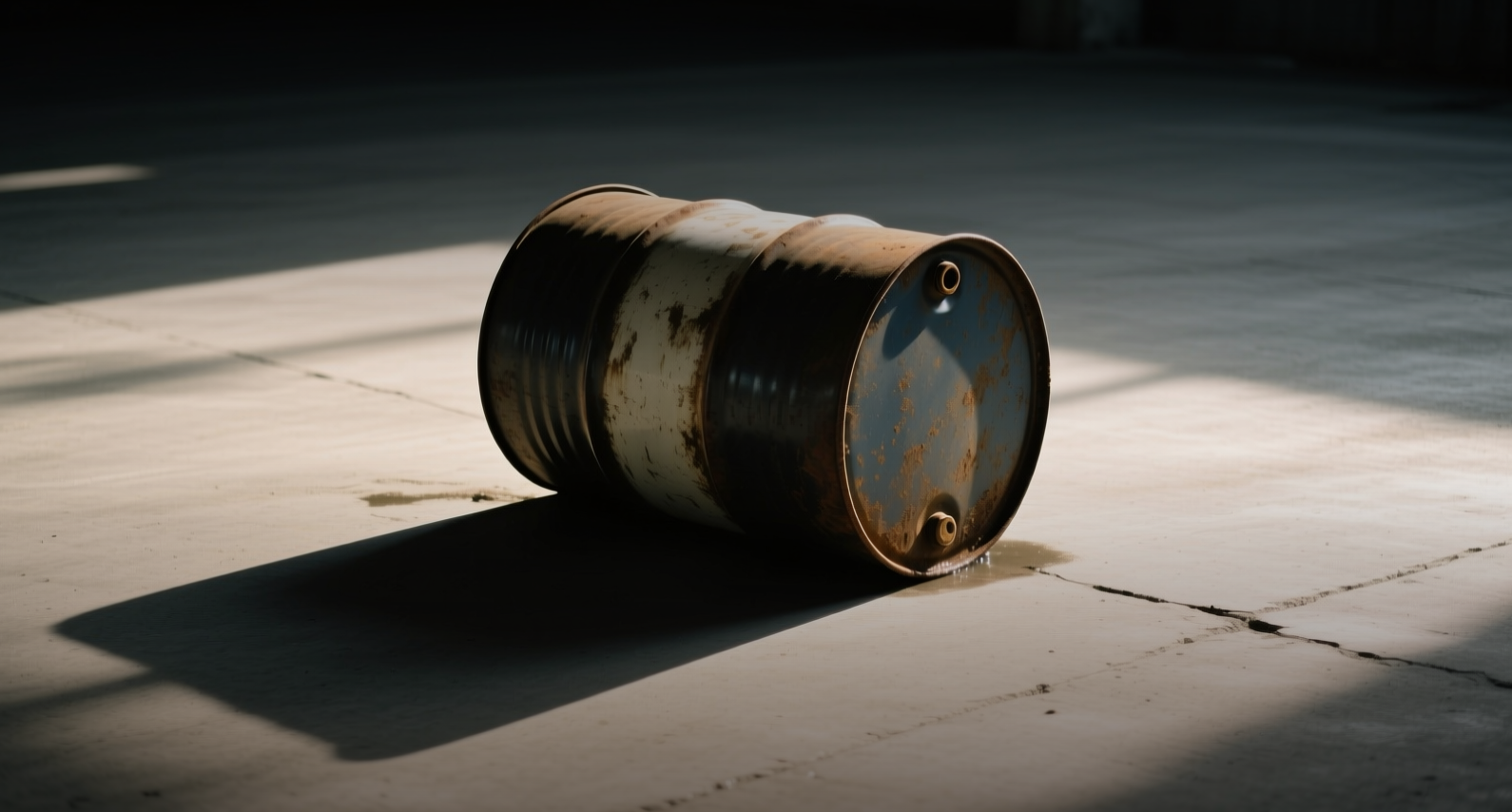
Trump's decision to cancel a planned strike on Iran after Tehran requested time for a deal sent crude down more than 4 percent, though the agreement's parameters remain unverified.
"Although the enemy's recent statements are part of a psychological and cognitive warfare campaign, we consider every threat to be real and take it seriously," Seyyed Majid Ibn Al-Reza, Iran's acting defense minister, said in a state media post on X.
Trump said in a Truth Social post at 10:05 p.m. Saturday that Iran and "other Middle Eastern Countries" asked the U.S. to hold off attacks, with the deal including the "Immediate, Complete, and Total" reopening of the Strait of Hormuz and an end to Iran's nuclear threat. West Texas Intermediate futures fell more than 4 percent to trade near $81 a barrel Monday, while Brent slipped below $87, after closing Friday at $84.67 and $90.12 respectively. Brent had jumped 24 percent in July as the conflict escalated.
The stakes are high: the Strait of Hormuz carries roughly a fifth of the world's oil and LNG supplies, and the war that began Feb. 28 has already pushed energy prices up sharply, threatening to reignite inflation and pressure Trump politically ahead of the midterm elections. Trump has said he fears becoming "the next Herbert Hoover" over high gas prices.
Trump said the U.S. remains "locked and loaded and ready to go" if the deal fails, and that Israel "joins me in this commitment." But Iran's state news agency Fars International dismissed Trump's demands as a "wish list," and Tehran's Foreign Minister Abbas Araqchi warned against any "adventurous action" by the U.S. in separate phone calls with his Turkish and Pakistani counterparts.
The announcement follows a week of escalating military exchanges. The U.S. completed a "heavy wave" of strikes against Islamic Revolutionary Guard Corps targets, and Iran retaliated by attacking U.S. military bases in Kuwait and Bahrain. A drone strike hit two ships at Egypt's Mediterranean port of Damietta on Thursday, marking the first attack on Egyptian soil since the war began. U.S. embassies in Iraq, Jordan, and the United Arab Emirates warned American citizens to consider leaving the region immediately.
The core of the proposed deal — reopening the Strait of Hormuz — faces significant hurdles. Iran has largely closed the waterway since the war began, and the U.S. reimposed a naval blockade on Iranian ships July 13. Iran's Supreme National Security Council Secretary Mohammad Bagher Zolghadr warned that continued U.S. "warmongering" would "not only lock the Strait of Hormuz tighter, but will also shut down other straits and chokepoints."
Iranian Foreign Ministry spokesperson Esmaeil Baghaei said negotiations with Oman over the strait were in their final stages, focused on agreeing a new route through the waterway. But he added that this was "a separate discussion" from whether the strait is opened or closed. Last month, Iran publicly rejected an Omani proposal, backed by Gulf states, to manage the strait they share.
Trump's decision to stand down reflects mounting political pressure. His approval rating has fallen below Joe Biden's and Barack Obama's at comparable points in their terms, and high gas prices threaten Republican prospects in the midterms. The death of Sen. Lindsey Graham removed a hawkish counselor from Trump's inner circle, while advisers including son-in-law Jared Kushner, special envoy Steve Witkoff, and Secretary of State Marco Rubio have pushed for a negotiated exit.
The June 17 memorandum of understanding between the U.S. and Iran offered limited concessions and has effectively broken down. Neither side has yielded on Iran's nuclear program or control of shipping through Hormuz. Israel's Energy Minister Eli Cohen said Israel would strike Iran "with or without an agreement" if Tehran attempts to renew its nuclear program or advance its ballistic missile industries.
The last time Trump announced a similar breakthrough — the April ceasefire — markets rallied briefly before the truce collapsed and Brent surged 24 percent in July. If this deal follows the same trajectory, the current oil selloff could prove short-lived. Analysts polled by Reuters expect prices to rise further this year.
This article is for informational purposes only and does not constitute investment advice.
