Ukraine's Patriot interceptor shortage is forcing Kyiv to hunt Russian ballistic-missile launchers before they fire, a strategy that hinges on access to Elon Musk's Starlink network over Russian territory.
Ukraine is running out of the only weapon that can stop Russian ballistic missiles. The U.S.-made Patriot system is "perilously low" on interceptors, and Russia now manufactures more than 100 ballistic missiles a month while receiving additional supplies from North Korea, according to John Hardie, a senior fellow at the Foundation for Defense of Democracies. With U.S. and European stockpiles drained by the war with Iran, Kyiv cannot shoot down every incoming missile — so it is trying to kill the launchers instead.
"Since it cannot intercept Russian arrows, so to speak, Ukraine must kill the archer," Hardie wrote in a Wall Street Journal opinion letter published this week, urging the White House to intervene with Musk. The SpaceX chief has refused to lift a restriction that keeps Starlink terminals from operating over Russian territory, where ballistic-missile launchers typically sit. Musk reportedly told Kyiv to make peace instead, a view Hardie said ignores that Vladimir Putin "won't negotiate on reasonable terms if he thinks he can still prevail militarily."
The stakes are stark. Russia launched nearly 70 ballistic missiles at Ukraine during the first 10 days of August alone, and Ukrainian air defenses intercepted only one, according to the Ukrainian Air Force. President Volodymyr Zelensky has said Ukraine needs about 300 Patriot interceptors to survive the coming winter — roughly 10 percent of the U.S. stockpile — while Kyiv currently holds just 1 percent. The shortage extends to Europe, where U.S. forces lack enough interceptors to defend against multiple ballistic-missile strikes, the Associated Press reported, citing a U.S. military official and a NATO representative.
Starlink Is the Backbone of Ukraine's Drone Campaign
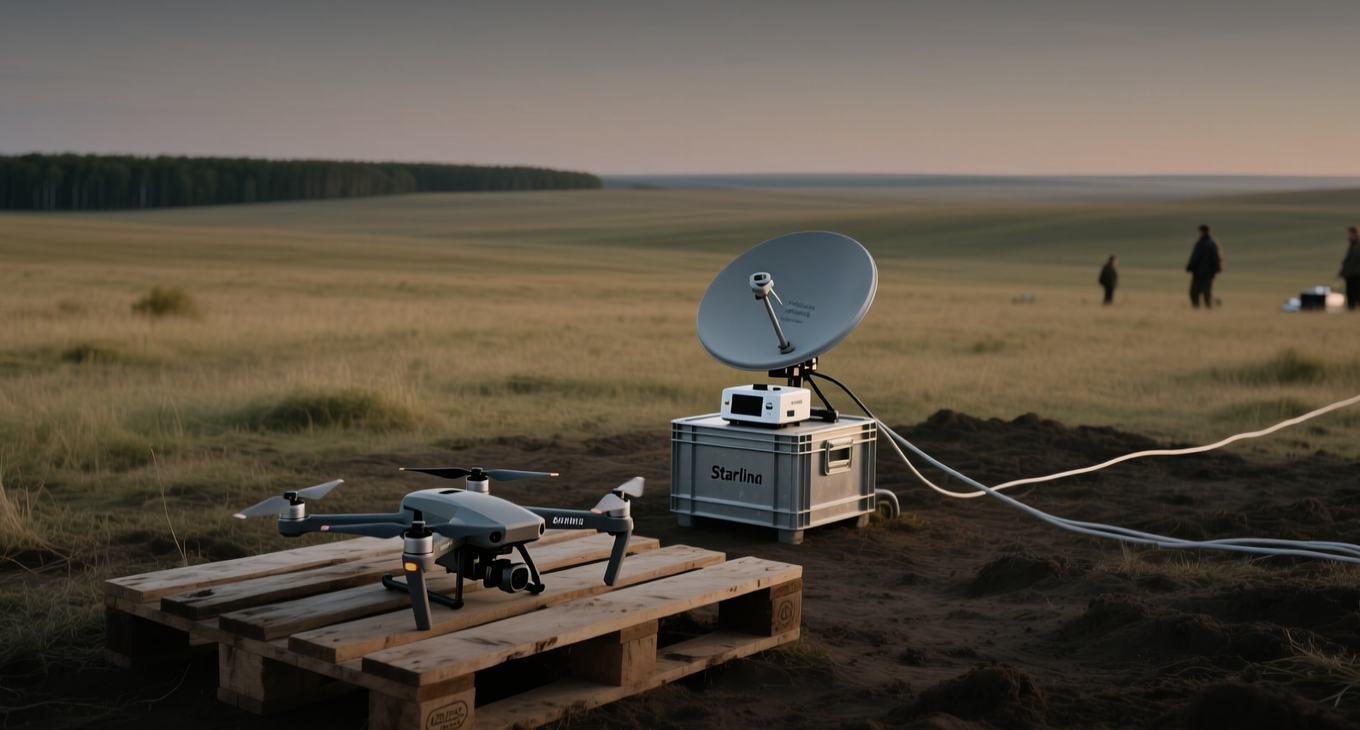
Ukraine's answer has been to strike the launchers before they fire, using drones that depend on a stack of American technology Kyiv does not control. Starlink terminals have become the operational backbone of many missions, letting operators keep a live video feed until impact and navigate with "synthetic GPS coordinates" when conventional GPS is jammed, according to a Ukrainian officer with the call sign Jura. The Hornet drone from Perennial Autonomy, the company founded by former Google CEO Eric Schmidt, carries warheads up to five kilograms at a unit price of $7,500 to $10,000 and has been central to strikes on Russian logistics in the occupied south.
The dependence is a point of vulnerability. "Many of my colleagues, and I as well, are very nervous about how we would work without Starlink," Jura told WELT. "We have discussed this issue several times: What if Elon Musk or somebody at SpaceX turns it off?" Austrian military analyst Gustav Gressel called the combination of Hornet drones and Starlink terminals the backbone of Ukraine's mid-range strike campaign, warning the advantage could shrink as Russia fields its own satellite system, Rassvet, as early as 2027.
A Dispute That Reached the White House
The Starlink restriction has become a diplomatic flashpoint. Zelensky said a dispute over whether SpaceX would allow the network over Russia contributed to his falling out with then-Defense Minister Mykhailo Fedorov, who was dismissed in July. Fedorov, now seeking U.S. investment for a defense-technology fund, has proposed trading Ukrainian drone know-how for Patriot interceptors. "I'm ready to make that trade," he told the Financial Times.
Musk cut off Russian forces' access to Starlink in February 2026, a decision that helped Ukraine's battlefield gains this year. But he has resisted extending that access to strikes inside Russia, where Ukraine is targeting oil infrastructure, logistics hubs, and the Iskander and North Korean missile launchers that threaten its cities. Hardie argued the fear of retaliation is misplaced: Starlink has been mission-critical since 2022, yet Russia has never attacked the system kinetically.
The coming winter will test whether Kyiv can hold the line. With Patriot interceptors scarce and Russian missile production accelerating, the outcome may hinge on a single phone call — whether President Trump can persuade Musk to let Ukraine aim for the archer.
This article is for informational purposes only and does not constitute investment advice.