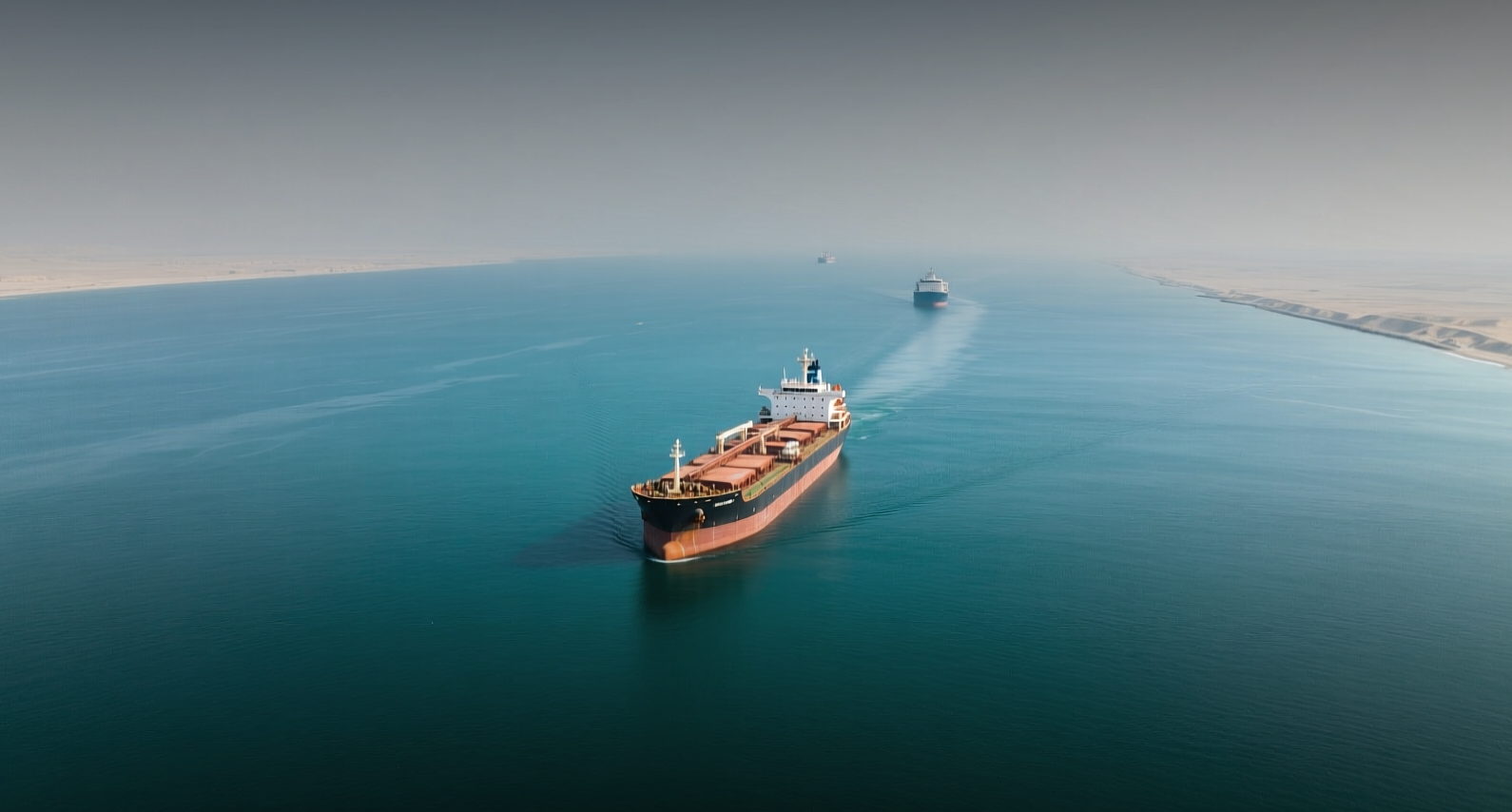
Crude benchmarks extended their advance while bitcoin shed roughly 1 percent over the weekend after U.S. forces destroyed one Iranian oil tanker and crippled two more, the latest escalation in a naval campaign that has stripped 39 percent of Middle East crude exports since February.
"There's probably only about 30 million barrels of Iranian crude oil left that China hasn't bought," Treasury Secretary Scott Bessent told Fox News on Sunday. "So that will run out soon and there will be no problem with China buying because they have no product."
U.S. Central Command released video on Saturday showing three Iranian crude oil tankers being hit — one off Kharg Island, Iran's main oil export hub, another near Jask and a third in the Gulf of Oman. Two were permanently disabled while a third sank after extensive bombing, CENTCOM said. The Islamic Revolutionary Guard Corps responded by firing ballistic missiles toward a U.S. aircraft carrier and another warship, and separately struck a U.S. naval drone attempting to enter the Strait of Hormuz, through which one-fifth of the world's oil and gas passes in peacetime.
Observable traffic through the waterway remains sparse, with only one commodity vessel crossing on Saturday, according to Kpler data. Middle East crude exports during August were down 39 percent from the January-February baseline of 18.5 million barrels per day, with the current deficit at 7.2 million barrels per day, TankerTrackers data shows. That deficit has narrowed from a peak of 12.4 million barrels per day in May, but Iran's exports of 1.68 million barrels per day may remain at zero for the foreseeable future, the maritime intelligence company said.
Bitcoin's slide reflects the broader risk-off posture spreading across financial markets as investors weigh the inflationary consequences of higher crude prices and the potential for further supply disruption. The conflict, which the U.S. and Israel launched more than six months ago, has already claimed the lives of 18 U.S. service members, according to figures cited by President Donald Trump, who called the war "small potatoes" on Friday even as polls show Americans giving him poor marks for his handling of the situation.
Iran's parliament speaker and lead negotiator in previous ceasefire talks, Mohammad Bagher Ghalibaf, warned on Sunday that the era of "proportionate responses" was over. "The Americans have surely understood that the era of proportionate responses has come to an end and our recent strikes against aggressor bases was only a start," he said. Any further attacks against Iranian interests would be met with "faster, heavier and more painful" strikes, he warned.
The stakes extend well beyond the immediate military confrontation. With U.S. midterm elections approaching in November, rising energy prices threaten to erode Republican control of Congress. Trump administration officials have framed the blockade and sanctions as Operation Economic Outcast, aimed at reducing Iran's trade with neighbors and further isolating its 90 million citizens. But IRGC spokesman Hossein Mohebbi countered that the U.S. is absorbing several dollars of economic damage for every dollar it inflicts on Iran, pointing to lowered U.S. strategic energy reserves and decreased aluminum exports from the region.
For bitcoin, the near-term trajectory hinges on whether the conflict escalates further or finds a diplomatic off-ramp. With Middle East crude exports already down 39 percent and Iran's 1.68 million barrels per day effectively zeroed out, the supply cushion is far thinner than in prior episodes. If the U.S. maintains its blockade and Iran continues retaliatory strikes, oil prices could push higher still, feeding inflation expectations and keeping risk assets including bitcoin under pressure. A de-escalation, by contrast, would likely see oil retrace and bitcoin recover some of its losses.
This article is for informational purposes only and does not constitute investment advice.