

Key Takeaways:
- Xiaomi Auto surpassed 700,000 cumulative deliveries in 2.5 years with two models
- The SU7 sedan and YU7 SUV both achieved blockbuster sales status
- Xiaomi is expanding into extended-range EVs with the Sky Nomad series
Key Takeaways:
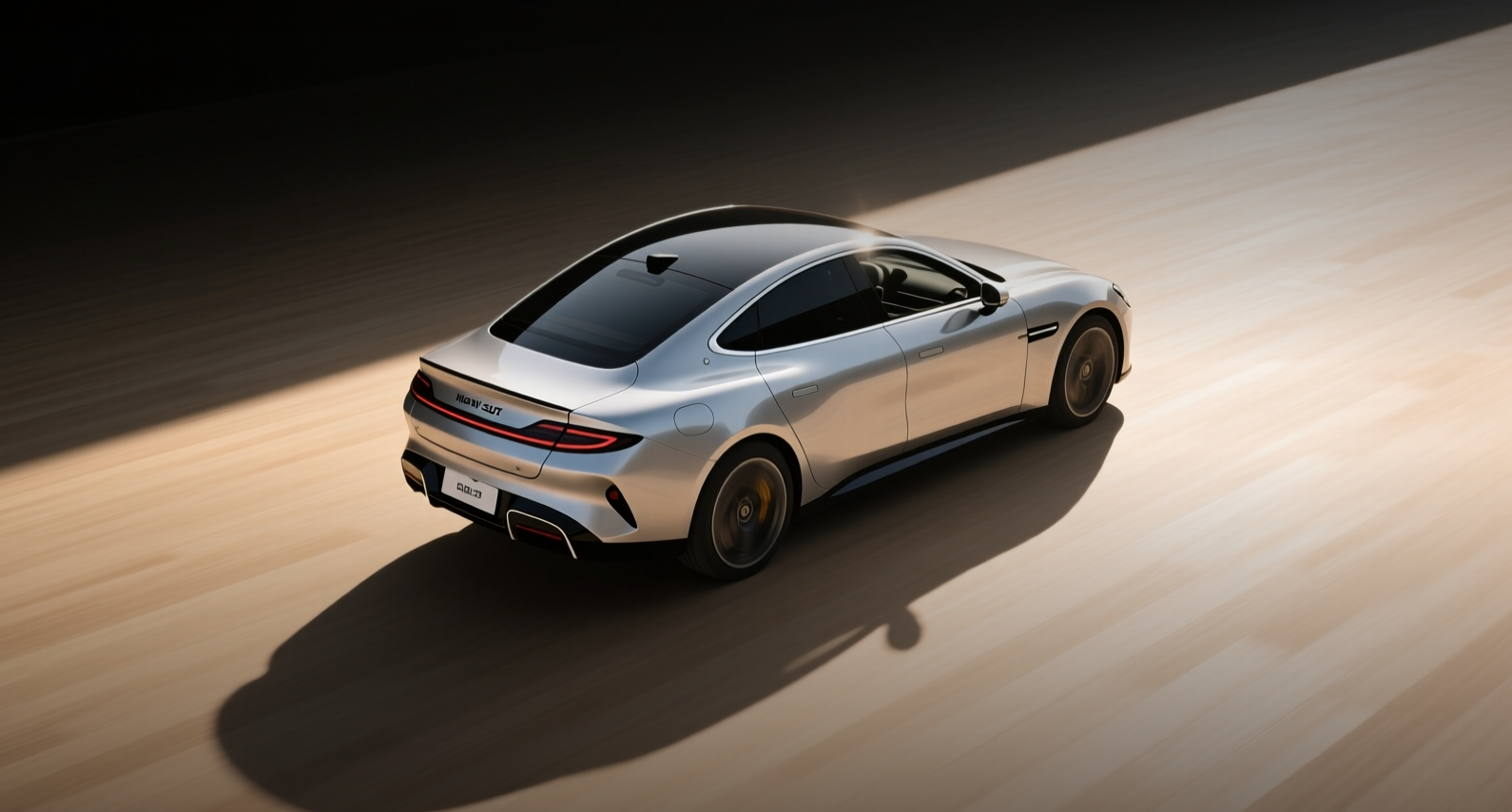
Xiaomi Auto has delivered more than 700,000 vehicles cumulatively since entering the EV market 2.5 years ago, making it one of the fastest automakers to reach the milestone.
Xiaomi Auto surpassed 700,000 cumulative deliveries in 2.5 years with two models — the SU7 sedan and YU7 sport utility vehicle — both achieving blockbuster status, founder Lei Jun said at the company's Pengcheng technology conference.
"Two and a half years, two cars, both became hits," Lei Jun, founder, chairman and chief executive officer of Xiaomi, said at the event. "This proves our product philosophy resonates with consumers."
The SU7, launched in early 2024, and the YU7, which followed later, have together driven Xiaomi to a delivery pace that rivals established Chinese EV makers. BYD, the country's largest EV producer, took roughly a decade to reach 1 million cumulative sales, while Nio and XPeng each took more than three years to cross 300,000 deliveries. Xiaomi's 700,000-unit tally in 30 months shows the company's ability to convert its massive smartphone user base — more than 500 million users globally — into car buyers.
The milestone strengthens Xiaomi's position in China's hypercompetitive EV market, where a price war has squeezed margins across the industry. Xiaomi's stock (1810.HK) has gained this year as investors bet on its EV business scaling quickly enough to offset slowing smartphone growth. The company is now expanding into extended-range electric vehicles with its Sky Nomad series, targeting the large family SUV segment.
Xiaomi's delivery achievement comes as the broader Chinese EV market shows signs of consolidation. Smaller players have struggled to maintain production volumes amid the price war, while top-tier manufacturers like BYD and Li Auto continue to gain share. Xiaomi's rapid ascent — from zero to 700,000 vehicles in 30 months — demonstrates the power of its brand ecosystem, where hundreds of millions of smartphone users provide a built-in customer funnel.
The company is not resting on its SU7 and YU7 success. Lei Jun used the Pengcheng conference to unveil Xiaomi's entry into the EREV segment with the Sky Nomad series, including the N70 Max and N90 Max models. The N70 Max achieves fuel consumption as low as 5.7 liters per 100 kilometers when the battery is depleted, while the N90 Max all-wheel-drive variant consumes 6.26 liters per 100 kilometers. Both models offer a CLTC battery-only range of up to 505 kilometers, allowing owners to charge once a week for typical urban commuting.
Lei Jun defended the EREV pivot, arguing the technology is undergoing a "generational leap" and is no longer comparable with earlier versions. He cited Li Auto's new-generation L6 as evidence that demand for EREVs remains strong. Li Auto chairman Li Xiang welcomed Xiaomi's entry into the segment, saying the market is willing to pay for excellent EREV products.
For investors, Xiaomi's EV ramp presents both opportunity and risk. The company's automotive gross margin per vehicle will be a key metric to watch as production scales. Xiaomi trades at roughly 25 times forward earnings, a premium to traditional automakers but a discount to high-growth EV peers. The 700,000-delivery milestone suggests the company is on track to absorb its initial EV investment faster than skeptics anticipated, though the price war and EREV transition costs remain headwinds.
This article is for informational purposes only and does not constitute investment advice.
