


Musk's G20 warning of a 15 GW AI power shortfall by 2027 has pushed Google and Anthropic to rent compute from SpaceX, which solved its supply by building dedicated power plants.
Musk's G20 warning of a 15 GW AI power shortfall by 2027 has pushed Google and Anthropic to rent compute from SpaceX, which solved its supply by building dedicated power plants.
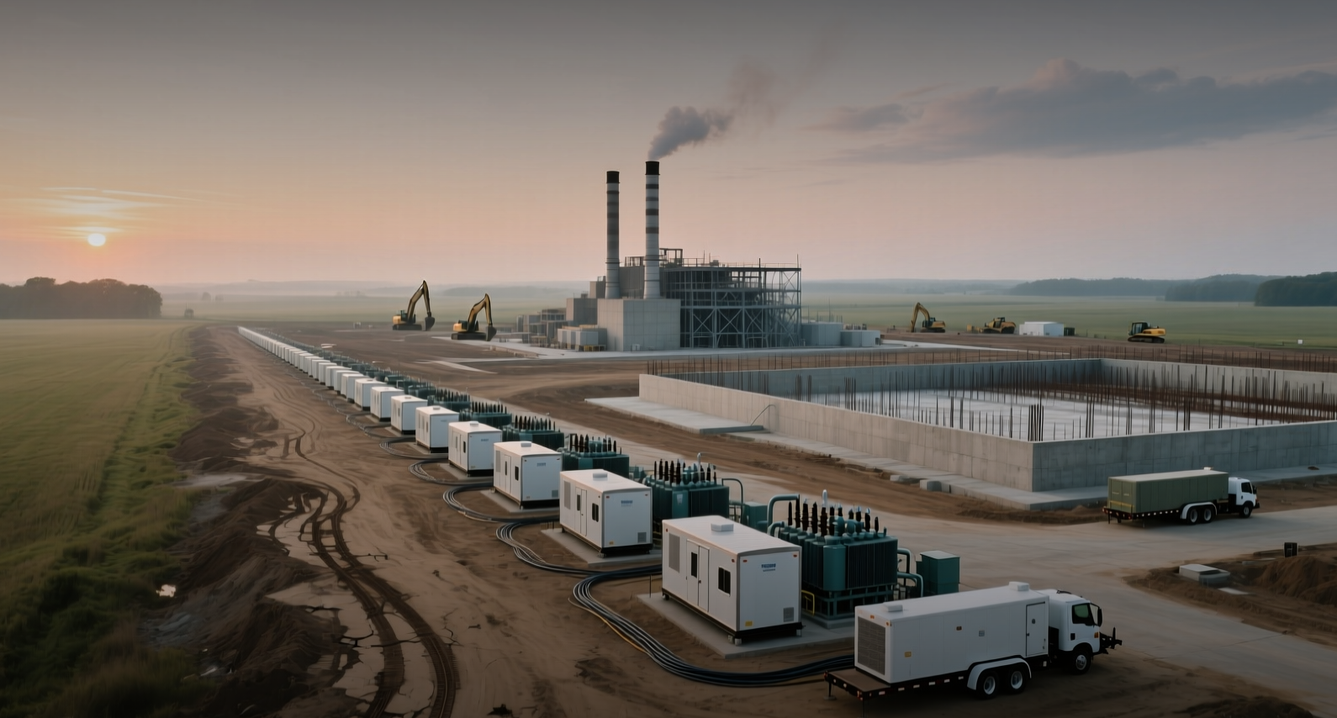
AI infrastructure's binding constraint has shifted from chips to electricity. Musk told the G20 that AI chips face a 15 GW power shortfall by 2027, as supply growth trails compute expansion by roughly threefold.
"To bring large AI data centers online requires building massive power plants, transformers, liquid cooling loops and chillers, as well as incredibly complex networking," Musk said at the G20 Innovation Ministerial Summit in Chapel Hill, North Carolina.
AI chip production is growing 40 to 50 percent annually, while available power outside China rises only 10 to 20 percent per year, Musk said, citing analyst consensus. The imbalance is already forcing structural changes in how compute is sourced. Google signed a multiyear cloud agreement in June worth $920 million per month at full scale for roughly 110,000 Nvidia GPUs from SpaceX. Anthropic agreed to pay $1.25 billion monthly through May 2029 for computing capacity.
The bottleneck is redirecting capital across the AI supply chain. Goldman Sachs projects US data center power demand will climb from 31 GW in 2025 to 66 GW in 2027, while Morgan Stanley puts the US shortfall at 38 GW through 2028. Lawrence Berkeley National Laboratory estimates data centers could consume 11.8 percent of US electricity by 2030.
SpaceX Turns the Power Bottleneck Into a Business
Musk's answer has been to bypass the grid entirely. SpaceX is building a 1.2 GW permanent power plant near its Greater Memphis supercomputer sites, retiring temporary mobile turbines as permanent capacity comes online. "Constructing our own power plants is the only way we were able to do it," he said.
That strategy has turned SpaceX into a compute landlord. The company's ability to bring AI compute online faster than grid-dependent rivals has made it a preferred supplier for hyperscalers facing multi-year interconnection queues. Musk said Google, Anthropic and "many other companies" are leasing compute from SpaceX.
The economics extend beyond SpaceX. GE Vernova reported a $176 billion total backlog with more than $5 billion in data-center orders booked year-to-date in its Electrification segment — more than double all of 2025. Bloom Energy's second-quarter revenue reached $1.07 billion, up 165.5 percent year-over-year, as fuel cells that can be installed in months rather than years gain traction.
Labor, Regulation and Public Resistance Add Friction
Power is not the only bottleneck. Zuckerberg told the G20 that Meta faces a shortage of skilled technical workers for data center construction, estimating the industry needs "hundreds of thousands to millions" of skilled positions. The labor gap compounds the power problem, extending build timelines at a moment when every month of delay pushes more compute capacity into the 2027 shortfall.
Regulatory friction adds a third layer. Musk criticized European Union technology rules as overly strict, arguing new technologies should be "legal by default" rather than "illegal by default." His position echoes Trump's pro-AI-infrastructure stance from the prior day, when the president criticized opponents of data center construction as "backward and poor."
Yet public opinion polls show most Americans oppose more data centers in their communities, citing electricity bill increases and noise pollution. That creates a policy paradox: solving the power shortage requires large-scale construction, but construction faces local resistance.
For investors, the AI trade is no longer decided by who makes the best chip. Nvidia's data center revenue reached $89 billion in its fiscal second quarter, up 117 percent year-over-year, but GPUs are only valuable if they can be powered. The companies positioned to capture value from the 15 GW gap include turbine and grid equipment suppliers like GE Vernova, fuel cell makers like Bloom Energy, and existing generators like Constellation Energy and Vistra that can sign power purchase agreements without new construction.
Musk estimates AI could add $20 trillion to $30 trillion annually to the global economy, a 20 to 30 percent expansion. But that projection assumes the power and labor constraints can be resolved. With chip production compounding at 40 to 50 percent annually against single-digit power growth, the gap widens every quarter that infrastructure lags.
This article is for informational purposes only and does not constitute investment advice.
