

Key Takeaways:
- AMD's Helios rack delivers 2.9 exaflops FP4 with 72 MI455X GPUs per rack
- OpenAI, Meta and Anthropic plan combined 14GW of AMD-powered infrastructure
- AMD claims 15% more peak FP4 and 30% lower token costs vs Nvidia's NVL72
Key Takeaways:
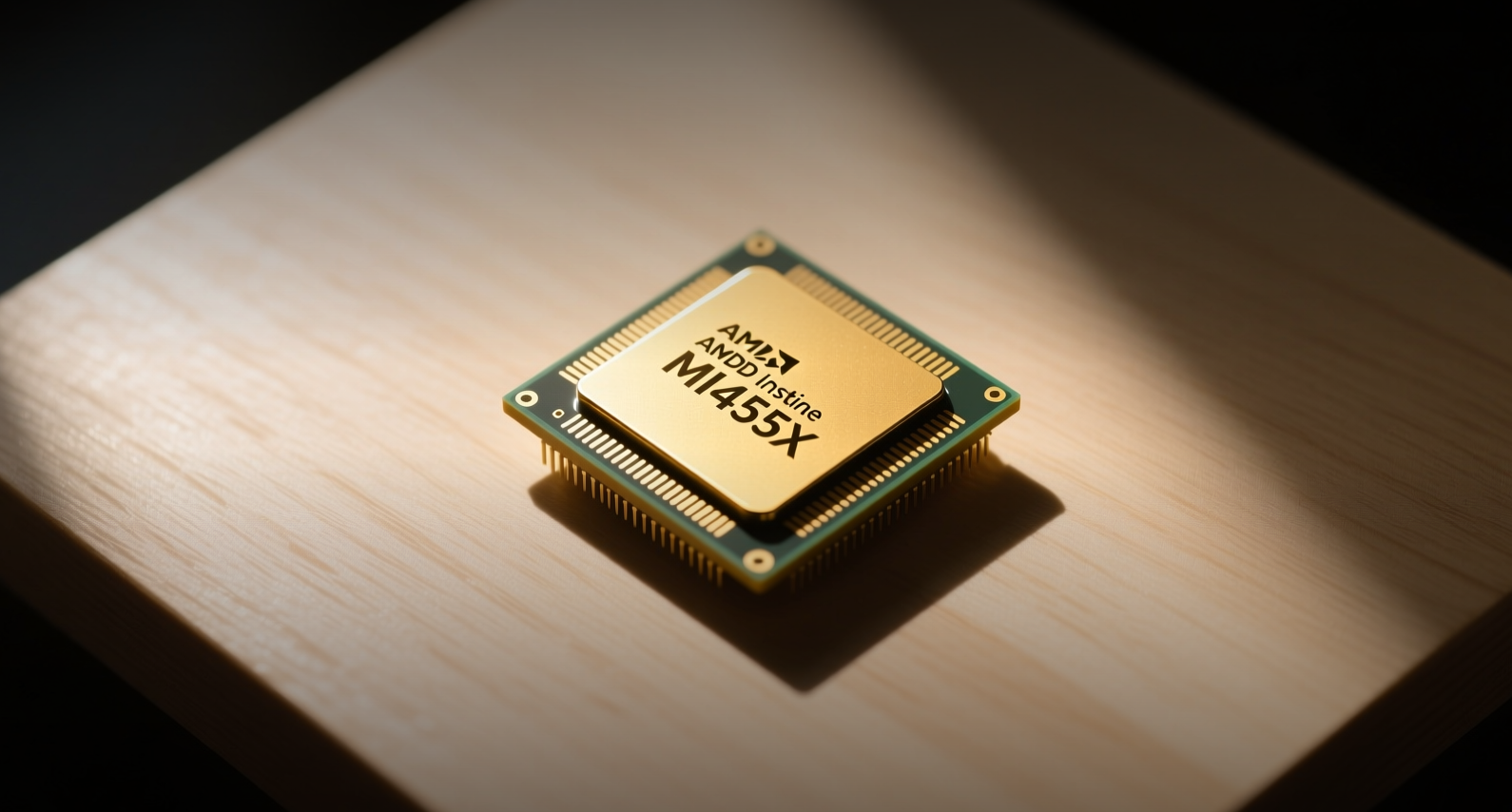
AMD's new Helios rack-scale system, unveiled at the Advancing AI 2026 event in San Francisco, combines 72 Instinct MI455X graphics processing units with 18 sixth-generation EPYC "Venice" server processors, Pensando networking and the ROCm software stack into a single integrated platform. A single rack delivers up to 2.9 exaflops of peak FP4 performance, 1.4 exaflops of peak FP8 compute and 31 terabytes of HBM4 memory, according to the company.
"The next phase of AI will span frontier models, agents and physical AI, creating new opportunities to bring intelligence everywhere," AMD Chair and Chief Executive Officer Lisa Su said at the event. "Realizing that potential will take the entire industry working together."
AMD claims Helios offers 15% greater peak FP4 performance and 50% more high-bandwidth memory capacity than Nvidia's NVL72 rack system, while reducing token costs by as much as 30%. The company did not disclose full benchmark conditions for the comparison. The system uses UALink over Ethernet for scale-up connectivity and Ethernet technologies aligned with the Ultra Ethernet Consortium for scale-out networking, with Pensando Vulcano 800 network interface cards connecting systems across larger clusters.
The launch marks AMD's most aggressive push yet into the AI factory market, a segment Nvidia has dominated since the ChatGPT-era buildout began. With three of the largest AI companies committing to multi-gigawatt deployments, AMD is betting that its open-ecosystem approach and chiplet-based architecture can carve out a sustainable share of a market Su estimates will reach $2 trillion by 2030.
Hyperscaler commitments signal demand shift
OpenAI expects to begin bringing Helios systems online in the fourth quarter of 2026, with deployments accelerating through 2027 as part of a six-gigawatt agreement announced in October 2025. The company has had access to Helios hardware for several months while optimizing GPT workloads for the MI455X, covering ROCm, networking, compilers and the Triton and Gluon GPU programming tools.
Meta is testing Helios racks and sixth-generation EPYC platforms and is developing a customized accelerator based on the MI450 generation. The company plans to deploy up to six gigawatts of infrastructure using AMD GPUs. Meta Head of Infrastructure Santosh Janardhan said the companies are aligning engineering decisions earlier in the development process rather than selecting completed components at the end of a product cycle.
Anthropic is preparing to install up to two gigawatts of MI455X GPUs under a multiyear engineering agreement that includes using Claude to help optimize workloads and support ROCm development. AMD plans to use the model within parts of its engineering operations.
"Every transaction is different," Su said when asked about the differing deal structures with OpenAI and Anthropic. "We are very happy, honored and excited to work with the most important frontier AI companies in the world."
Cerebras partnership targets ultra-low-latency inference
AMD also announced a technical partnership with Cerebras Systems to deliver a disaggregated inference solution combining Helios racks with Cerebras Wafer-Scale Engine technology. Helios will process prompts and large context windows, while the Cerebras system handles token generation, separating the throughput-intensive prompt stage from the memory-bandwidth-intensive generation stage.
The companies claim the system can deliver up to five times more tokens per second per watt, targeting coding assistants, real-time copilots, autonomous agents and robotics workloads. Cerebras plans to deploy Helios systems in its data centers, with the joint solution expected to be available through Cerebras Cloud in the second half of 2026.
Su said the partnership reflects AMD's commitment to an open ecosystem rather than a temporary arrangement. "We partner with Cerebras because Cerebras has very interesting technology," she said. "There are many different ways to accelerate specific workloads, and Cerebras' technology is one that works very well with Helios."
Expanded product portfolio and robotics push
Beyond Helios, AMD introduced the Instinct MI430X for high-performance computing and sovereign AI deployments, delivering up to 288 teraflops of hardware-based FP64 performance, and the MI350P designed to add AI acceleration to existing server infrastructure. The MI455X, the primary accelerator in Helios, offers 34 times the token throughput of the prior MI355X, according to AMD.
The company also unveiled the Kria AI Robotics Developer Platform, combining CPUs, GPUs, neural processing units and field-programmable gate arrays to power autonomous robots capable of more than 8,000 decisions per second with sub-millisecond vision-language-action reasoning. The platform is powered by Ryzen AI Embedded X100 series processors, which combine up to 16 Zen 5 CPU cores with an RDNA 3.5 integrated GPU and an energy-efficient NPU on a single system-on-chip.
AMD's roadmap extends through the Instinct MI500 series scheduled for 2027 and MI600 in 2028, with corresponding Helios 500 and Helios 600 rack systems. Three Zen 7-based server processors — Florence, Ferrara and Fidenza — are planned for 2028, followed by a Zen 8-based processor code-named Ravenna in 2030.
AMD shares have gained about 18% year to date as of Wednesday's close, narrowing the gap with Nvidia's dominant market position. The company's ability to convert its partnership commitments into sustained revenue will determine whether it can deliver on Su's promise of growing faster than the market in every segment it competes in.
This article is for informational purposes only and does not constitute investment advice.
