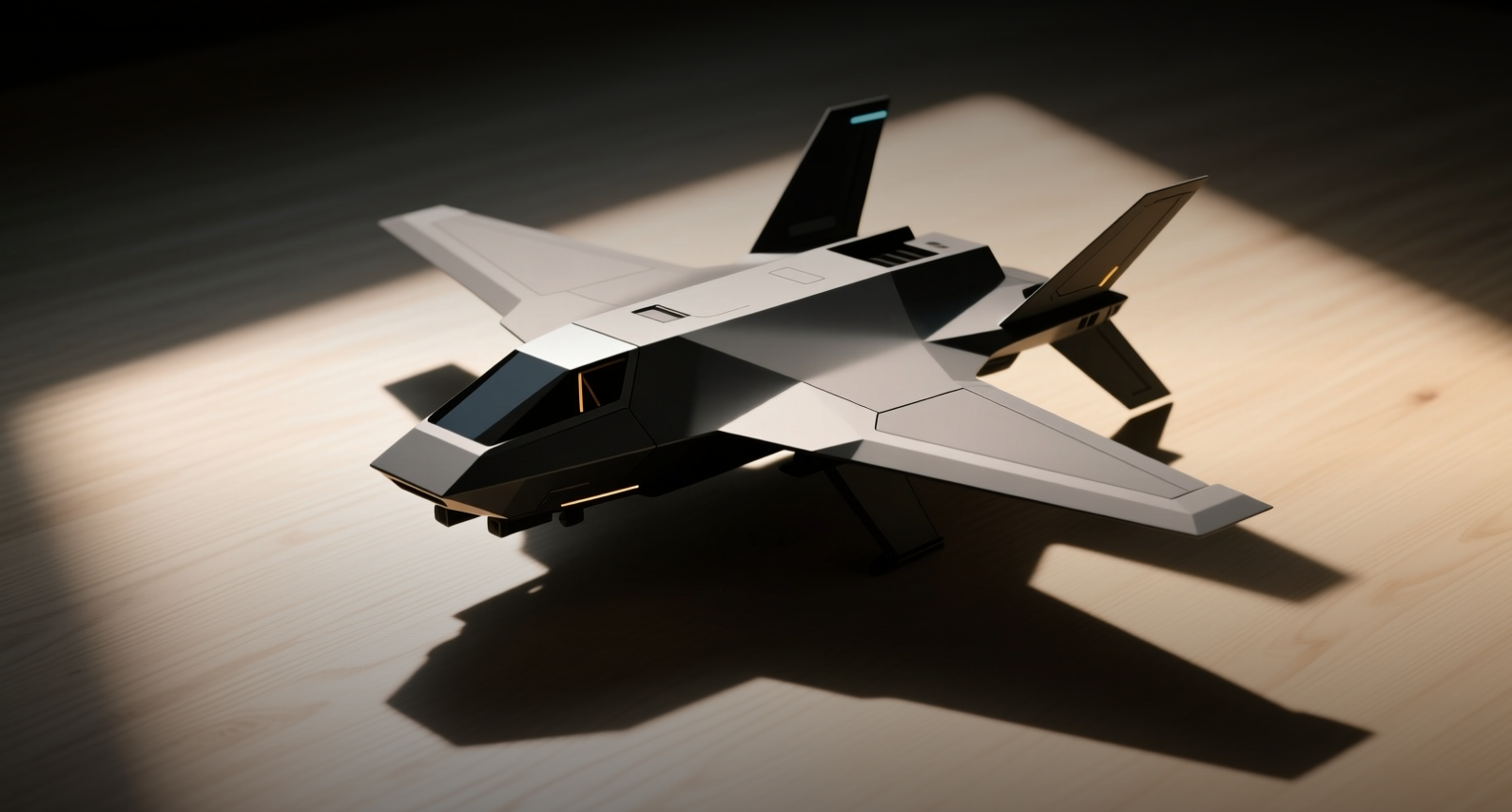
Autonomous weapons are moving from science fiction to the battlefield, and defense-tech companies are racing to capture a market valued at more than $125 billion.
Anduril is in talks to raise funding at a valuation of about $100 billion, according to a Reuters report, as the defense-tech company positions itself at the center of a global shift toward AI-driven autonomous warfare.
"AI will decide the future of warfare," Trae Stephens, Anduril's executive chairman and co-founder, said on Fox Business's "Mornings with Maria." "The speed at which decisions need to be made on the battlefield has exceeded human capability."
The company's valuation target comes as the market for Collaborative Combat Aircraft, or CCAs — AI-enabled drones that fly alongside crewed fighter jets — is projected to be worth more than 125 billion pounds ($162 billion) through 2050, according to UK Defense Minister Wes Streeting. Boeing's MQ-28 Ghost Bat, developed with the Royal Australian Air Force, has a range of 3,700 kilometers and can reach speeds of Mach 0.9, while BAE Systems and Airbus have also unveiled competing platforms.
The race to field autonomous systems reflects a broader rethinking of military strategy, driven by the war in Ukraine and growing unease over reliance on the US for defense. For investors, the question is which companies will capture the bulk of a market that analysts say no single firm can supply alone.
The $162 Billion Prize
The CCA sector's projected value of 125 billion pounds through 2050 has drawn a crowded field of competitors. Boeing began work on the MQ-28 nearly a decade ago, giving it what Glen Ferguson, director of the MQ-28 Global Program, called an insurmountable head start. "The thing we have going for us that no one else does, that no one can ever match, is we started nine years ago," Ferguson said at the Farnborough airshow.
Boeing has partnered with Germany's Rheinmetall to integrate the MQ-28 into the German Air Force, with capability expected by 2029. BAE Systems unveiled Britain's first sovereign CCA at Farnborough, though the UK government has yet to commit to a procurement decision. The UK has pledged 300 million pounds ($400 million) to its autonomous jet program over the next four years. Airbus has taken a different approach, partnering with US firm Kratos to use an existing American platform while integrating its own mission systems.
Can Margins Hold Above 40%?
For defense-tech investors, the key question is whether autonomous systems can deliver the profit margins that traditional defense contracting has struggled to maintain. Anduril, founded in 2017 by Palmer Luckey and Trae Stephens, has built its business model around software-defined manufacturing — what Stephens calls an "AI factory" approach that reduces production costs and accelerates iteration cycles.
The company's $100 billion valuation target would place it among the most valuable private defense contractors globally, surpassing legacy players such as L3Harris Technologies, which trades at a market capitalization of about $45 billion. General Atomics and Anduril both showcased autonomous aircraft models at Farnborough, signaling that the competitive landscape is broadening beyond traditional prime contractors.
"From a Western world perspective, we need everyone who's creating a CCA to be successful," Boeing's Ferguson said. "The demand for CCAs in the rest of the world is going to be so immense that not one company, two companies, three companies can actually keep up." For investors, the implication is clear: the autonomous weapons buildout is unlikely to be a winner-take-all market, but companies with mature platforms and sovereign manufacturing capabilities — Anduril, Boeing, and BAE Systems — are best positioned to capture the early contracts.
This article is for informational purposes only and does not constitute investment advice.