

Key Takeaways:
- David Tepper cut his Microsoft stake by 82% in Q1 2026
- Bill Ackman initiated a $2.09 billion Microsoft position
- Microsoft shares are down 18% year to date as capex surged 84%
Key Takeaways:
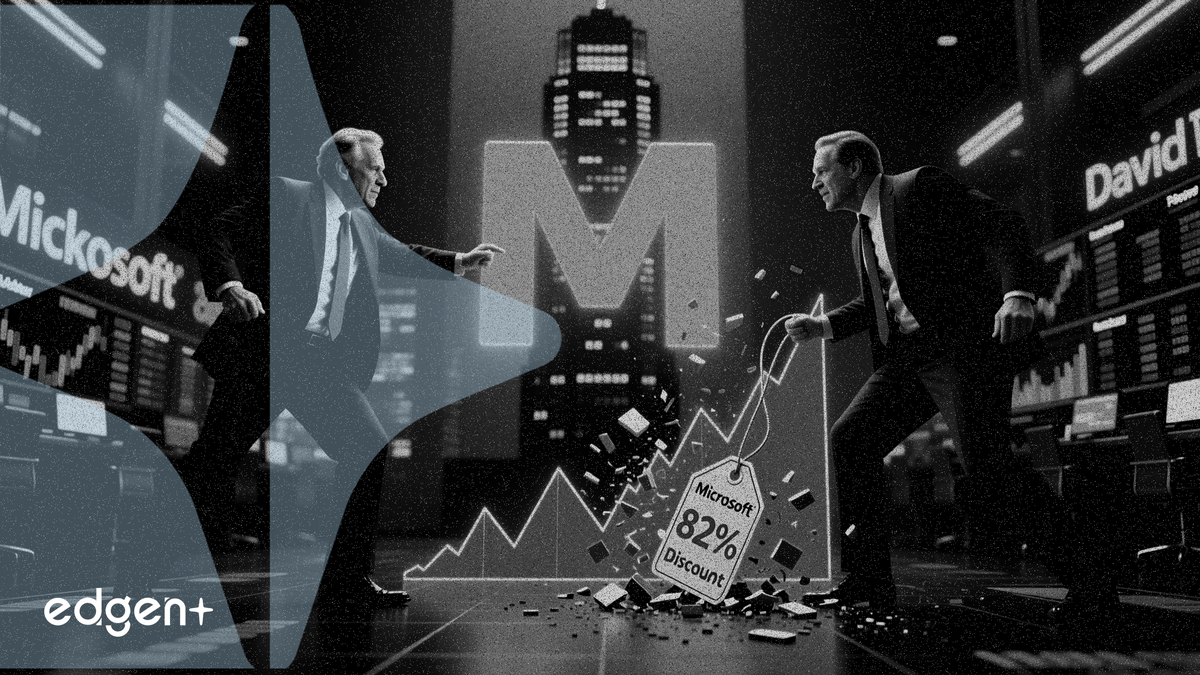
Two billionaire investors placed opposing bets on Microsoft in the first quarter, with David Tepper slashing his stake by 82% while Bill Ackman poured $2 billion into the stock.
David Tepper's Appaloosa Management cut its Microsoft stake by 82% in the first quarter of 2026, while Bill Ackman's Pershing Square initiated a $2.09 billion position of 5.65 million shares, 13F filings show.
"We view Microsoft as a highly compelling valuation opportunity given the strength of Azure and its AI business," Ackman said in a letter to investors explaining the new position.
Ackman started accumulating shares in February after Microsoft sold off following fiscal Q2 earnings. The stock has since fallen another 8% from $421.49 to $387.95, leaving his entry underwater. Tepper trimmed at higher prices, exiting most of his position before the deeper slide that has left Microsoft down 18% year to date.
The divergence highlights a debate over Microsoft's AI spending trajectory. Q3 capital expenditure jumped 84% to $30.88 billion, free cash flow fell 3%, and OpenAI-related losses widened to $3.1 billion from $523 million a year earlier — factors that may determine which billionaire placed the correct bet.
Ackman's thesis rests on Microsoft's cloud and AI momentum. Azure grew 40% in the most recent quarter, the Intelligent Cloud segment hit $34.68 billion, up 30% year over year, and the AI business surpassed a $37 billion annualized run rate, up 123%. Commercial remaining performance obligations reached $627 billion, providing multi-year revenue visibility.
The valuation case supports the entry. Microsoft trades at a forward P/E of 21 with a 34% return on equity. The Q3 earnings report delivered $4.27 per share versus the $4.07 consensus, marking a fourth straight quarterly beat. Analysts maintain a $560.95 price target, implying 31% upside from current levels.
The Bear Case Tepper Is Respecting
The spending side of the AI story gives reason for caution. Full-year free cash flow declined 3% as capital expenditures surged 45%. Seven insider transactions between March and June were all disposals, with zero purchases. OpenAI-related investment losses climbed more than fivefold year over year to $3.1 billion.
For investors, the opposing bets create a clear framework. Ackman is betting that Microsoft's AI-driven revenue growth will eventually outpace its spending, while Tepper is respecting the margin pressure from a capex cycle that has not yet peaked. The next earnings report will provide the first signal on whether free cash flow is inflecting higher.
This article is for informational purposes only and does not constitute investment advice.
