
China's presale reform forces developers to top out buildings before selling, stretching capital recovery to 6-12 months while mortgage terms extend to 40 years.
China's presale reform forces developers to top out buildings before selling, stretching capital recovery to 6-12 months while mortgage terms extend to 40 years.
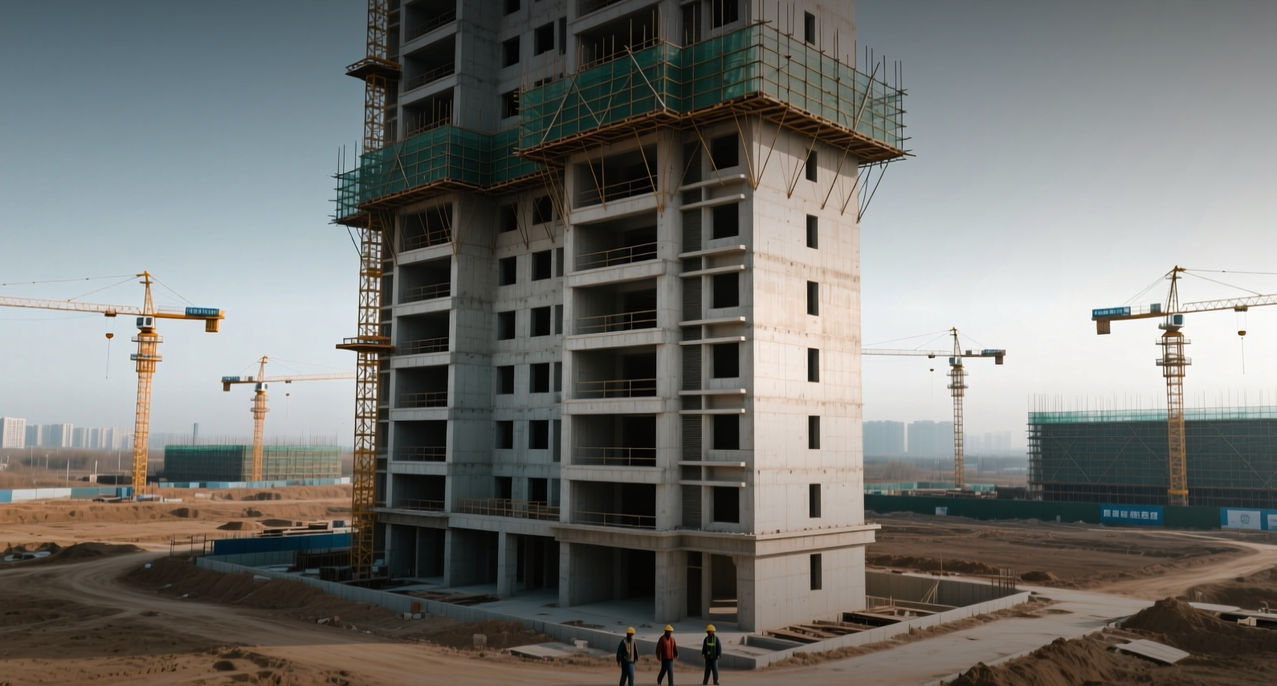
China's new presale rules require developers to finish building structures before selling off-plan, extending capital recovery cycles to 6-12 months from 3-6 months while mortgage terms stretch to 40 years.
"The reform exchanges short-term pain for the industry's long-term health, directly addressing delivery risks that have eroded buyer confidence," CMBI said in a research report.
The package, issued Aug. 28 by the Ministry of Housing and Urban-Rural Development, the People's Bank of China, the National Financial Regulatory Administration and the China Securities Regulatory Commission, also extends the maximum individual housing loan term to 40 years from 30. On a 1 million yuan loan at 3 percent, the monthly payment falls to 3,581.02 yuan from 4,216.04 yuan, a drop of about 15 percent.
The reform marks the end of the high-leverage, fast-turnover model that defined China's property market for three decades, pushing market share toward state-owned developers with cheaper financing. CMBI recommends selective exposure to quality SOE developers with high commercial-property holdings and core-city land reserves.
The presale threshold, raised to the "structural topping-out" stage, tightens developer liquidity and accelerates the exit of undercapitalized small builders, CMBI said. Full supervision of presale funds for newly granted land parcels ensures "what you see is what you get, and the property right certificate is delivered upon house delivery," said Zhao Xiuchi, dean of the Beijing-Tianjin-Hebei Real Estate Research Institute at Capital University of Economics and Business.
The pre-sale system, established in 1994 by the Urban Real Estate Administration Law, has been the mainstream way new homes are sold in China for more than 30 years. The latest notice does not abolish it outright but emphasizes "seeking progress while maintaining stability, establishing the new system before abolishing the old one," said Yan Yuejin, vice president of the Shanghai E-House Real Estate Research Institute. Completed-home sales will gradually become the market's mainstream, raising the bar on developer capital strength, project management and product quality, Zhao said.
The extension of the maximum mortgage term to 40 years is "a major breakthrough in the field of real estate finance," Yan said. Its most direct effect is to reduce early-stage monthly payments, letting more demand "dare to borrow and be able to borrow." Zhao cautioned the longer term is a "double-edged sword," since total interest rises and some borrowers may have retired by the time repayment ends.
The People's Bank of China and the NFRA also established a lead bank system for development loans, requiring banks to take full-process responsibility for project financing and provide loans to developers of all ownership types on an equal footing. The CSRC, in a separate opinion, built a multi-level capital market financing system spanning equity, mergers, bonds, asset securitization and private equity real estate funds. Li Yujia, chief researcher at the Guangdong Provincial Housing Policy Research Center, said the financing function of real estate is weakening, and "head-to-head" financing is gone forever.
Investor reaction has been more positive than expected, with focus shifting toward the long-term impact, CMBI said. The policy reinforces themes of supply contraction and market share concentration, placing the industry on a medium- to long-term recovery track with limited downside risks. C&D International Group (01908.HK), a state-backed developer, reported interim net profit down 9.7 percent year on year to 825 million yuan, showing the margin pressure even well-capitalized builders face.
Tian Lihui, professor of finance at Nankai University, said real estate finance has shifted from a "100-meter sprint" to a "marathon," testing endurance and long-termism rather than explosive growth. The last time regulators pursued such a full-chain overhaul was the 15th Five-Year Plan's push to improve commercial housing development, financing and sales systems, which analysts say now has a concrete institutional foundation. Dong Ximiao, chief economist at China Merchants Union Consumer Finance, said the credit overhaul builds a framework "more friendly to home buyers, more robust to the real estate industry, and safer to the financial system."
This article is for informational purposes only and does not constitute investment advice.
