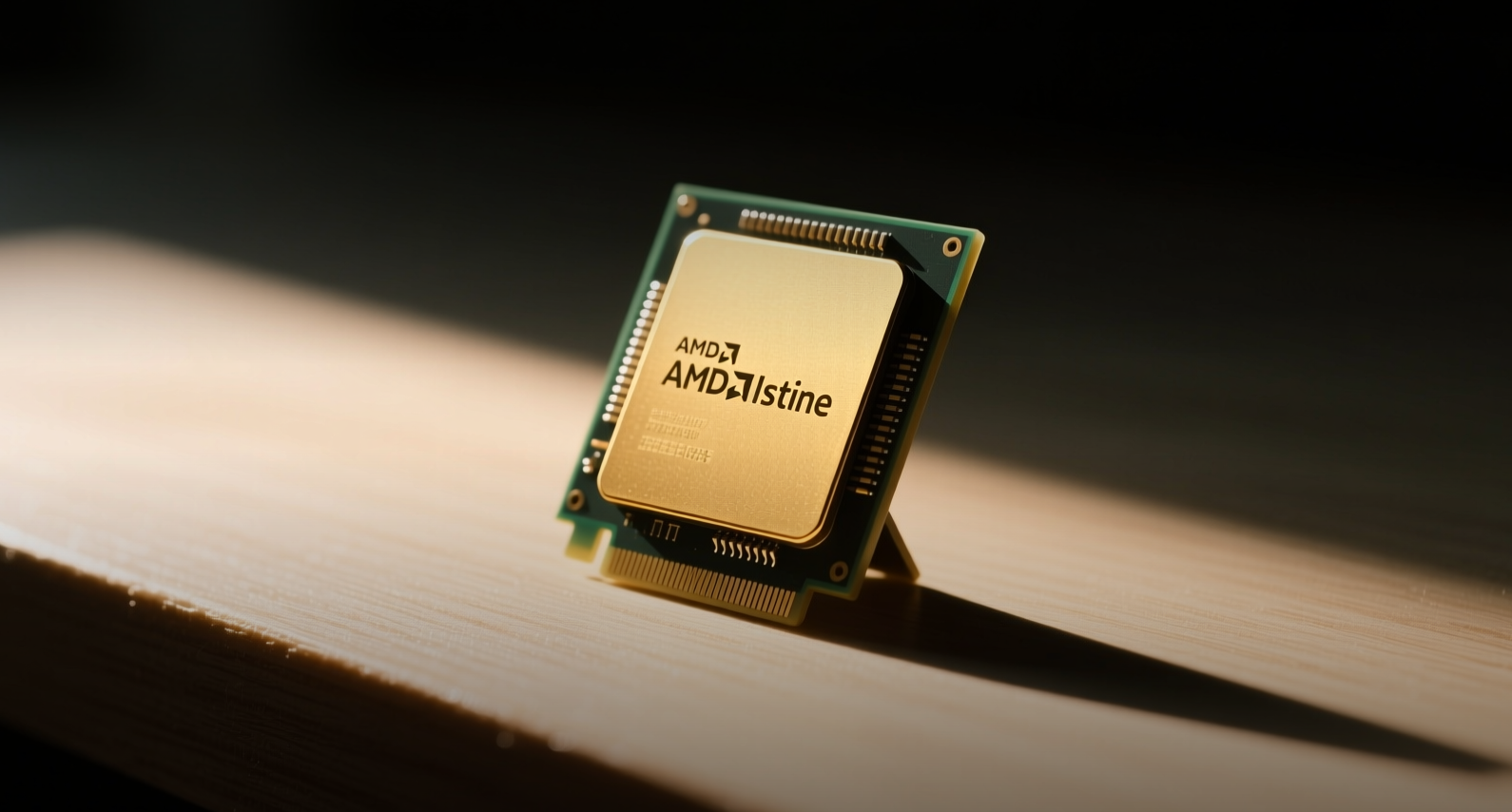
Nine months after shareholders torpedoed a $9bn CoreWeave takeover, Core Scientific locked in a far larger partner: AMD.
The former bitcoin miner said Tuesday it signed a data-center agreement with Advanced Micro Devices that could reach 2.5 gigawatts of capacity across the American South, a deal that pushes its contracted revenue past $24bn and cements its pivot from crypto mining to AI infrastructure.
"This partnership provides AMD with guaranteed, long-term data center capacity at a scale that matches our GPU roadmap," said Forrest Norrod, executive vice president and general manager of AMD's Data Center Solutions group, in a statement. "Core Scientific's existing power infrastructure and operational expertise made them a natural partner."
At the core of the arrangement are 15-year leases covering 529 megawatts of critical IT capacity across five sites in Texas, Oklahoma, Alabama and Georgia, with three five-year renewal options that could extend the relationship to three decades. AMD has taken 377MW directly, while a group of unnamed neocloud operators accounts for the remaining 152MW. Revenue is expected to begin flowing in 2027.
The deal caps a remarkable turnaround for Core Scientific, which spent much of 2025 as CoreWeave's acquisition target before its own shareholders voted down the roughly $9bn all-stock offer on Oct. 30. The company that could not persuade its owners to sell for $9bn is now, on paper, worth considerably more on its own — Core Scientific shares jumped as much as 10% on the news, while AMD slipped more than 5%.
AMD's Equity-for-Capacity Playbook
AMD has reserved the right to call on up to 1,925MW of additional capacity through December 2028, which is how the partnership arrives at its headline 2.5GW figure. The chipmaker also received a warrant for up to 30 million Core Scientific shares at $23.47 apiece, vesting at 12,222 shares for every megawatt brought online. About 6.5 million of those shares vested the moment the leases were signed.
The structure mirrors the equity-for-capacity model Nvidia used when it took a $2.1bn warrant in IREN for 5GW of data center capacity at its Sweetwater site. By tying its upside to the landlord housing its silicon, AMD gains guaranteed real estate at a moment when it is straining to compete with Nvidia in both AI training and inference.
The capacity will run AMD's Instinct GPUs, EPYC processors and ROCm software — a full-stack deployment that gives AMD a showcase for its AI ecosystem. The company has spent the past two years building credibility against Nvidia's dominant CUDA platform, acquiring Silo AI and promising Anthropic up to 2GW of its newest accelerators.
One wrinkle worth watching: AMD has agreed to provide credit support should any of the neocloud tenants occupying 152MW of capacity default. The chipmaker is effectively backstopping the smaller clouds that will run its hardware, a measure of how far it will go to seed an ecosystem around its chips.
What It Means for Investors
Core Scientific's leased footprint now stands at roughly 1.1GW, and the company's contracted revenue exceeds $24bn — though those are company figures rather than independently audited ones. The deal also leaves room for the company's existing relationship with CoreWeave, which still hosts GPUs under a separate multi-hundred-megawatt agreement.
For AMD, the partnership locks in power and data center capacity ahead of demand, removing one of the harder bottlenecks in its challenge to Nvidia's estimated $62bn data center GPU business. AMD shares trade at roughly 22 times forward earnings, a discount to Nvidia's 35 times, reflecting the market's skepticism about its ability to close the competitive gap. A deal of this scale — if executed — could begin to narrow that valuation disparity.
This article is for informational purposes only and does not constitute investment advice.