
Hong Kong's bourse operator is weighing a listing-rule overhaul that would fold about 300 small-cap companies into its main board.
Hong Kong's bourse operator is weighing a listing-rule overhaul that would fold about 300 small-cap companies into its main board.
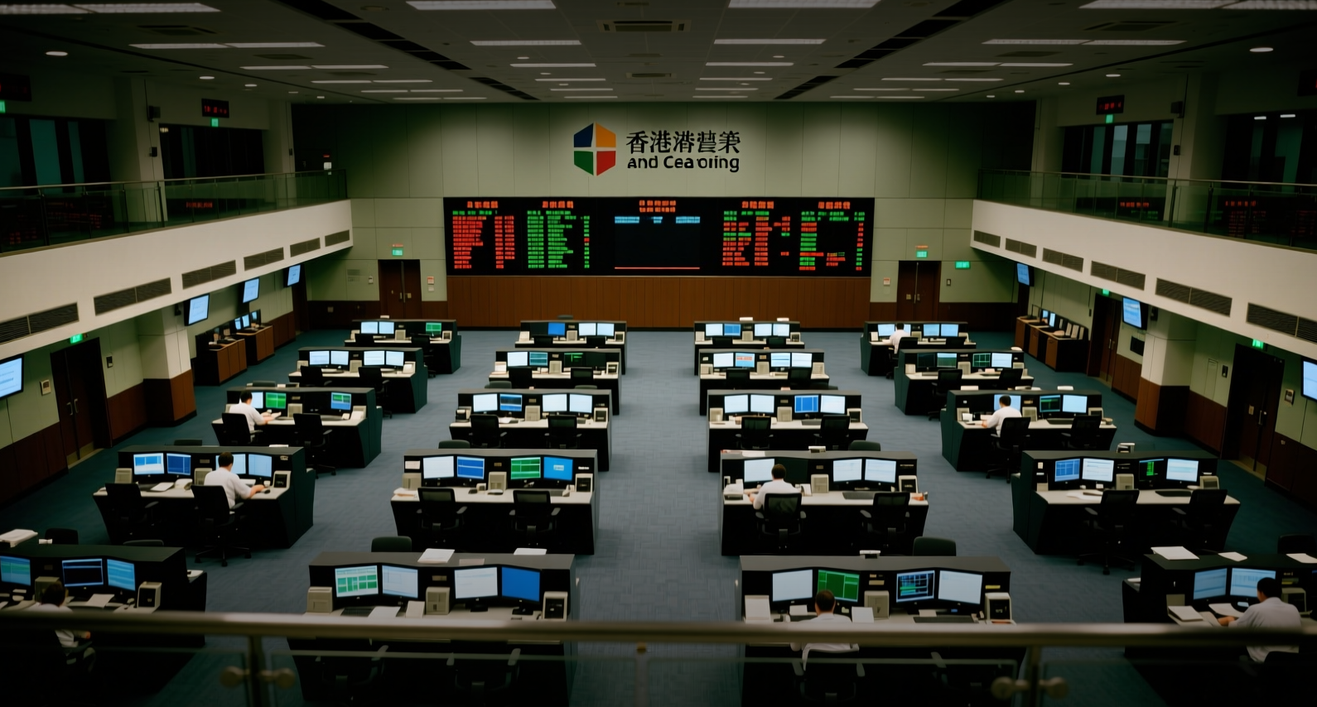
Hong Kong Exchanges and Clearing is exploring a new listing-rules chapter that would absorb about 300 GEM companies into the main board, part of a second-phase review aimed at reviving the underperforming small-cap board.
"There have been studies on reforming the GEM for a long time, as the second board did not really work well in terms of allowing smaller-sized companies to list," a person familiar with the discussions told the South China Morning Post. "Allowing these smaller players to list in a specific chapter may be a better option."
The proposal to create Chapter 18D would be subject to a public consultation by the end of the year, the person said. About 300 companies currently listed on GEM may be exempted under the new chapter and transferred directly to the main board. Since its 2018 reform, HKEX has introduced specialized listing chapters for companies that cannot meet general requirements — Chapter 18A for pre-revenue biotechnology firms, 18B for special purpose acquisition companies and 18C for large technology companies without revenue.
Merging GEM with the main board is one option to restructure the second board, which suffers from extremely low trading turnover and a limited number of newly listed companies. The new chapter would broaden the range of listed companies on HKEX while helping smaller firms obtain financing. An HKEX spokesperson said the exchange is examining additional initiatives to enhance the attractiveness of the listing framework and would share updates at an appropriate time.
GEM was launched in 1999 as a Nasdaq-style venue for growth companies, but it has struggled to attract listings and liquidity. The board has seen minimal turnover and few new entrants in recent years, prompting repeated calls for reform. The merger proposal marks the most concrete step yet toward consolidating the two boards.
The consolidation would align HKEX with a broader global trend of exchanges simplifying their listing structures to compete for issuers. Singapore Exchange has consolidated its boards over the past decade to streamline access, while the Shenzhen and Shanghai bourses have expanded their own small-cap and tech-focused boards. For Hong Kong, folding GEM into the main board under a dedicated chapter would preserve a pathway for smaller issuers while removing the stigma of a separate, thinly traded board.
The reform has drawn a positive response from analysts covering HKEX. Citi raised its price target on the stock to HKD500 with a Buy rating, while UBS lifted its target to HKD450 with a Neutral rating. HKEX shares traded up 1.4 percent, or HKD1.40, with short selling of HKD60.8 million representing 19.6 percent of turnover.
The consolidation could boost HKEX's revenue from listing fees and trading volumes by attracting more small-cap companies to Hong Kong. It also shows the exchange's commitment to improving its competitive position as a listing venue against regional rivals. The last time HKEX overhauled its listing regime — the 2018 reform that introduced the biotech and weighted-voting-rights chapters — it drew a wave of new-economy listings that reshaped the market's composition.
If the consultation proceeds as planned and the chapter is adopted, the transfer of roughly 300 GEM companies would take effect in stages, with existing issuers given time to comply with main-board disclosure and governance standards. The outcome will hinge on how regulators balance the goal of broadening access for small issuers against investor-protection concerns that have long shadowed the GEM board. For HKEX, the stakes are clear: a more active small-cap segment would deepen liquidity across the exchange and strengthen its pitch to companies weighing a Hong Kong listing against rival venues.
This article is for informational purposes only and does not constitute investment advice.
