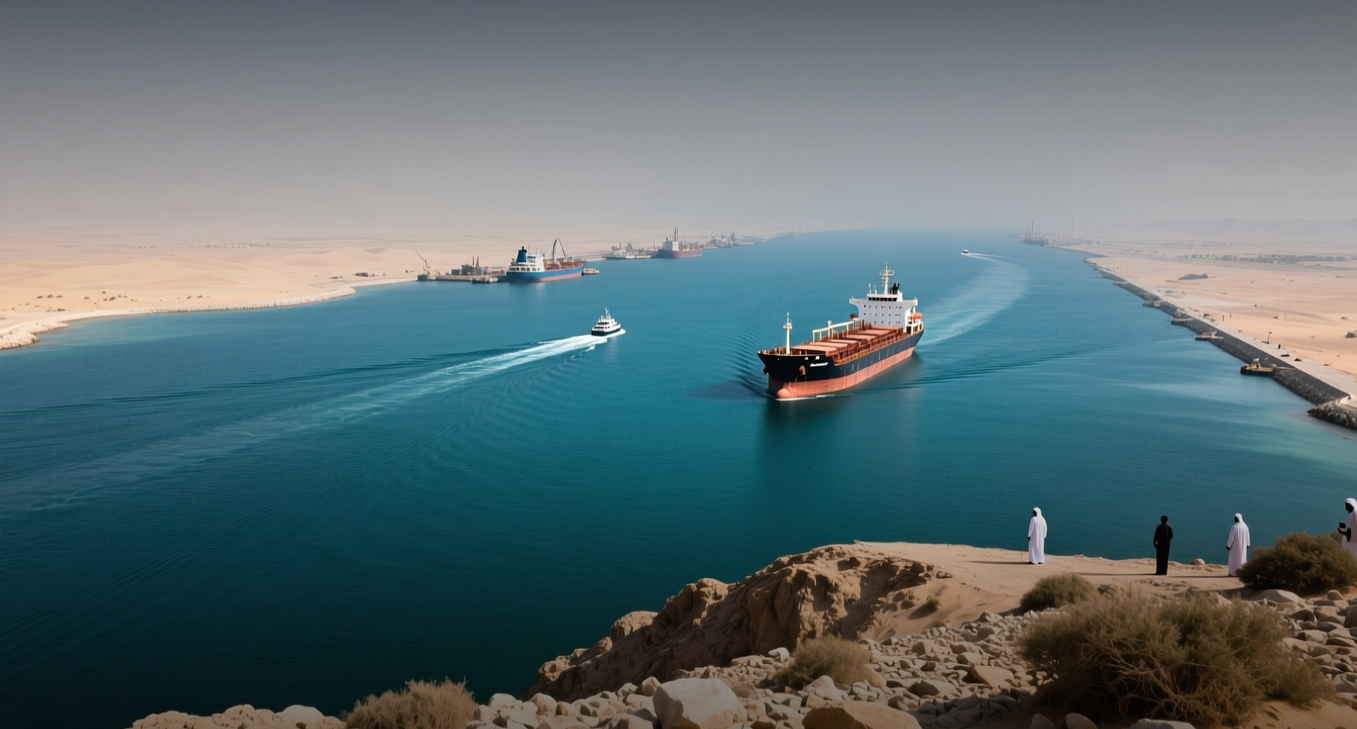
The buffer that normally cushions the oil market against supply shocks is being spent at the fastest rate on record. Crude and refined product stockpiles worldwide shrank by roughly 4.8 million barrels a day from March 1 through April 25, the steepest quarterly decline in International Energy Agency data, as the near-closure of the Strait of Hormuz choked off Persian Gulf flows. HSBC responded by raising its 2026 average commodity price gain forecast to 22 percent from 16 percent and lifting its 2027 projection by 14 percent, with chief global commodities economist Paul Bloxham calling the setup a "super squeeze" that can keep prices elevated for longer.
"Inventories are acting as the shock absorber of the global oil system," Natasha Kaneva, head of global commodities research at JPMorgan Chase & Co., said. "Not every barrel can be drawn."
Crude accounted for nearly 60 percent of the drawdown, with refined products making up the rest, according to Morgan Stanley data. JPMorgan warned OECD inventories could reach "operational stress levels" in early May and fall to "operational minimum" levels by September if Hormuz remains closed. Visible global oil stocks are already near their lowest since 2018, Goldman Sachs Group Inc. said, though the bank noted the pace of drawdowns has eased on weaker Chinese demand.
The physical squeeze is now visible across benchmarks. LME copper traded above $14,700 per tonne, a record, while Brent crude moved back above $102 per barrel. The Bloomberg Commodity Index is up 18 percent year to date and 24 percent over 12 months. Lithium has gained 130 percent over the past year.
Key Takeaways:
- Worldwide oil stockpiles are draining at the quickest quarterly pace the IEA has ever recorded, led by crude
- HSBC now expects a 22 percent average gain in commodity prices for 2026, up from its earlier 16 percent call
- LME copper set a record above $14,700 per tonne while Brent crude reclaimed $102 per barrel
Asia's fuel importers have roughly one month of cover
The most immediate stress is in fuel-import-dependent Asia. Traders identify Indonesia, Vietnam, Pakistan and the Philippines as most at risk, with shortages possible within a month, according to Bloomberg. Asia-Pacific inventories outside China have fallen by about 70 million barrels since the conflict began, Kayrros co-founder Antoine Halff said. Japan and India sit at at least 10-year seasonal lows, with stocks down 50 percent and 10 percent respectively.
Frederic Lasserre, head of research at energy trader Gunvor Group, said gasoline shortages in Asia are likely to emerge first, with Pakistan, Indonesia and the Philippines most exposed. If Hormuz stays closed into early June, parts of Asia could face a macroeconomic shock from gasoil shortages, he said, while Europe has a slightly longer window.
Europe's jet fuel is already the tightest product. Stocks at the Amsterdam-Rotterdam-Antwerp hub have dropped by a third since the war began to a six-year low, according to Insights Global. Lars van Wageningen, research and consultancy manager at the firm, said stocks could reach critical levels within five months as summer demand rises, with the UK, Germany and France most exposed.
Distillates at 2005 lows as the US exports its reserve
The United States, acting as supplier of last resort, has seen crude inventories including the Strategic Petroleum Reserve fall for four consecutive weeks. Distillate stocks are at their lowest since 2005 and gasoline inventories near seasonal lows last seen in 2014. Washington has used 79.7 million barrels of its pledged 172 million from the IEA-coordinated 400-million-barrel release; the SPR could fall to its lowest since 1982 if fully deployed.
Chevron Corp. chief financial officer Eimear Bonner said the depletion is now the binding constraint. "A lot of the inventory and spare capacity has been depleted already," she said. "We are going to start to see some import-dependent countries potentially start to face critical shortages as we get into the June-July time-frame."
The supply shock is no longer confined to crude. Six months into the Middle East conflict, Hormuz remains effectively closed with no clarity on reopening terms, while Houthi attacks on Red Sea and Saudi vessels continue to disrupt Bab al-Mandeb shipping. In its fifth year, the Russia-Ukraine war has pushed disruption into diesel, sulfur, fertilizer, aluminum, helium, aviation fuel and naphtha. Ukrainian drone strikes have held Russian output near 9 million barrels a day against a 9.8 million-barrel target, and Opec+ members cannot lift exports while Hormuz transit is impaired, even as the group prepares another 188,000-barrel-a-day quota increase.
Copper's record run meets a 20-year El Nino
Demand-side pressure is compounding the supply story. AI infrastructure investment and electrification have pushed most base metals higher, with copper's record reflecting both consumption growth and underinvestment in new mines. Aluminum gains have been muted because some cargo still transits Hormuz. Lithium's 130 percent advance may be capped as high prices draw new supply from Zimbabwe and Australia.
Agriculture faces weather and input-cost risk at once. The Southern Oscillation Index, which measures tropical Pacific atmospheric circulation, sits at a more than 20-year extreme, raising drought risk in Australia and Indonesia, weakening the Indian monsoon and pushing Southeast Asia hotter and drier. Fertilizer and diesel supply risk from the Middle East and Russia-Ukraine conflicts is lifting grain prices, with wheat the standout and cocoa and coffee also higher.
Precious metals have diverged. Gold retreated from its January 2026 peak as rising long-end rates pulled investors toward yield assets, though Bloxham said continued geopolitical risk, central bank buying and bond market uncertainty should support the metal, with constrained mine supply favoring platinum and palladium.
HSBC's statistical COCCLES model flags the market as being in a "super bull market" phase, which historically runs longer than other commodity cycles. The next test is whether Hormuz reopens before JPMorgan's September "operational minimum" window, and whether restocking after the conflict adds a fresh layer of demand — Plains All American Pipeline LP chief executive Willie Chiang said countries could rebuild strategic reserves above pre-war levels.
This article is for informational purposes only and does not constitute investment advice.