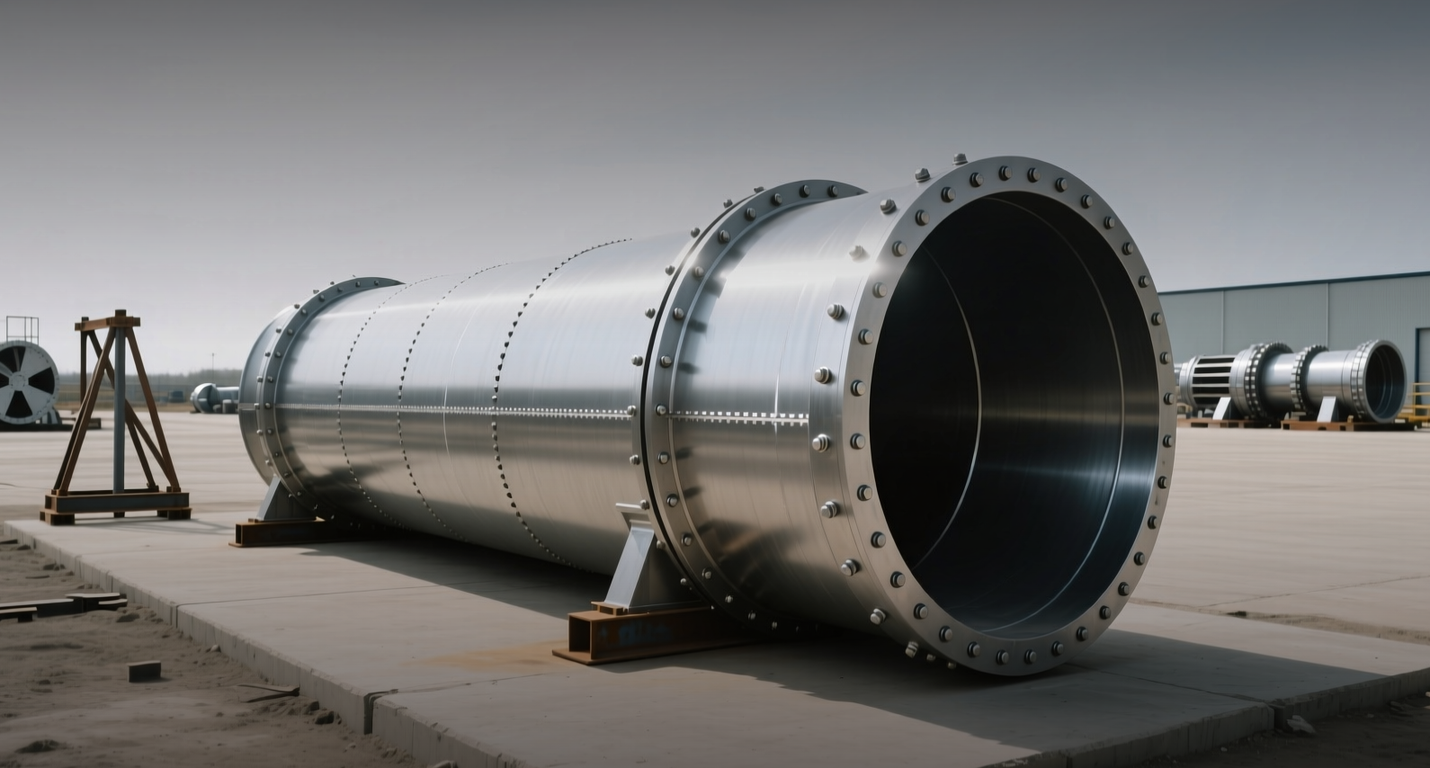
The $10 trillion nuclear renaissance has left its most hyped players behind.
Oklo and NuScale Power have shed a combined 85.3% in 2026, even as Bank of America projects a $10 trillion nuclear opportunity — a disconnect between the SMR narrative and commercial reality.
"I am not against using natural gas power as a bridge to solar and even using it long-term to some degree to help with the dip in solar power during the deep winter months," Elon Musk, chief executive of SpaceX and Tesla, wrote on X on July 31. Musk's pivot toward gas-fired power for SpaceX's rocket launches and AI infrastructure adds a competing energy source to the SMR pitch.
NuScale Power (NYSE:SMR) closed at $9.27 on Aug. 26, down 5.5 percent, after reporting second-quarter revenue of $75,000 — a 99 percent drop from the prior year as Romanian engineering contracts concluded. Research and development expenses rose 56 percent to $18.4 million, and the operating loss widened 49 percent to $64.0 million. Oklo (NYSE:OKLO) fell 6.03 percent to $41.60 the same session. Both stocks rebounded modestly Thursday on a broader risk-on tape, with NuScale up 4 percent to $9.65 and Oklo up 3 percent to $42.76.
The gap between the sector's promise and its financials is stark. Only two SMRs operate commercially worldwide. NuScale holds roughly $1.9 billion in cash and investments as of June 30, but burned $372.9 million in operating cash during the first half, offset by $984.5 million in stock issuance. Wall Street reflects the uncertainty: six analysts rate NuScale a buy, nine hold, and two sell, with a consensus target of $12.59 — about 36 percent above the current price.
The Commercial Gap Behind the Selloff
NuScale's second-quarter results illustrate the challenge. Revenue of $75,000 came almost entirely from engineering services, not reactor sales. The company is in talks with the Tennessee Valley Authority through its ENTRA1 partnership for a potential power-purchase agreement, and it is pursuing a six-module project in Romania. Neither effort generates binding revenue from reactor delivery yet.
The company's AI deployment — Nuclearn's AtomAssist platform, which cuts engineering document retrieval times by up to 80 percent — improves internal efficiency but does not change the revenue picture. Chief Technology Officer José Reyes said the tools are intended to boost team efficiency while maintaining safety and quality standards. NuScale did not disclose contract value, licensing fees, or anticipated cost savings.
Oklo faces a similar dynamic. The company posted its first real quarterly revenue earlier this year, but shares remain down 42 percent year to date through Wednesday's close. The company's Aurora reactor design, a liquid-metal-cooled fast reactor, has not yet received a construction license from the Nuclear Regulatory Commission.
Natural Gas and the Timing Problem
The SMR value proposition rests on speed: factory-built reactors that can come online faster than conventional plants. But natural gas offers an even faster path. SpaceX is building a dedicated natural gas pipeline to support rocket launches, and Musk's AI infrastructure increasingly relies on gas-fired power. If AI companies can meet near-term demand with gas, they can delay SMR commitments until larger conventional nuclear plants come online — potentially at lower operating costs.
That timing risk is existential for pre-revenue developers. NuScale and Oklo are unprofitable, with meaningful cash flows likely years away. Every quarter of delay extends the dilution timeline. NuScale's share count has grown from 93.25 million in 2024 to 410.39 million today, a 340 percent increase driven by equity raises.
The fuel complex tells a different story. Uranium Energy (NYSEAMERICAN:UEC) is up 12 percent year to date, and the Global X Uranium ETF (NYSEARCA:URA) has held steady near $48. The divergence between fuel producers and reactor developers shows investors are pricing near-term uranium demand while discounting SMR deployment timelines.
BWX Technologies (NYSE:BWXT), a profitable nuclear supplier with $3.51 billion in annual revenue, advanced 2.29 percent on Aug. 26 after securing a new reactor contract with the U.S. Army. The contrast with NuScale and Oklo — both down sharply the same day — highlights how the market rewards companies with actual revenue and punishes those without it.
For investors, the SMR trade is a bet on regulatory approval, customer financing, and construction execution — all of which remain unproven at scale. NuScale's $4.03 billion market cap against $31.5 million in trailing revenue implies a price-to-sales ratio of roughly 74x. The market is paying for a future that has not yet arrived, and the 85.3 percent combined decline in 2026 suggests investors are losing patience with the wait.
This article is for informational purposes only and does not constitute investment advice.