
OpenAI is betting that letting ChatGPT operate a computer like a human will turn the chatbot into the default interface for digital work.
OpenAI is betting that letting ChatGPT operate a computer like a human will turn the chatbot into the default interface for digital work.
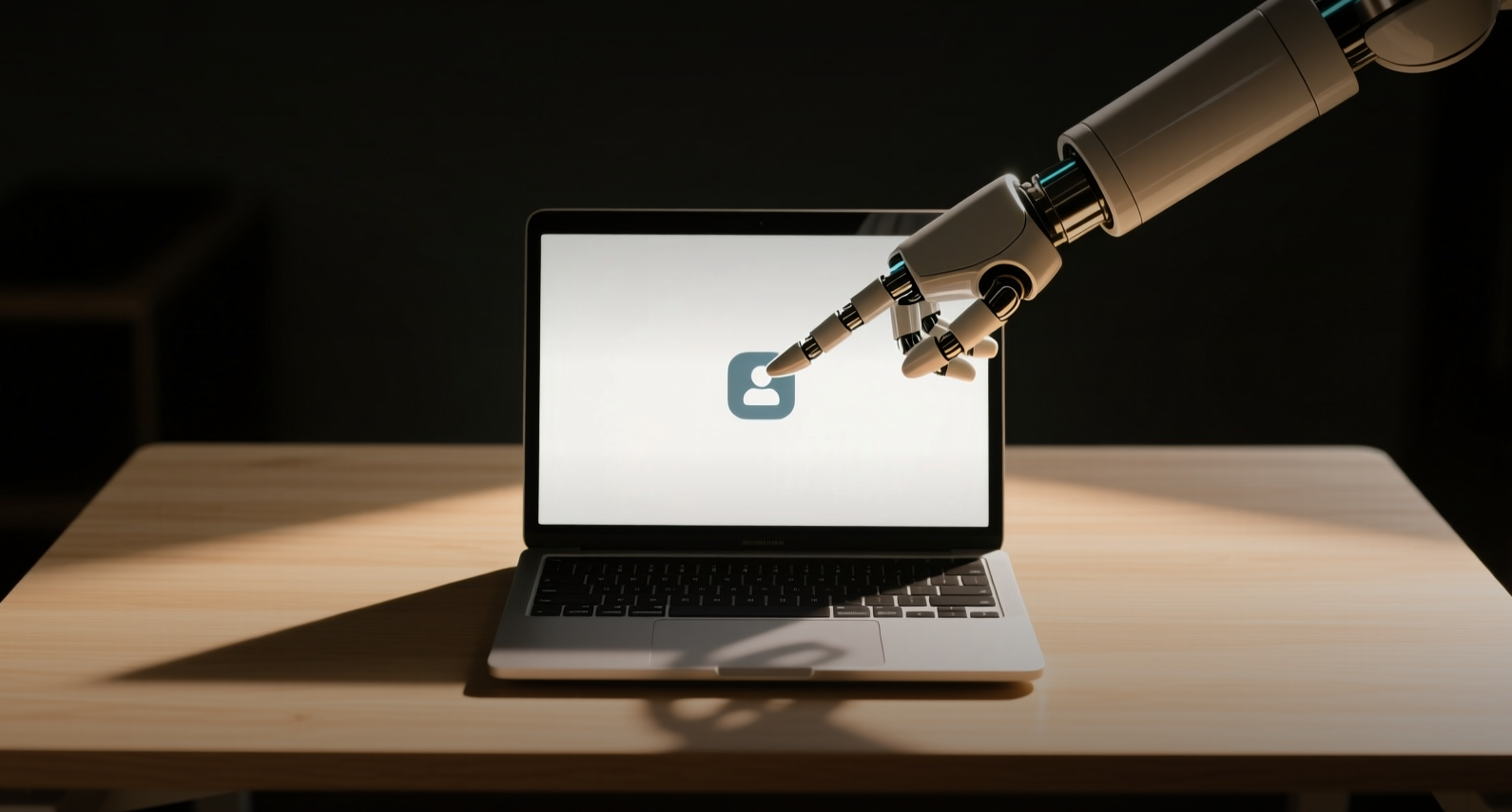
OpenAI is rolling Computer Use tools into ChatGPT, letting the assistant click, type, and navigate apps and browsers — a direct challenge to Anthropic, whose Claude Cowork has drawn 600,000 organizations.
"Once ChatGPT can use computers and software faster than you or I can, it's going to change the way that you, by default, want to interact with your computer," Ari Weinstein, a manager on OpenAI's Computer Use team, said.
The company this year launched a Chrome extension that lets ChatGPT take over the browser, created cloud and in-app browsers for the assistant to interact with public websites, and added Computer Use to its Codex coding tool. OpenAI's president, Greg Brockman, wrote on X that an April update made the technology "no longer just for coders, but for anyone who does computer work."
The expansion targets a market where Anthropic moved first, shipping its Computer Use in 2024, and where enterprise adoption is accelerating. OpenAI's move could reshape how businesses allocate software spending and intensify competition among Microsoft, Google, and Amazon-backed Anthropic.
How OpenAI trained Computer Use
Each phase of training for OpenAI's newest models included data or processes that improved them for Computer Use. Zhou Yu, an AI researcher at Columbia University who worked on a popular benchmark test for computer-use agents, said this type of extra training builds on a standard AI model's capabilities and teaches it how to handle more tasks.
At the earliest phase, where OpenAI builds a model's base with a vast amount of data, the company likely included frame-by-frame screenshots to "front-load" helpful information for Computer Use, Yu said. In a later step, developers can provide the models with data showing the ideal inputs that produce a given output — in this case, the computer functions that lead to that result, such as filling out a tax form or 3D-modeling an object.
This data can come from human trainers: OpenAI, when it announced a 2025 version of Computer Use, said it had used datasets where people demonstrated how to complete tasks. Yu said this type of data is expensive since it's hard to obtain and clean up for use. OpenAI also likely improves the models' computer-use skills by ordering them to try to complete virtual tasks and rewarding successful behavior — known as reinforcement learning.
The browser as the new battleground
OpenAI has upgraded how its models interact with a computer and process data while in use, Weinstein said. Previously, ChatGPT would take a screenshot of a user's computer, analyze pixels, inject a command, and repeat. Now, when the tool has a website open, it can swiftly read the page's underlying structure — its memory structure, accessibility information, and link connections.
The tool still takes screenshots; users are asked to let ChatGPT record their screen as they set up Computer Use, so it can rapidly analyze what's on-screen. Weinstein said the mix of tools helps provide OpenAI's Codex with a way to test the code it's built, find bugs, and make improvements in a "full loop."
That's the use case for Cristian Medina Ruiz, a hobbyist coder in the Czech Republic. He used Codex to rebuild the 2013 city-building game "SimCity" from its original source code. The Computer Use tool opened a window on his computer to verify that the game correctly simulated car movements and building images. Ruiz said Computer Use got him wholeheartedly into ChatGPT, and he now leaves his code running and iterating when he's away from his computer.
Weinstein and James Sun, who works on browser capabilities at OpenAI, said part of the technology's promise is connecting ChatGPT's agents to disparate parts of the internet and its "long tail" of websites. Most online tools are built only for the human hand — an appointment-scheduling website, a company's internal inventory dashboard, a social media platform. Weinstein and Sun said they're seeing users of Computer Use automate data entry work, compliance tasks, and calendar scheduling.
Yu said there's a "gap" between the technology's current speed and the level consumers want. "We definitely do see that computer-use agents could do well in limited domains, when we give it a lot of training data," Yu said. "When you want to generalize to any webpage, any application, any operating system, it's still very difficult."
When OpenAI CEO Sam Altman was discussing an early Computer Use version in 2025, he wrote on X that, "Although the utility is significant, so are the potential risks," and added, "We recommend giving agents the minimum access required to complete a task to reduce privacy and security risks."
The fact that OpenAI puts this onus on users worries Mark Beare, a general manager at the security firm Malwarebytes. "This does still feel a little bit wild west-ish to me," Beare said, adding that customers might not have enough privacy protections set up and that businesses also struggle to keep pace with AI governance.
Sun said his team has been grappling with what he called "confirmation policy," or how often and when the Computer Use tool should ask a user to permit its next step. So far, they've decided that whenever an AI agent transmits data or deletes something, it should ask the user first. "You can make something 100% safe, but then it's just very, very difficult to use, and you can make something that is very easy to use but very dangerous," Sun said.
For investors, the stakes are clear. OpenAI's expansion of Computer Use into ChatGPT positions it to capture a share of the enterprise automation market that Anthropic has been building since 2024. Microsoft, which backs OpenAI and embeds its models across Azure and Office, stands to benefit from broader agent adoption, while Google's Gemini and Amazon's investment in Anthropic create competing platforms. The race to make AI agents that can operate computers will determine which platform becomes the default interface for digital work — and which companies capture the subscription and usage revenue that follows.
This article is for informational purposes only and does not constitute investment advice.
