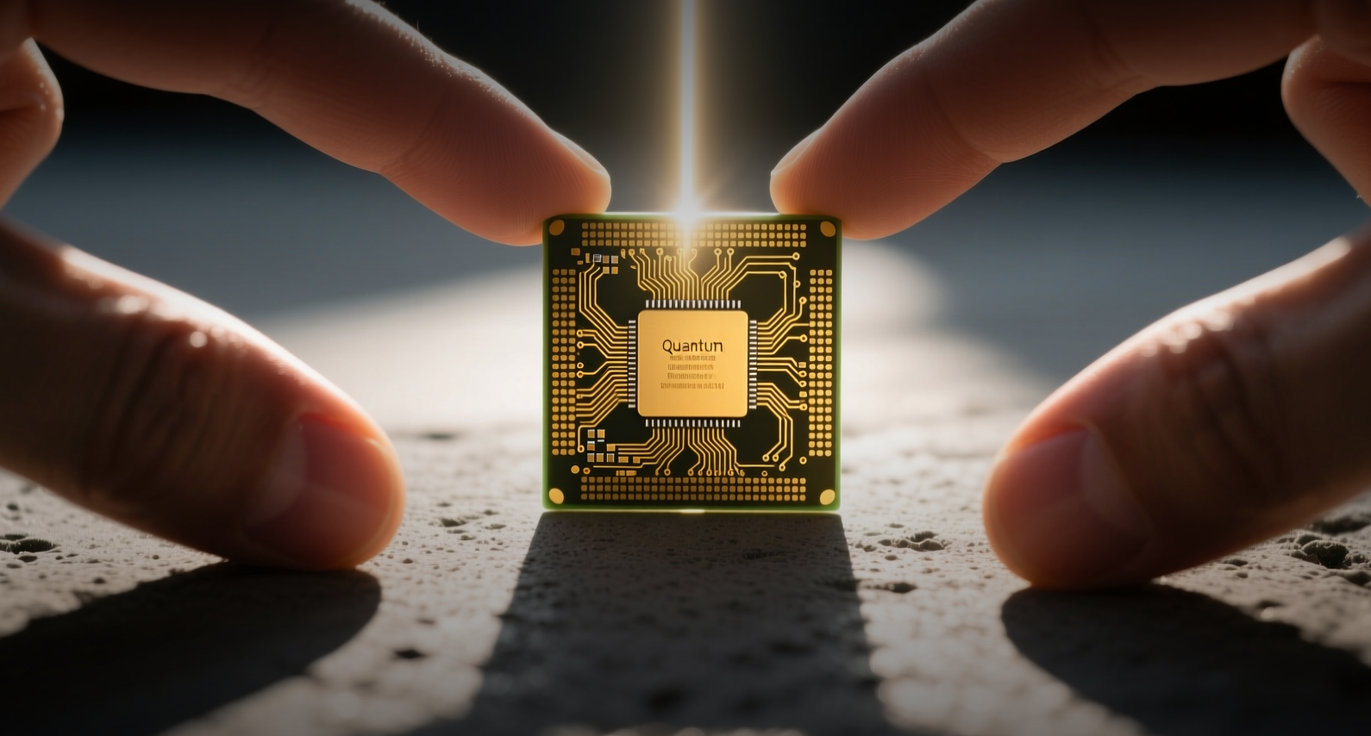
Quantinuum and Quanta Computer agreed to co-develop the manufacturing infrastructure for large-scale, fault-tolerant quantum computers, pairing the Nasdaq-listed quantum firm with a Fortune Global 500 builder of cloud hardware.
Quantinuum and Quanta Computer agreed to co-develop the manufacturing infrastructure for large-scale, fault-tolerant quantum computers, a partnership that pairs the Nasdaq-listed quantum firm with a Fortune Global 500 builder of cloud hardware.
"It is time for quantum computing to transition from breakthroughs in physics achieved in the lab to breakthroughs in system manufacturing that can be deployed and operated at scale," Dr. Rajeeb Hazra, president and chief executive officer of Quantinuum, said.
The companies plan to jointly develop critical hardware infrastructure, systems engineering, and manufacturing capabilities for future generations of Quantinuum's trapped-ion systems. Joint engineering is already underway to make future quantum computers more modular, manufacturable, and scalable. Quantinuum's Helios, its third-generation system, runs on 98 physical qubits with operational accuracy exceeding 99.9 percent and consumes less than 1 percent of the energy of modern supercomputers, according to the company. Pricing and availability timelines for the co-developed hardware were not yet disclosed.
The announcement follows an Aug. 11 partnership with Oracle that deployed Helios through Oracle Cloud Infrastructure, a deal that preceded a 28.02 percent 24-hour move in Quantinuum shares. The Quanta agreement gives Quantinuum a path from lab prototypes to commercially deployable systems, a milestone competitors including IBM and Google are also racing toward.
Quanta, a Taipei-based manufacturer that builds servers and cloud infrastructure for some of the world's largest data center operators, brings the industrialization expertise quantum hardware has lacked. The company's role in scaling advanced computing platforms — from hyperscale servers to AI accelerators — gives Quantinuum access to supply chains and manufacturing processes that trapped-ion systems require as they move beyond research settings.
The collaboration targets the transition from today's quantum systems to commercially deployable machines capable of supporting broad enterprise and scientific adoption. Quantinuum's QCCD architecture, which the company says achieves the industry's highest accuracy based on average two-qubit gate fidelity, underpins its commercially deployed generations of trapped-ion systems.
The race to fault tolerance has drawn competing approaches. IBM is pursuing superconducting qubits with its Condor and Heron processors, while Google's Willow chip demonstrated error correction that reduced errors as qubits scaled. Quantinuum's trapped-ion approach competes on accuracy rather than raw qubit count, a trade-off the Quanta partnership aims to industrialize.
For investors, the deal extends Quantinuum's commercialization runway. The company, with roughly 700 employees and more than 70 percent of its technology team holding PhDs or master's degrees, has active engagements across pharmaceuticals, materials science, financial services, and government. The Oracle partnership, announced two days earlier, had already pushed shares up 28.02 percent in 24 hours, giving the Quanta announcement a directly comparable market datapoint. The manufacturing agreement signals that the quantum sector is shifting from pure physics milestones to the supply-chain and production economics that determine which architectures reach commercial scale first.
This article is for informational purposes only and does not constitute investment advice.