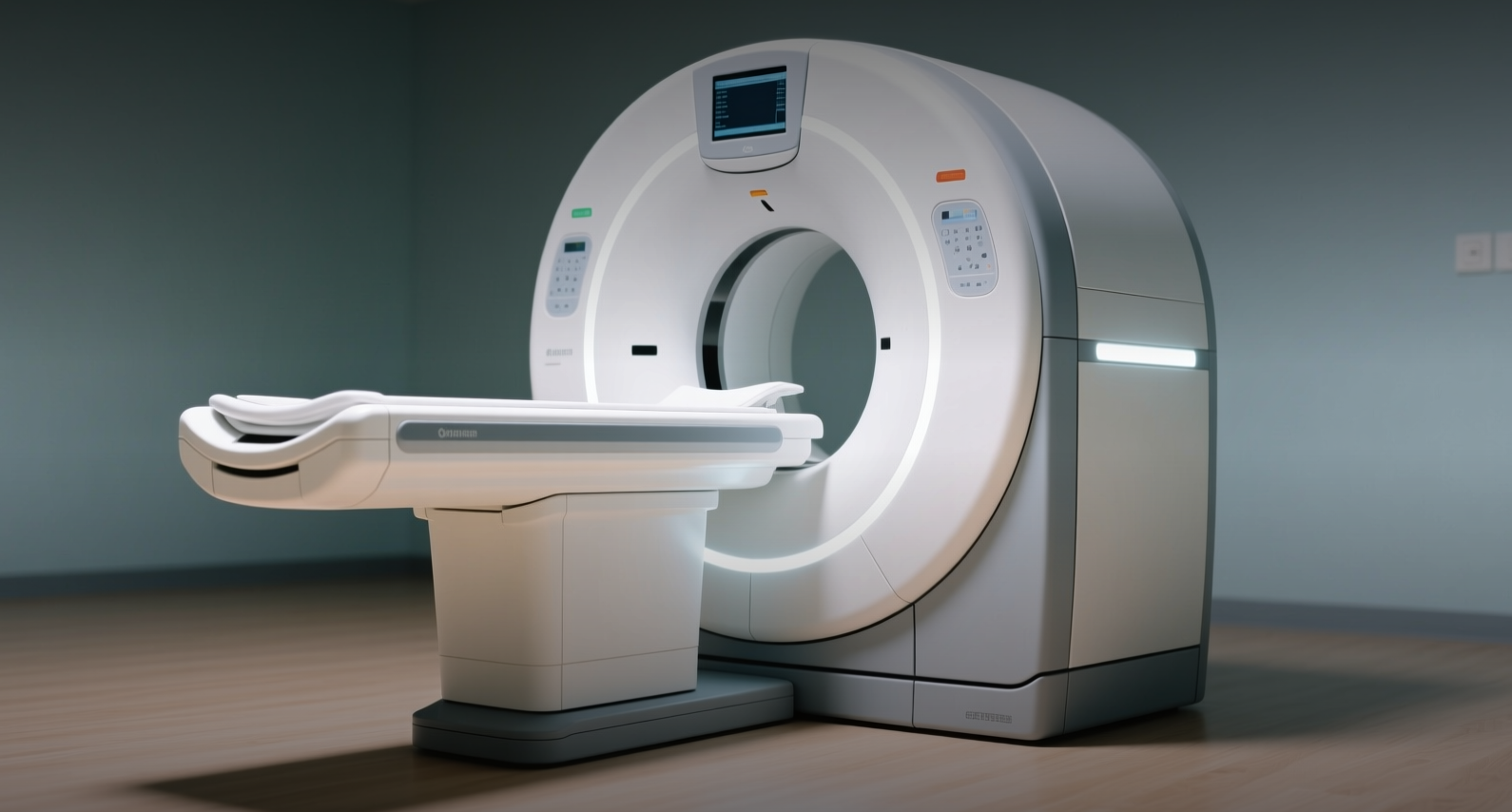
RadNet topped second-quarter estimates, with adjusted earnings of 29 cents a share on revenue of $622.7 million, up 25 percent from a year earlier, as advanced imaging volumes and its AI-driven Digital Health unit accelerated. The diagnostic imaging provider raised its full-year 2026 outlook for imaging-center revenue, adjusted EBITDA and free cash flow.
"Total company revenue and adjusted EBITDA were both quarterly records," Howard Berger, chief executive at RadNet, said on the earnings call. "Growth in the quarter was broad-based, driven by strong increases in aggregate and same-center procedural volumes, the contribution from recent acquisitions, a continuing shift in procedural volumes towards advanced imaging, and incremental Digital Health sales."
Adjusted EBITDA rose 22.7 percent to $99.7 million from $81.2 million a year earlier, while imaging-center adjusted EBITDA margin improved 17 basis points to 16.1 percent. Aggregate advanced-imaging volumes climbed 21.2 percent, with MRI up 21 percent, CT up 20.9 percent and PET/CT up 31 percent, pushing advanced procedures to 29.9 percent of total volume from 27.5 percent. Digital Health revenue surged 56.5 percent to $32.4 million, and annual recurring revenue reached $105.5 million, up 97 percent year over year.
The beat was broad enough to lift the stock 6.09 percent to $76.80 in after-hours trading, roughly 10 percent below its 52-week high of $85.84. Management raised imaging-center revenue guidance to $2.37 billion to $2.42 billion, adjusted EBITDA to $345 million to $358 million, and free cash flow to $115 million to $125 million, while reaffirming Digital Health revenue of $135 million to $145 million.
FDA Clearance Opens a Reimbursable AI Channel
RadNet's growth thesis now hinges on converting FDA-cleared AI tools into reimbursable revenue. The company received 510(k) clearance for its DeepHealth breast ultrasound solution, which automates lesion detection, measurement and draft reporting. In validation studies, the software localized breast lesions with more than 98 percent accuracy, improved breast-cancer detection sensitivity by 8 percent and cut radiologist interpretation time by 37 percent.
The product is eligible for reimbursement under an existing Category III CPT code, and RadNet plans to deploy it across its network by year-end, covering nearly 1 million annual breast ultrasound exams. Combined with its thyroid ultrasound AI, about 40 percent of RadNet's more than 3 million annual ultrasound exams could run through potentially reimbursable, FDA-cleared draft-reporting tools. Management expects close to 15 percent of RadNet volumes to use AI-powered automated draft reporting by year-end, rising to more than 50 percent by the end of the second quarter of 2027.
The company ended the quarter with $726.3 million in cash and a net debt-to-adjusted EBITDA ratio of 1.8 times, after repricing its term loan and revolving facility at a 25-basis-point lower rate and adding a $250 million incremental term loan in June. Medicare, which represents about 24 percent of RadNet's business mix, is expected to have a negative revenue impact of less than $1 million in 2027 under proposed physician-fee-schedule rates, according to CFO Mark Stolper.
The strategic bet is that AI adoption will ease the labor shortages squeezing radiologists and technologists across the industry, a pressure that has kept imaging-center margins from expanding faster. Berger said the company's tools, all FDA-approved, are designed to address "the shortage of radiologists to meet the growing demand that imaging continues to present." With 442 centers, including 157 held within health-system partnerships, RadNet is positioning its AI portfolio as the answer to hospital radiology departments facing reimbursement cuts and staffing gaps.
This article is for informational purposes only and does not constitute investment advice.