
Russia's failure to intercept ballistic missiles over Kyiv has turned the Patriot interceptor shortage into the war's most consequential supply constraint.
Russia's failure to intercept ballistic missiles over Kyiv has turned the Patriot interceptor shortage into the war's most consequential supply constraint.
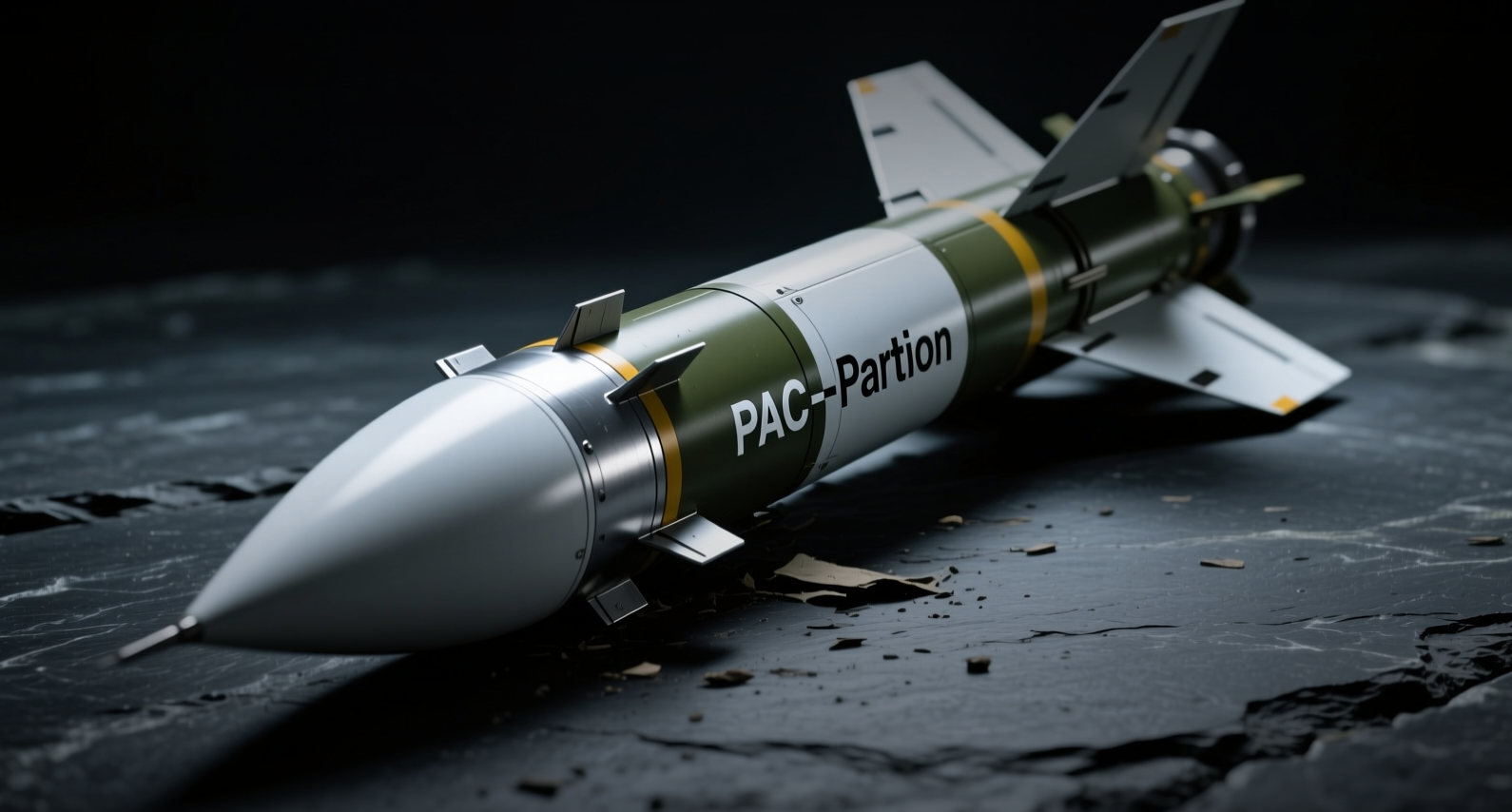
Russia killed at least 17 people in Kyiv on Wednesday after Ukraine's air defenses failed to intercept any of 28 ballistic missiles, exposing a Patriot interceptor shortage deepened by the U.S.-Iran war.
"Ballistic missile interceptors could have saved the lives of those killed today," Volodymyr Zelensky, Ukraine's president, said on X. "Delays in supplying them, or an unwillingness to provide antiballistic systems, lead directly to such horrific casualties and destruction."
The overnight barrage included 35 missiles and 185 drones, according to the Ukrainian Air Force, with strikes damaging 18 residential buildings, a school and the Lithuanian Embassy in Kyiv. Ukrainian delivery service Nova Poshta said three employees were killed and eight injured after Russia used cluster munitions against a facility, while eight people died at a train station in the Kyiv region, local officials said.
Russia fired a record 376 missiles at Ukraine in July, more than double the total launched in June, according to data compiled from Ukrainian Air Force reports. The Pentagon has committed more than $135 billion to boost production of Patriot interceptors and nuclear submarines, yet President Donald Trump said Friday the U.S. has not approved Ukraine's request to manufacture the interceptors domestically, citing the risk of sharing advanced technology.
The Patriot shortage has become the central constraint on Ukraine's air defense. Russia has stepped up ballistic missile attacks on Ukrainian cities in recent months to exploit the gap, and the U.S.-Iran war has compounded the global shortfall. Washington and European capitals have been reluctant to draw down their own limited stocks, leaving Kyiv to ration interceptors against an escalating strike tempo.
Trump's reversal on a production license complicates Kyiv's path. He said last week he supported giving Ukraine a license to produce Patriots itself, then backtracked, calling the transfer of such technology "a big step" and "a hard thing to give away." Even with approval, setting up domestic production would take time, leaving Ukraine dependent on foreign shipments in the interim.
Lockheed Martin, the manufacturer of the PAC-3 interceptor, remains central to the discussions. Ukrainian Ambassador Olha Stefanishyna said Thursday that Lockheed is committed to expanding cooperation with Ukraine, and executives met with Zelensky earlier this week. The company is expected to send representatives to Ukraine to explore collaboration.
The imbalance between Russian missile production and Western interceptor supply is widening. Ukrainian intelligence estimates Russia produces about 60 Iskander-M ballistic missiles and 40 S-400 missiles monthly, while the Kremlin has increasingly tapped refurbished S-400 systems and Zirkon missiles to sustain the higher strike tempo. Russia launched over 120 ballistic missiles in July alone, according to Ukrainian Air Force data.
The last comparable escalation came in October 2025, when Russia launched 270 missiles in a single series. The current pace exceeds that, and Zelensky has pressed Western nations to tighten sanctions on Russian missile production while accelerating interceptor deliveries.
The shortage has direct implications for defense contractors. The Pentagon's $135 billion commitment to boost Patriot interceptor output signals sustained demand for Lockheed Martin's PAC-3 program, even as the White House resists transferring production know-how to Kyiv. European allies, holding limited stocks, face a choice between defending their own airspace and replenishing Ukraine's depleted arsenal.
For Ukraine, the near-term outlook hinges on Western deliveries. If interceptor shipments accelerate, Kyiv can restore protection over its cities; if not, Russia's ballistic missile campaign is likely to inflict further civilian casualties while Moscow's ground forces grind forward at a slow pace. Russian forces advanced just 37.85 square kilometers in July, according to the Institute for the Study of War, paying a heavy price in casualties for minimal territorial gain.
This article is for informational purposes only and does not constitute investment advice.
