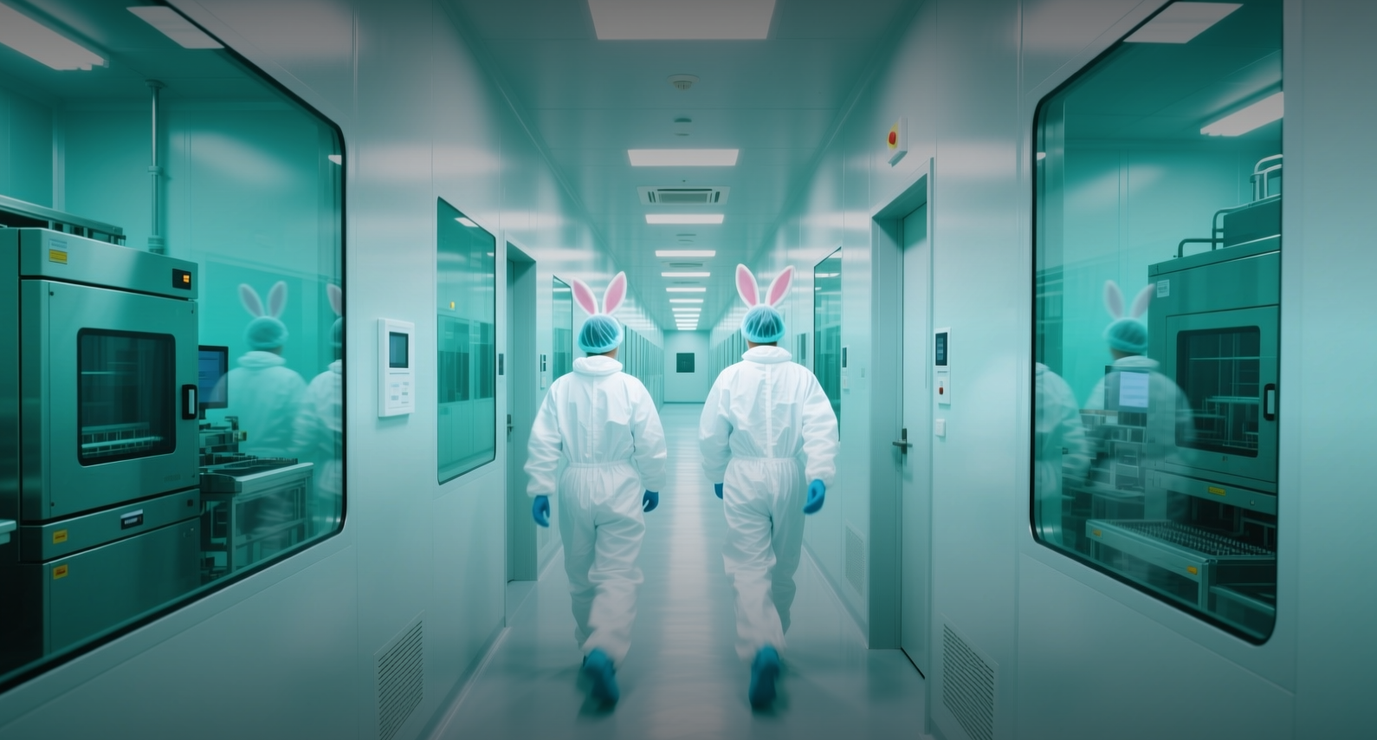
SK Hynix's co-packaged optics roadmap extends photonics from network switches toward processors and memory, expanding Coherent's addressable market.
SK Hynix's co-packaged optics roadmap, published in Nature Electronics on Aug. 20, extends photonics from network switches to processor-memory links, expanding Coherent Corp.'s addressable market beyond the $15 billion CPO estimate the company presented at OFC 2026.
The roadmap, co-authored with researchers from leading universities, argues the AI industry is moving from chip-level competition toward system-level competition, where data must flow between thousands of accelerators, pooled memory resources, and network switches. SK hynix, the leading supplier of high-bandwidth memory used with Nvidia accelerators, describes a photonic interposer that directly connects computing resources in an XPU pool with memory resources in a separate memory pool.
Coherent already generates substantial revenue from the current optical transition. Data Center and Communications revenue rose 59 percent year over year to $1.62 billion in fiscal Q4, reaching 79 percent of total company revenue. Total quarterly revenue climbed 34 percent to $2.05 billion, with adjusted EPS of $1.74 versus $1.00 a year earlier. Nvidia invested $2 billion in Coherent in March as part of a multiyear strategic partnership covering optical technology, manufacturing expansion, and capacity access.
The SK hynix roadmap matters because it suggests optics will not remain confined to the edges of AI servers and switches. If processor-to-memory photonics reaches production, Coherent's component portfolio — indium phosphide lasers, external laser sources, silicon photonics, microlenses, fiber-attach assemblies — could capture content at multiple layers of the AI system, not just the transceiver slot.
CPO Has Entered Production
Co-packaged optics moved from laboratory demonstrations to commercial deployment in May, when Nvidia announced its Spectrum-X Ethernet Photonics switches were in production as part of the Vera Rubin infrastructure ramp. The platform uses CPO and 200-gigabit-per-second serializer/deserializer technology, with Nvidia claiming five times better power efficiency and five times longer AI-system uptime than traditional transceiver-based networks. CoreWeave, Lambda, and Oracle Cloud Infrastructure are among the first identified adopters.
SK hynix's contribution is distinct from Nvidia's switch-level CPO. The company is not an optical-component manufacturer trying to create demand for its own products. It is the leading HBM supplier, and its decision to publish a processor-to-memory optical architecture provides independent confirmation that data movement is becoming a system-level constraint. Nvidia validates the near-term CPO market in switches; SK hynix expands the long-term opportunity toward memory and compute.
Coherent's Breadth Across the Optical Stack
Coherent's competitive position rests on vertical integration across nearly every CPO component. The company produces high-power indium phosphide continuous-wave lasers at its Sherman, Texas, facility, integrates them with isolators and thermoelectric cooling into external laser-source modules, and designs silicon-photonics products, microlenses, polarization-maintaining fiber, and fiber-attach assemblies.
At OFC 2026, Coherent disclosed very-high-volume, multiyear orders from a leading AI data center customer for CPO solutions, including high-power lasers manufactured on its expanding 6-inch indium phosphide platform. The company also demonstrated a socketed 6.4-terabit silicon-photonics CPO platform combining an external laser source, internally produced lasers, isolators, thermoelectric cooling, polarization-maintaining fiber, microlenses, and fiber-attach technology.
The 6-inch wafer transition is financially significant. Moving from 3-inch to 6-inch wafers increases available manufacturing area by approximately four times, and Coherent reports yields on the 6-inch platform have exceeded its older 3-inch lines. This capacity expansion is essential because CPO revenue depends on producing large quantities of high-power lasers with consistent reliability and acceptable cost.
Competition remains meaningful. Lumentum Holdings competes in high-power lasers and external laser sources, Corning supplies optical fiber and connectivity products, and TSMC handles silicon-photonics manufacturing and advanced packaging. Nvidia's parallel $2 billion investment in Lumentum confirms the company intends to maintain multiple laser suppliers. But Coherent's breadth — spanning active and passive optical components, transceivers, and advanced manufacturing — gives it several potential revenue paths as CPO architectures reach volume production.
The revenue record supports the thesis. Networking revenue increased 55.6 percent from fiscal 2022 through fiscal 2025, from $2.198 billion to $3.421 billion, before Data Center and Communications accelerated further in fiscal 2026. Management guided fiscal Q1 2027 revenue to between $2.2 billion and $2.4 billion, with non-GAAP earnings of $1.85 to $2.05 per share. The midpoint would represent another sequential increase of approximately 12 percent.
The principal risk is adoption timing. SK hynix's photonic-interposer architecture remains a technology roadmap, not a product with a disclosed manufacturing date or customer commitment. Processor-to-memory optical links will require new standards, packaging techniques, memory controllers, and system architectures. Customer concentration is another concern — AI optical demand is driven by a relatively small number of hyperscalers and accelerator-platform companies.
Coherent shares, trading at roughly 70 times trailing earnings and about 37 times forward estimates, already reflect substantial enthusiasm for AI optical networking. The possible mispricing lies in whether investors are valuing Coherent primarily as a transceiver supplier or as an enabling supplier for the optical fabric connecting processors, switches, and memory throughout future AI systems. SK hynix's roadmap supports the broader interpretation.
This article is for informational purposes only and does not constitute investment advice.