

SpaceX's recovery of an intact Starship after 24 days adrift gives engineers their first direct look at a vehicle that survived atmospheric reentry.
SpaceX's recovery of an intact Starship after 24 days adrift gives engineers their first direct look at a vehicle that survived atmospheric reentry.
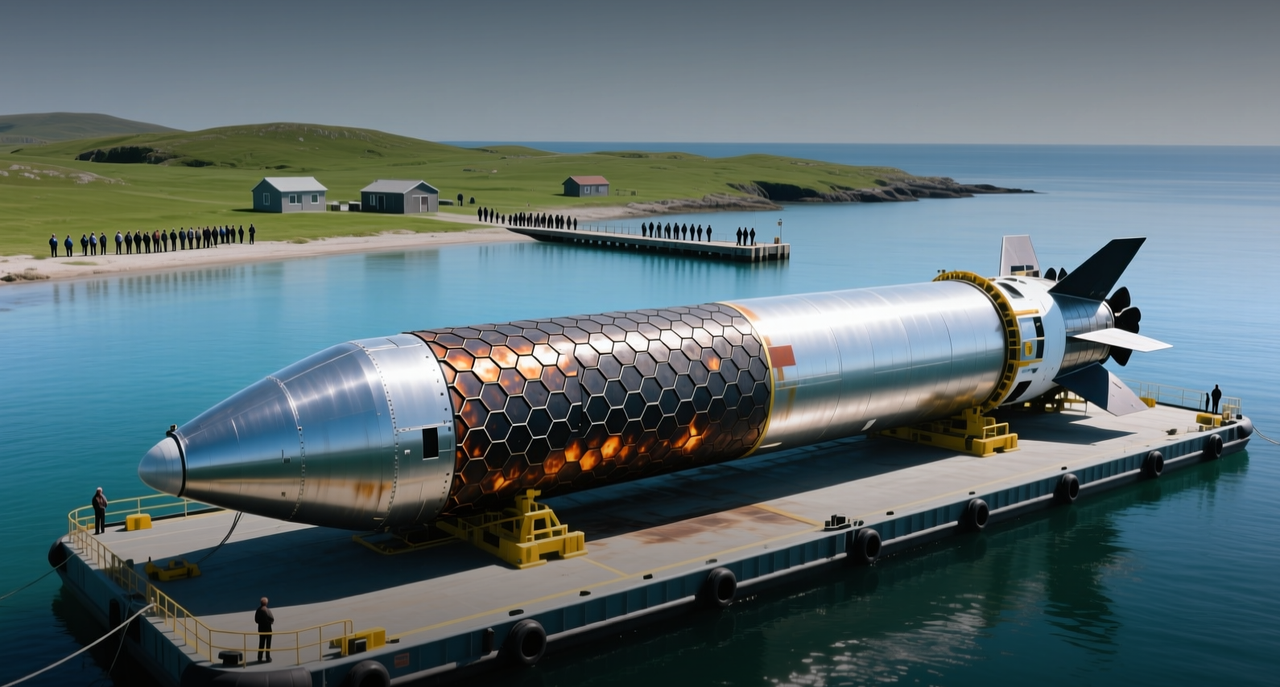
SpaceX recovered the intact upper stage of its Starship rocket after nearly 24 days at sea, the first salvage of flight hardware from an ocean landing and a direct look at the vehicle's 18,000 heat-shield tiles.
"Starship Flight 13 is being recovered from sea," Elon Musk, SpaceX's chief executive, said in a post on X, confirming the operation after recovery crews towed the 52-meter spacecraft several hundred miles across the Indian Ocean.
The vehicle, designated Ship 40, was guided into sheltered waters off Christmas Island, an Australian territory home to fewer than 1,200 residents, where it has drawn sightseers and inspired a local signature cocktail. "A team of SpaceX engineers is on their way to conduct additional analysis on the vehicle in calmer waters before attempting to return it to Starbase," the company said in a post on X.
The recovery defied expectations set weeks earlier, when Musk cautioned that salvage was "not looking good" because of rough seas. It comes as SpaceX prepares for Flight 14, targeted for early to mid-September, which may attempt to catch the returning upper stage with the launch tower's mechanical arms — a step toward full reusability of both Starship stages.
The arrival turned the remote outcrop into an impromptu draw. David Watchorn, director at Extra Divers Australia, described watching the rocket arrive as "surreal," while wildlife photographer Chris Bray said the size of the online following rivaled his usual nature subjects. "Pretty amazing thing to have turned up on your little tiny island in the middle of nowhere," Bray said.
Ship 40 launched on July 24, deployed 20 Starlink V3 satellites, and completed a controlled soft landing in the Indian Ocean — an outcome that surprised even SpaceX officials, who had expected the vehicle to topple over and disintegrate as earlier Starships had done. The intact return gives engineers unprecedented access to the thermal protection system that Musk has called the program's most pressing unsolved challenge.
During SpaceX's first quarterly earnings call on Aug. 4, Musk declared the heat-shield problem "solved," though some industry experts remain cautious. The recovered tiles will now undergo laboratory testing and potentially fly on future missions, offering concrete evidence about whether the thermal protection system can withstand the high flight rates required for SpaceX's plans involving lunar and Martian bases.
The timing is significant. SpaceX completed a single-engine static fire test on Ship 41 on Aug. 19, demonstrating the deorbit burn needed for orbital missions, followed by a full six-engine test the next day. Flight 14 will be Starship's first orbital flight and the third launch of the upgraded Version 3 vehicle, which SpaceX introduced in May. The company is also modifying a Starship V3 to dock with NASA's Orion spacecraft as part of the Artemis III mission to Earth orbit next year.
SpaceX shares (NASDAQ: SPCX) have climbed roughly 40 percent since falling to a low of $104.83 on Aug. 3, following a second-quarter report that showed revenue surging 92 percent year over year to $7.8 billion. The company's AI business generated $2.6 billion in quarterly revenue, up from $737 million a year earlier. Harvard Management Co. disclosed a $2.2 billion stake in SpaceX, holding 12.94 million shares of Class A common stock at the end of the second quarter, according to 13F filings.
The recovered Starship will not fly again — saltwater exposure has likely compromised its engines, stainless steel structure, and sensitive electronics. But the hardware represents an invaluable resource for validating SpaceX's design assumptions and accelerating development of a fully reusable launch system, a core driver of the company's valuation. Wall Street analysts maintain a Moderate Buy consensus rating on the stock, with an average price target of $232.35 per share, according to TipRanks data.
This article is for informational purposes only and does not constitute investment advice.
