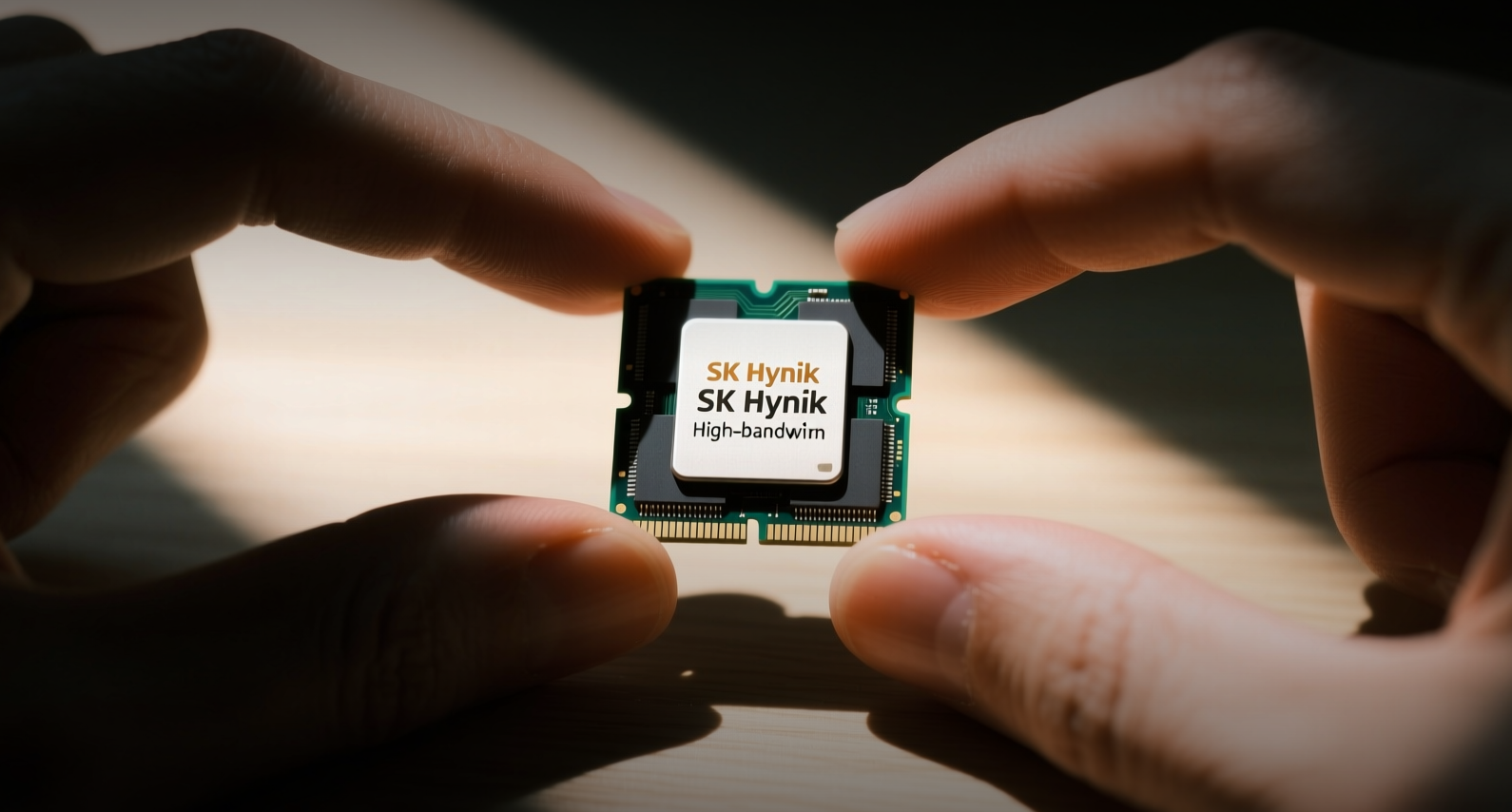
Tradr ETFs launched two single-stock leveraged funds on SK hynix's US-listed shares Monday, bringing the total number of leveraged ETF products tied to the memory chip maker to at least five as demand for amplified AI-semiconductor exposure continues to accelerate.
"Fresh off its much anticipated recent US listing, SK hynix stands out as one of the world's most important DRAM suppliers and is the leader in high bandwidth memory as demand for its products from AI hyperscalers continues to accelerate," Matt Markiewicz, Head of Product and Capital Markets at Tradr ETFs, said.
The Tradr 2X Long SK Hynix Daily ETF, trading under SKHA, and the Tradr 2X Short SK Hynix Daily ETF, under SKHN, both listed on Cboe and seek 200% and negative 200% of SKHY's daily return respectively. Tradr's lineup now spans 76 leveraged ETFs. The new products join existing SK hynix leveraged funds including Direxion's SKHL and T-Rex's HYNX on the long side and SKDD on the short side, all offering identical 200% daily leverage ratios.
The proliferation of leveraged ETF products on a single stock that only listed in the US six weeks ago reflects extraordinary retail and institutional appetite for high-beta semiconductor exposure. But the daily reset mechanics that make these products suitable for intraday trading also create volatility decay that can erode returns over multi-day holding periods, a risk amplified by SK hynix's primary listing on the Korean Stock Exchange, which produces overnight gap risk during US trading hours.
How SKHA and SKHN differ from existing products
The mechanical objective of 200% daily long and negative 200% daily short exposure is identical across all competing products, making liquidity the primary differentiator rather than product structure. SKHL from Direxion and HYNX from T-Rex already provide 200% daily long exposure to SKHY, while SKDD offers the short-side equivalent. Tradr's Cboe listing rather than NYSE Arca means the new funds trade at market prices that can develop premiums or discounts to net asset value, particularly in early trading when liquidity is thinner.
Issuer track record matters for execution quality. GraniteShares' NVDL, a 2X Nvidia fund, grew to roughly $5.7 billion while later competitors struggled to gain traction, demonstrating that first-mover liquidity advantages tend to persist in single-stock leveraged ETFs. Investors comparing SKHA against SKHL or HYNX should evaluate actual bid-ask spreads and order book depth after the launch date rather than assuming equivalent liquidity from identical leverage ratios.
The daily reset and overnight gap risks
The daily reset is the most important mechanical feature of both products and the one most frequently misunderstood. Each trading day, SKHA and SKHN reset their exposure to deliver exactly 200% or negative 200% of SKHY's return for that specific day, starting over from the new price level regardless of prior performance. This creates volatility decay: if SKHY falls 10% on day one and rises 11.1% on day two to return to its starting price, SKHA loses approximately 2.2% over the two-day period despite the underlying being flat.
SK hynix's primary listing on the Korean Stock Exchange introduces an additional risk specific to these products. Material news, including earnings releases and customer announcements, can produce significant price movements in Korean shares during US overnight hours when SKHA and SKHN are not trading. A 5% gap down in SKHY at the US open becomes approximately a 10% opening loss in SKHA, with no opportunity for holders to exit before the damage materializes. SK hynix reports Q2 2026 results on July 29, creating specific overnight gap risk for holders of either product through that event.
For short-term directional traders with holding periods measured in hours, SKHA and SKHN provide a useful tool for expressing high-conviction views on SK hynix without margin accounts or options. For long-term investors in the HBM thesis, owning SKHY directly remains the appropriate vehicle — volatility decay destroys value in leveraged products over multi-quarter holding periods regardless of how correct the underlying thesis proves.
This article is for informational purposes only and does not constitute investment advice.