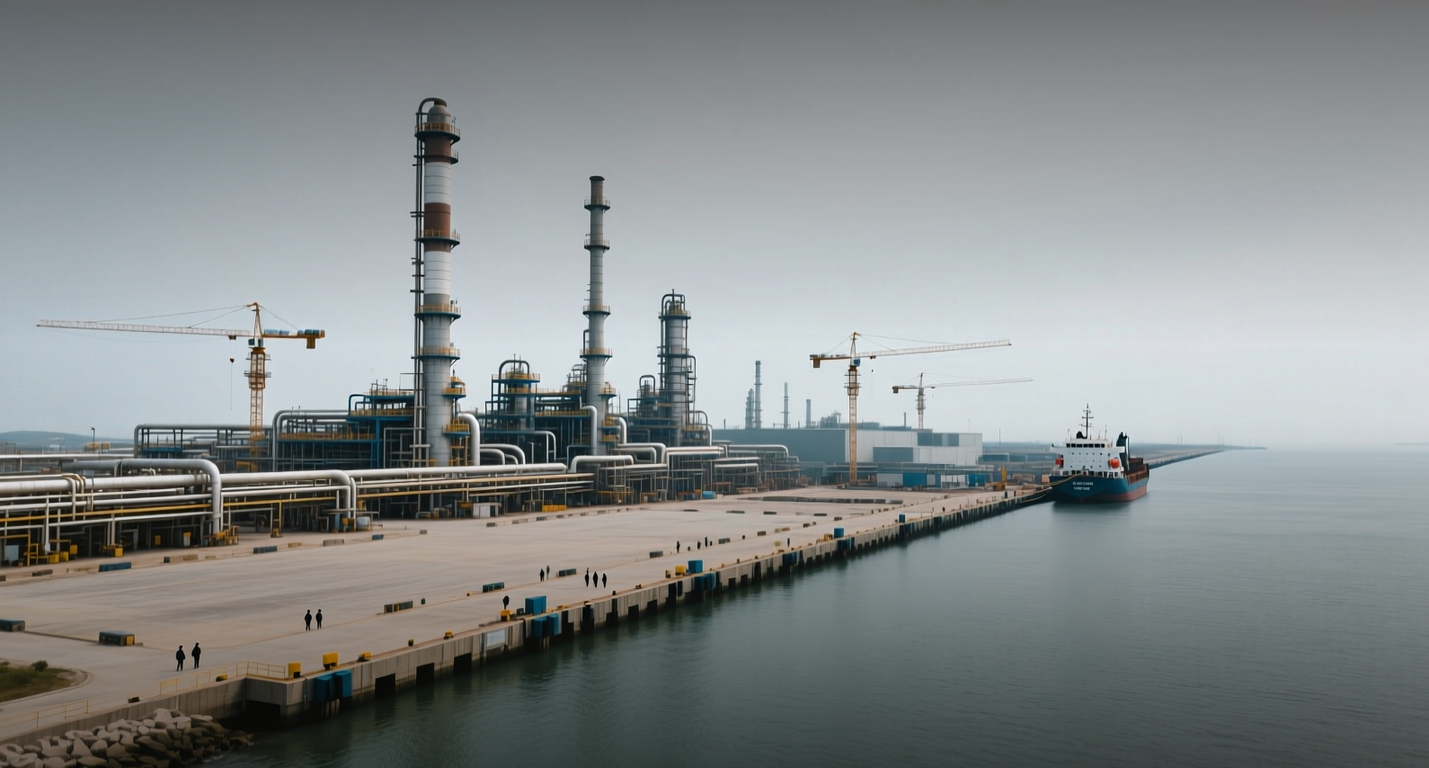
President Donald Trump's summons of US oil executives to the White House on Sept. 1 to expand refining capacity runs into a structural wall: owning an American refinery is highly profitable, but building a new one has been uneconomic for decades, with greenfield projects estimated to cost more than $100 billion and take upward of a decade to bring online.
"Refining margins are strong, but that does not translate into new capacity because the capital hurdle for a greenfield US refinery is enormous and the demand outlook is uncertain," said one company official involved in advising which executives would attend the meeting, who spoke on condition of anonymity. The official added that companies worry about the optics of a White House encounter after Trump accused refiners of gouging consumers.
The meeting comes as the national average gasoline price holds at $4.08 a gallon, up 28 percent over the past year, according to AAA, which says August is on track to be the most expensive August on record. US refiners are posting bumper profits — Marathon Petroleum, Phillips 66 and Valero Energy reported combined second-quarter earnings of $12.6 billion — even as the White House argues the country is running at nearly 100 percent of existing refining capacity and needs "concrete, near-term steps" to add more.
The tension between political pressure and project economics is the crux. Trump has called for a Justice Department investigation into refiners and urged companies to use their earnings to cut pump prices, which surged after the Iran conflict began in late February and pushed crude up more than 20 percent since March on the effective shutdown of the Strait of Hormuz. Yet the industry's reluctance reflects hard numbers: analysts estimate repairing and modernizing Venezuela's existing fields alone would require $10 billion to $20 billion, while Rystad Energy projects it could take until the mid-2030s to reach full production there — and developing new fields would need at least $100 billion in investment over a decade.
Why new US refineries don't get built
The last major US refinery built from scratch opened in 1977, and the sector has instead consolidated and closed plants, shrinking capacity even as demand held. The economics that drove that decline remain intact: construction costs in the US run far above global benchmarks, permitting timelines stretch for years, and the long-term demand outlook is clouded by electric-vehicle adoption and fuel-efficiency rules. Existing assets, by contrast, generate cash with minimal incremental capital, which is why Marathon, Phillips 66 and Valero can return billions to shareholders rather than commit to new builds.
The White House meeting, which will also include Interior Secretary Doug Burgum, Energy Secretary Chris Wright and Jarrod Agen of the National Energy Dominance Council, is expected to touch on biofuel policy and the Jones Act, which affects fuel shipment costs between US ports. Companies invited include Marathon, Delek US Holdings, Chevron, PBF Energy and Valero, according to people familiar with the plans. Exxon Mobil, the country's third-largest refiner by capacity, was not invited after Chief Executive Darren Woods drew Trump's ire at a January meeting by describing Venezuela as "uninvestable" in its current form.
The Venezuela wildcard
The administration is simultaneously working to increase flows of Venezuelan crude to US refineries, after Trump announced what he called "the biggest oil deal in world history" — 100-year concessions to develop 17 oil fields with estimated reserves of 65 billion barrels, held by a joint venture between the US government and North American Blue Energy Partners. But even that supply faces a refining bottleneck: Venezuelan crude is heavy and high in sulfur, making it costly to process, and US heavy-crude capacity is constrained by the Hormuz disruption.
For now, the gap between political ambition and project reality suggests the push will yield little near-term capacity. If the administration offers meaningful incentives — permitting reform, tax credits or relaxed environmental review — some expansions at existing sites could advance, but a greenfield build remains a distant prospect. Absent such policy shifts, the more likely outcome is continued political friction with an industry that prefers returning record profits to shareholders over committing billions to projects that may not clear their cost of capital for a generation.
This article is for informational purposes only and does not constitute investment advice.