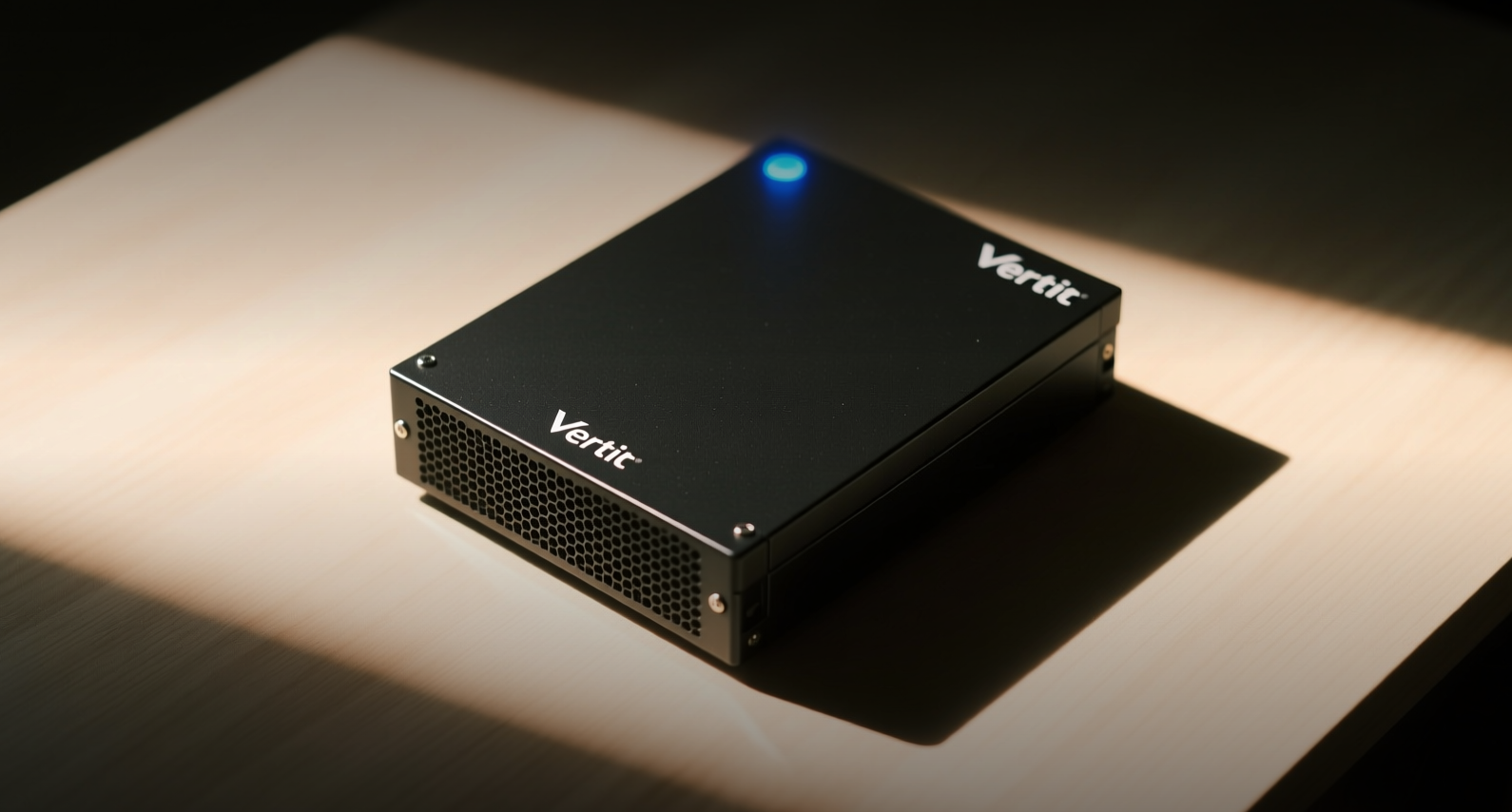
Vertiv's cooling infrastructure business is no longer just riding the AI wave — it's becoming the bottleneck that hyperscalers can't afford to ignore.
Vertiv Holdings Co. raised its 2026 financial guidance on Wednesday, citing surging demand for liquid cooling systems as next-generation AI hardware from Nvidia Corp. and others pushes data center power densities beyond what traditional air cooling can handle. The company, which supplies thermal management and power infrastructure to roughly 70% of the world's largest data center operators, now expects 2026 revenue to exceed prior forecasts by about 15%, according to people familiar with the matter.
"The transition from air to liquid cooling is happening faster than the market anticipated, and Vertiv is the primary beneficiary," Ananda Baruah, analyst at Loop Capital, said. Baruah has called Vertiv a "tech company in disguise," arguing its thermal management systems carry the same switching costs and margin profiles as enterprise software.
Vertiv's backlog has swelled past $15 billion, with order velocity jumping 252% in the fourth quarter alone. The company's ThermoKey acquisition, completed earlier this year, added heat rejection capabilities that allow data centers to dissipate the thermal output of racks exceeding 100 kilowatts — a threshold that Nvidia's upcoming Vera Rubin architecture is expected to cross. Baird initiated coverage of Vertiv on Tuesday with a buy rating and a $370 price target, implying 21% upside from current levels. Shares rose 4.4% on the day, recovering some ground after falling into bear market territory from a May peak.
The cooling bottleneck becomes a competitive moat
The AI data center buildout has entered a new phase where thermal management, not just chip supply, determines how fast capacity comes online. Nvidia's H100 generates roughly 700 watts per GPU; next-generation racks packing 72 or more GPUs can draw 50 to 100 kilowatts each. Without liquid cooling, those densities are physically impossible to maintain. Vertiv's portfolio now covers the full thermal chain — from liquid distribution units inside the rack to the heat rejection systems on the roof — giving hyperscalers a single vendor for what was previously a fragmented procurement process.
That bundling advantage is showing up in the numbers. Vertiv's $117 billion market cap reflects a forward price-to-earnings multiple of 47.2x, a premium that Baruah argues is justified. "The market is still pricing Vertiv as an industrial cyclical when it should be pricing it as an AI infrastructure compounder," he said.
The competitive field is narrowing. Eaton Corp. acquired Boyd Thermal in a deal that closed in June, consolidating another piece of the thermal supply chain. But Vertiv's installed base across thousands of existing data centers gives it a replacement-cycle advantage that new entrants cannot replicate quickly.
Local opposition adds a wild card to buildout timelines
Not all the news is favorable. A growing backlash against data center construction is creating permitting delays that could stretch buildout schedules. In the first three months of 2026, local opposition blocked or delayed at least 75 data center projects worth roughly $130 billion, according to Data Center Watch. A Gallup survey fielded in March found 71% of Americans opposed to having an AI data center in their community — a higher share than opposition to a nearby nuclear plant.
For Vertiv, the implication is nuanced. Delayed projects mean delayed equipment orders in the near term. But the company's $15 billion backlog provides multi-year revenue visibility regardless of quarterly permitting volatility. And as projects eventually get approved — often with stricter noise and water-use requirements — Vertiv's thermal efficiency technologies become more valuable, not less.
Vertiv shares trade at 47.2x forward earnings, a multiple that assumes the current order velocity is sustainable. If the backlog conversion rate holds, that premium may prove conservative. If local opposition hardens into policy bans — as it already has in San Marcos, Texas, which prohibited data centers in all zoning districts in June — the growth trajectory could face headwinds that no amount of cooling capacity can fix.
This article is for informational purposes only and does not constitute investment advice.