

Agentic AI will require roughly four times the central processing unit work of current systems, AMD's chief technology officer said, signaling a structural shift in how the industry allocates infrastructure spending.
Agentic AI will require roughly four times the central processing unit work of current systems, AMD's chief technology officer said, signaling a structural shift in how the industry allocates infrastructure spending.
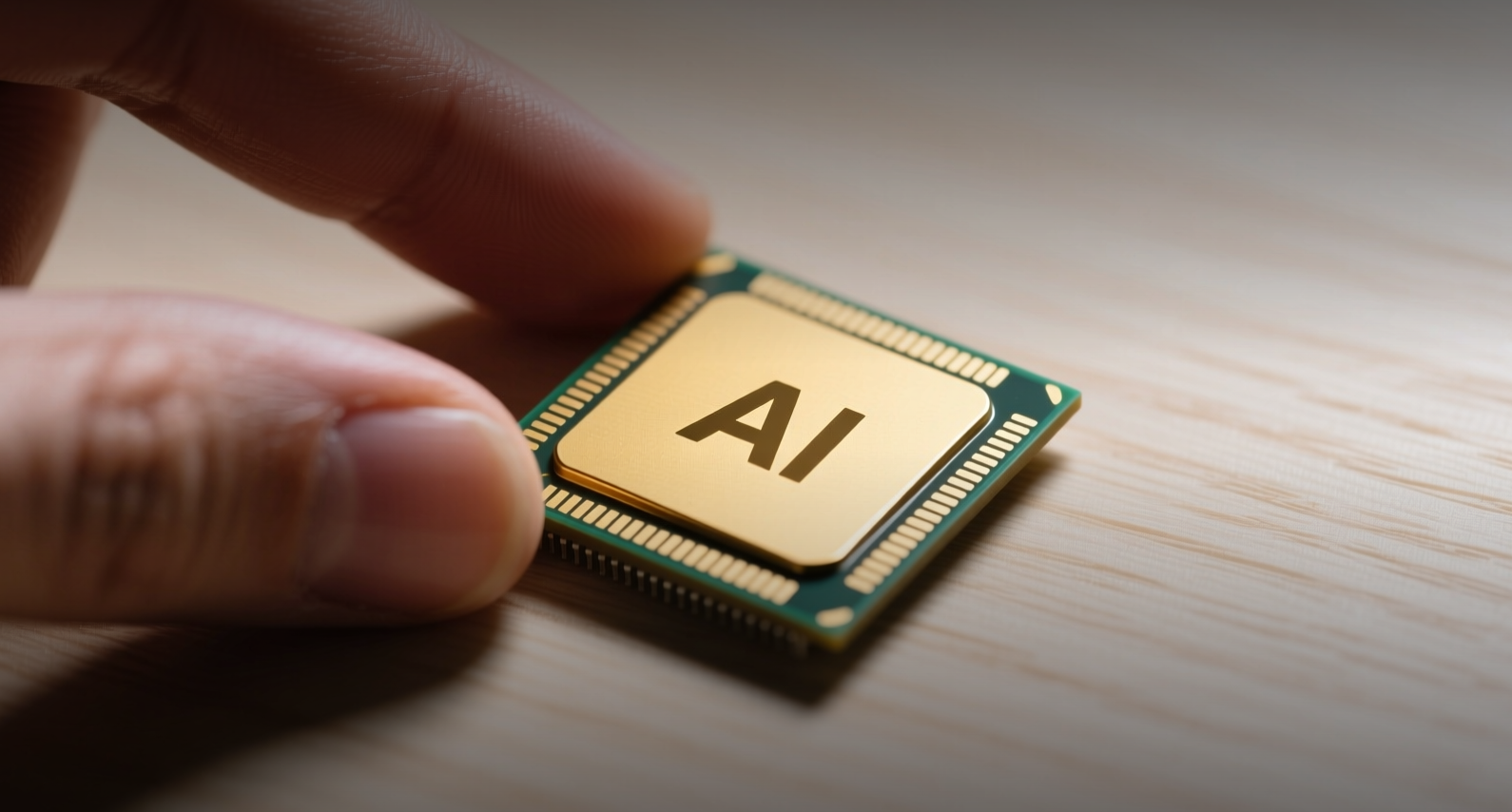
AMD's CTO Mark Papermaster said agentic AI demands roughly four times the CPU work of current systems, challenging the narrative that AI infrastructure spending flows overwhelmingly to graphics processors.
"You're actually using more and more CPU," Papermaster said at the RAISE Summit in Paris on July 9. "Agentic AI doesn't just need GPUs, it needs a lot more CPUs."
AMD shares have surged more than 140% over the past year to above $500, pushing the company's market value toward $1 trillion. Intel shares rose about 3.5% in premarket trading Thursday, while AMD gained 2.2%, as investors weighed the implications of a CPU renaissance driven by AI orchestration workloads.
The shift could redirect billions in data center capital expenditure toward CPU capacity, benefiting both AMD and Intel after years of GPU-centric AI investment. AMD's Advancing AI event on July 22-23 in San Francisco is expected to showcase Helios, its rack-scale system packing 72 Instinct GPUs alongside server CPUs.
Why agents need CPUs, not just GPUs
The popular narrative of the AI boom is a GPU story. Papermaster wants to widen it. When running agentic applications — workflows that spin up multiple agents, deploy sub-agents for specific skills, and manage growing context — the coordination and reasoning layer runs on the CPU before the heavy matrix math lands on the GPU. He cited a figure pegging the CPU workload at roughly four times what today's agents require.
AMD has already felt the shift internally. The company now uses AI to design its own chips, compressing tasks that once took months into weeks or days. Productivity gains, Papermaster said, have jumped from the 10% range to something far larger in the past six months.
Selling systems, not chips
AMD's strategy has moved beyond selling individual silicon. The $4.9 billion acquisition of ZT Systems, a hyperscale infrastructure builder, lets AMD tune the full cluster — CPU, GPU, and networking — rather than optimizing a single component. AMD kept the design expertise and sold the manufacturing arm to Sanmina to avoid competing with its own customers.
The showpiece is Helios, AMD's rack-scale AI system that wires 72 Instinct GPUs alongside its server CPUs for large-scale training and inference. "You have to design for the system, all the way through the application stack," Papermaster said.
AMD is also betting on openness. Its ROCm software stack is open-source. Helios uses an open rack standard submitted by Meta to the Open Compute Project. The networking is open too — a pointed contrast with the more closed approach of Nvidia, AMD's chief GPU rival.
What it means for investors
For investors, the CPU renaissance thesis introduces a new variable into AI infrastructure allocation. Nvidia dominates the GPU market with an estimated 80% share, but if agentic AI workloads scale CPU demand as Papermaster projects, both AMD and Intel stand to capture a larger slice of data center spending. AMD trades near $500 with a market cap approaching $1 trillion, while Intel, at roughly $130, has lagged the AI rally.
Papermaster teased next-gen parts built on TSMC's 2nm process at AMD's upcoming July event. The company, now 33,000 employees, has trained its entire sales force on AI and instructed staff to think like an AI-native startup — a telling posture for a company whose market value has multiplied in the past year.
This article is for informational purposes only and does not constitute investment advice.
