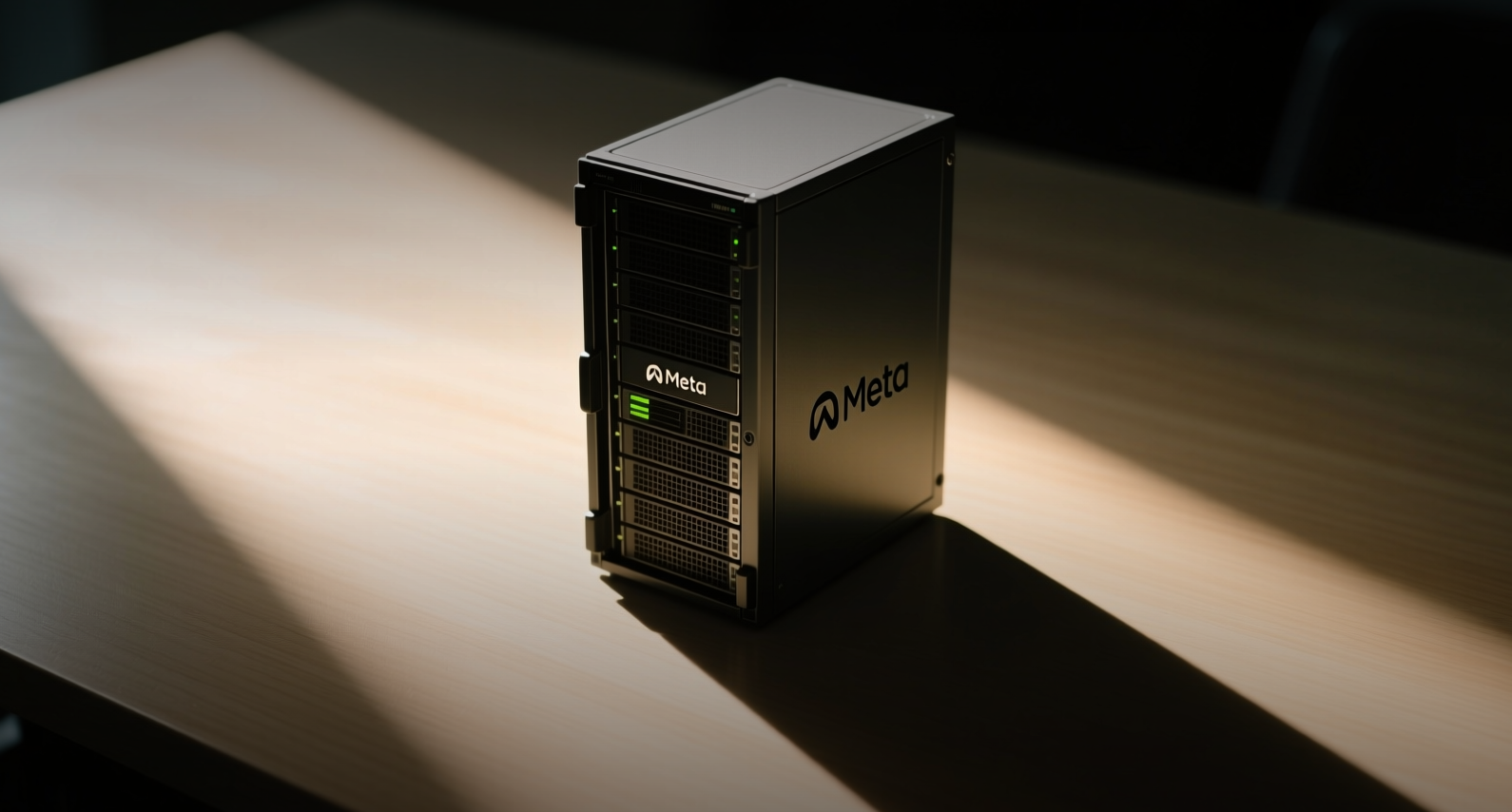
Big Tech is spending billions on community grants, jobs guarantees and open houses to defuse a grassroots backlash that threatens the AI data center build-out.
Meta, Microsoft, Amazon and OpenAI are pouring billions into community grants, jobs guarantees and open houses to counter a backlash that threatens the AI data center build-out, with 71 percent of Americans opposing local construction, according to Gallup.
"There's an opportunity to think about how we're showing up and being a good partner, and we need to do that on a scale we haven't done before," Lindsay Elin, vice president of public policy at Meta, said.
Meta launched a $1 billion "Future Is For Everyone" fund in August, on top of roughly $94 million in prior community grants, and is planning up to $145 billion in capital spending this year. OpenAI pledged $80 million to Effingham County, Georgia, plus $71 million in coding credits to local students. Microsoft ended its use of nondisclosure agreements with local governments in March.
The spending comes as the first quarter of 2026 saw the largest single-quarter concentration of blocked and delayed data center projects on record, according to Data Center Watch, with New York Gov. Kathy Hochul ordering a temporary ban on large construction and Pennsylvania Gov. Josh Shapiro signing an executive order with new guardrails — a regulatory drag that could slow the AI build-out and pressure margins at the biggest hyperscalers.
The backlash has reshaped how the industry negotiates. In Piqua, Ohio, Meta pledged $8 million to replace emergency services equipment and support additional personnel as part of its proposal to build a data center, alongside a potential $1 billion direct investment in the region. In Gilroy, California, residents learned of Amazon's $2 billion data center only after construction had begun, prompting the company to host its own open house, according to Roger Wehner, vice president of economic development at Amazon Web Services.
Data center opponents cite rising electricity prices, environmental impacts and noise, while some oppose AI itself over fears it will eliminate jobs. The backlash feeds a "broader-based belief that the system is broken and no longer working for the average person," Clifford Young, chair of Ipsos Public Affairs, said.
The companies have signed the White House's Ratepayer Protection Pledge, vowing to cover the cost of the electricity their facilities require so it is not passed to consumers. Meta has committed to being "water-positive" by 2030, restoring more than it uses, and 200 percent of consumption in high water stress areas. Its free five-week workforce academy guarantees graduates a job at a data center construction site.
Can Spending Shift the Politics?
Microsoft executives recognized the need for a community-focused approach after the issue was central to last November's New Jersey gubernatorial race, where Democrat Mikie Sherrill campaigned on electricity prices and won, Vice Chair and President Brad Smith said. Two months later, Microsoft announced commitments around electricity, water, jobs and taxes.
Ben Green, assistant professor of information and public policy at the University of Michigan, sees a disconnect between the PR tactics and actions. "They're saying on the one hand, 'Oh, we want to be a good neighbor. We want to support the community.' On the other hand, they're fighting back against moratorium bills and other regulations," he said.
Smith acknowledged limits to messaging without substance. "People are smart. Even if you don't inform them, they find ways to inform themselves," he said.
For investors, the question is whether community investment can clear the path for the roughly $800 billion in combined projected capital spending across Meta, Microsoft, Alphabet and Amazon this year. Any delay in data center monetization could pressure valuations across the hyperscaler group, which trade at a premium to the broader market. The companies are betting that goodwill spending now is cheaper than project delays later.
This article is for informational purposes only and does not constitute investment advice.