

Elon Musk's five-word endorsement of a fringe physics theory has crypto traders claiming Bitcoin is quantum-safe — but the math says otherwise.
Elon Musk's five-word endorsement of a fringe physics theory has crypto traders claiming Bitcoin is quantum-safe — but the math says otherwise.
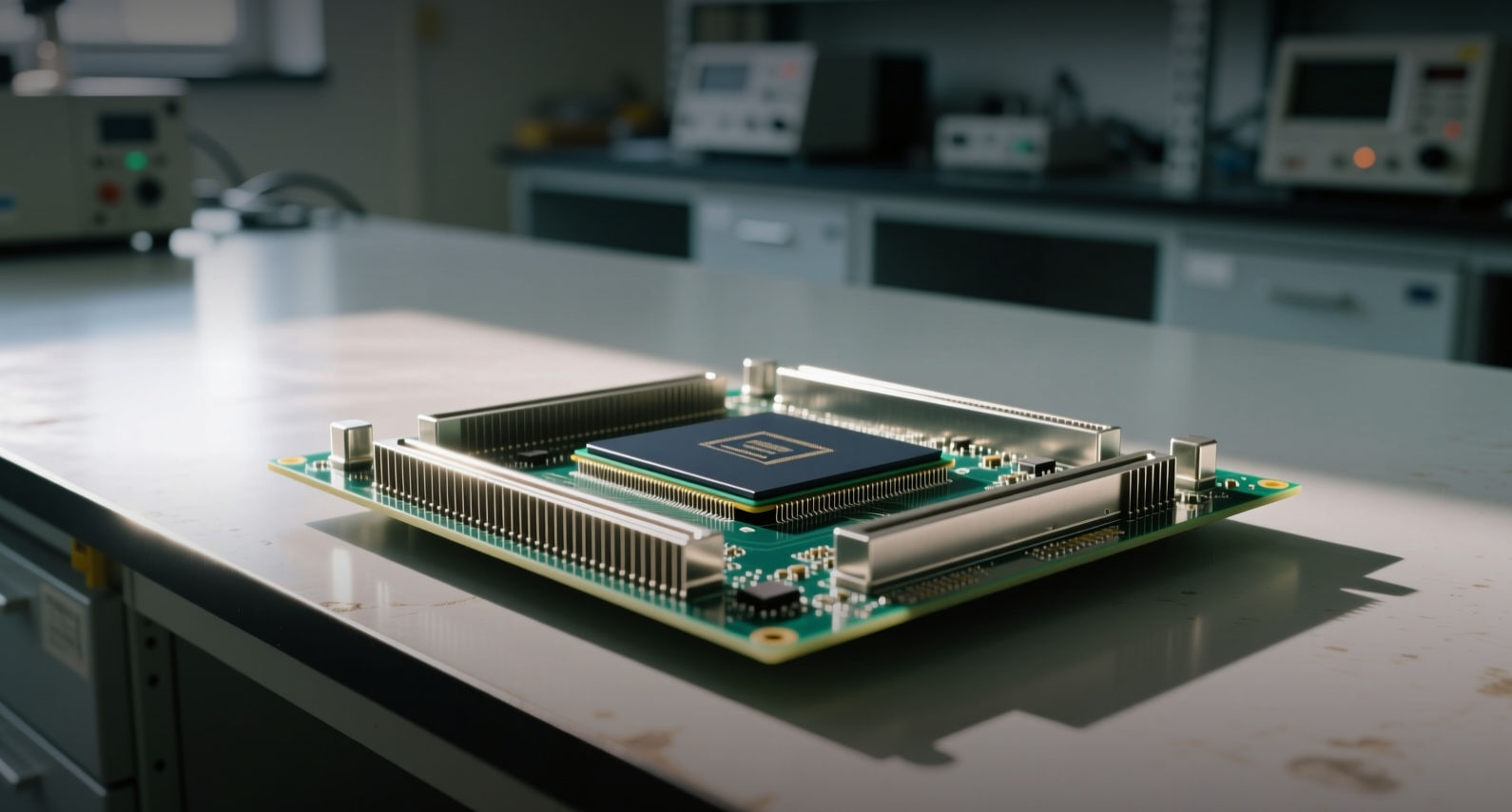
Bitcoin held near $78,449 on Aug. 30, up 1.17 percent, after Elon Musk endorsed a theory that quantum computers may never break the network's cryptography.
Tim Palmer, the Oxford physicist behind the theory, published his paper in the Proceedings of the National Academy of Sciences in March, arguing that nature contains no smooth continuum and quantum entanglement eventually hits a wall between 200 and 400 qubits on current hardware.
Palmer puts a hard ceiling of 1,000 qubits on quantum machines, far below the 835 logical qubits researchers estimate are needed to break Bitcoin's elliptic-curve signatures with Shor's algorithm. IBM plans a 200-logical-qubit machine by 2029, which would test Palmer's floor but not approach Bitcoin's threshold.
The stakes are concrete: Glassnode estimates roughly 6.04 million BTC — 30.2 percent of issued supply — have exposed public keys, worth about $483 billion at current prices. StarkWare mined the first quantum-resistant Bitcoin transaction on mainnet on Aug. 26, using a hash-based method called QSB that requires no soft fork.
Musk's five-word reply on Aug. 29 to an Institute of Art and Ideas post about Palmer's work — agreeing the universe comes in fixed chunks — said nothing about Bitcoin. Investor Fred Krueger cited him a day later anyway, under the headline that Bitcoin is already quantum-safe.
"Bitcoin may already be quantum-safe...The latest estimates require at least 835 logical qubits to break Bitcoin's signatures with Shor's algorithm," Krueger wrote.
Palmer's credentials are real, though his theory sits outside the mainstream. He is a Royal Society fellow, elected in 2003, and spent his career building weather forecasting models at Oxford. Ordinary quantum theory sets no limit on qubit counts, leaving Palmer in a minority until a machine proves him right.
The qubit estimates for breaking Bitcoin have been shrinking. A July study by Han Luo and colleagues cut the requirement from earlier figures of 1,098 and 1,175 logical qubits down to 835. That trend is the part worth watching — the closer the number gets to Palmer's ceiling, the more relevant his theory becomes.
StarkWare's QSB method, developed by researcher Avihu Levy, adds a second quantum-resistant lock based on hash functions rather than elliptic curves. It uses "signature grinding," performing computational work off-chain to find a transaction hash Bitcoin accepts as a validly formatted signature. The GPU cost is estimated at a few hundred dollars per transaction.
Eli Ben-Sasson, StarkWare's CEO, called the technique a lifeboat. "What today's successful transaction offers Bitcoin is a reassurance that holdings can be protected before that happens," he said. "I still want Bitcoin to choose to do a soft fork and I expect we will get one."
The method has limits. It cannot protect addresses with already-exposed public keys, and transactions must be sent directly to miners. Moving vulnerable coins into QSB outputs after a cryptographically relevant quantum computer exists could trigger a race between the user and an attacker.
Matt Corallo, one of the earliest Bitcoin developers, has argued the community should "minimize the chance that the Bitcoin community feels the need to fork to burn coins" by reducing the amount of bitcoin that remains vulnerable. A soft fork could disable vulnerable spending paths once the threat becomes serious, though what happens to unmigrated coins remains controversial.
Coinbase established an independent advisory board on quantum computing and blockchain security. In July, Coinbase, Strategy, BlackRock, Galaxy, Fidelity Digital Assets, Blockstream and others founded a consortium pledging $15 million over three years toward Bitcoin security research, with post-quantum cryptography as its first focus.
Michael Saylor has argued a serious quantum threat is more than a decade away, while Coinbase's research stresses preparation must begin well before the technology matures. Ray Dalio has repeatedly cited quantum computing among the technological risks facing Bitcoin.
The real test arrives around 2029, when IBM's 200-logical-qubit machine could either confirm Palmer's ceiling or push past it. Bitcoin Improvement Proposal 360 already exists as a migration mechanism, and StarkWare's QSB demonstrates an emergency option works today. But the gap between Palmer's 1,000-qubit ceiling and the 835 qubits needed to break Bitcoin's signatures is narrowing — and nobody knows which side of that line the hardware will land on.
This article is for informational purposes only and does not constitute investment advice.
