

Key Takeaways:
- Public miners cut realized hashrate 15 percent, shutting down ~56 EH/s
- Cango and IREN led the exodus, disconnecting 51.4 EH/s combined
- Miner Position Index fell to -1.2 as BTC exchange flows dried up
Key Takeaways:
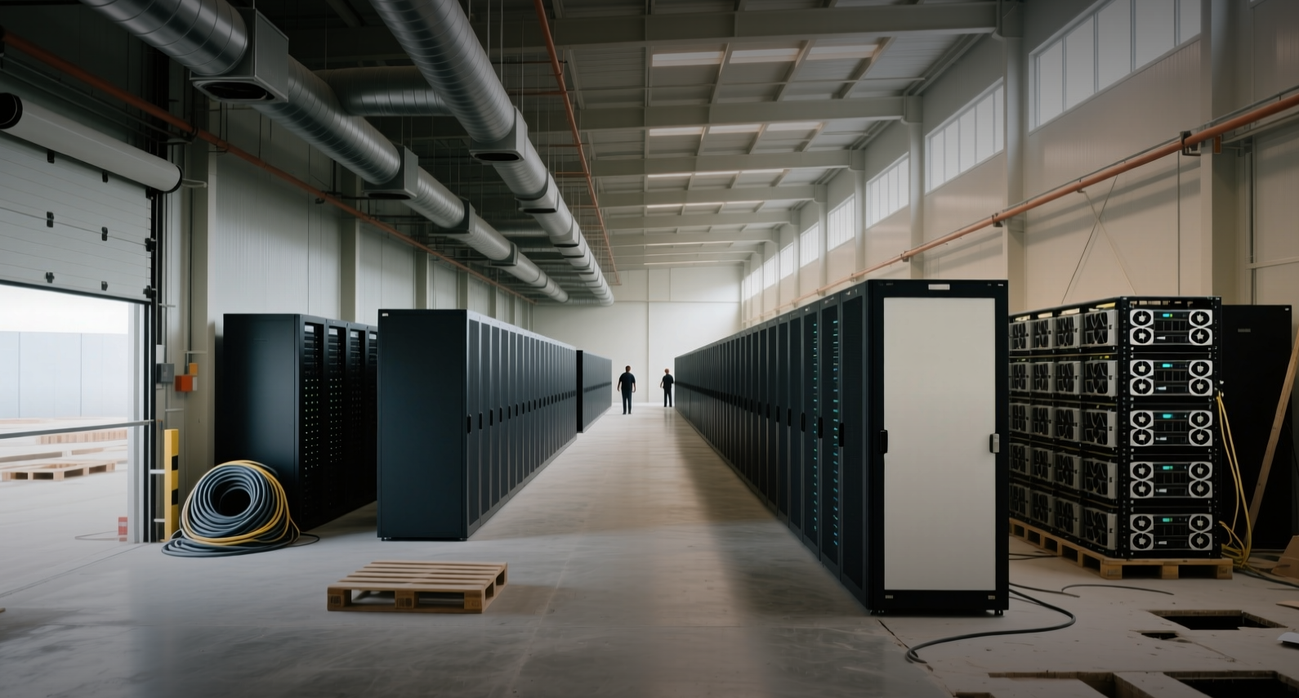
Public Bitcoin miners halted all coin sales after redirecting $30 billion toward AI data center infrastructure, cutting realized hashrate 15 percent over six months.
CryptoQuant's Miner Position Index data shows the selling pause was not capitulation but deliberate capital reallocation. The index — a gauge of miner selling pressure — spiked to 2.8 during Bitcoin's August price surge before collapsing to -1.2 by September, according to Bitfinex on-chain data. The flow of coins from miner wallets to exchanges has practically dried up. An MPI reading below zero indicates miners are accumulating rather than distributing, a pattern that historically precedes tighter market conditions.
The "Biggest Unplug" charts show Cango and IREN disconnected 29.5 EH/s and 21.9 EH/s respectively during the first half of the year, accounting for 68 percent of the total decline in capacity among public companies. Cipher, Riot, TeraWulf, and CleanSpark also reduced their footprints. Combined spending on repurposing data centers for AI has exceeded $30 billion, with the six largest infrastructure providers' capital expenditures outpacing their operating revenue by nearly 15 times.
The enormous cash gap from this transition is what forced miners to actively sell their mined Bitcoin during summer rallies. But once the main tranches for purchasing AI equipment were covered, the need to drain crypto wallets disappeared. The surge in selling turned out to be a one-off episode, and the index returned to deeply negative territory.
This shift represents more than a temporary pause in selling. It signals a fundamental transformation of the mining industry's business model, as companies that once derived all revenue from Bitcoin block rewards now operate hybrid data center businesses serving AI workloads. The capital reallocation has implications for Bitcoin's network security as well — a 15 percent reduction in realized hashrate means fewer machines securing the network, though the remaining operators are consolidating around more efficient hardware.
For the broader market, the halt in miner selling creates a supply squeeze dynamic. With miners no longer flooding exchanges with excess coins, Bitcoin faces structurally reduced sell-side pressure. The question now is whether this tightening persists as miners complete their AI infrastructure buildout or whether renewed capital needs force another round of liquidations.
This article is for informational purposes only and does not constitute investment advice.
