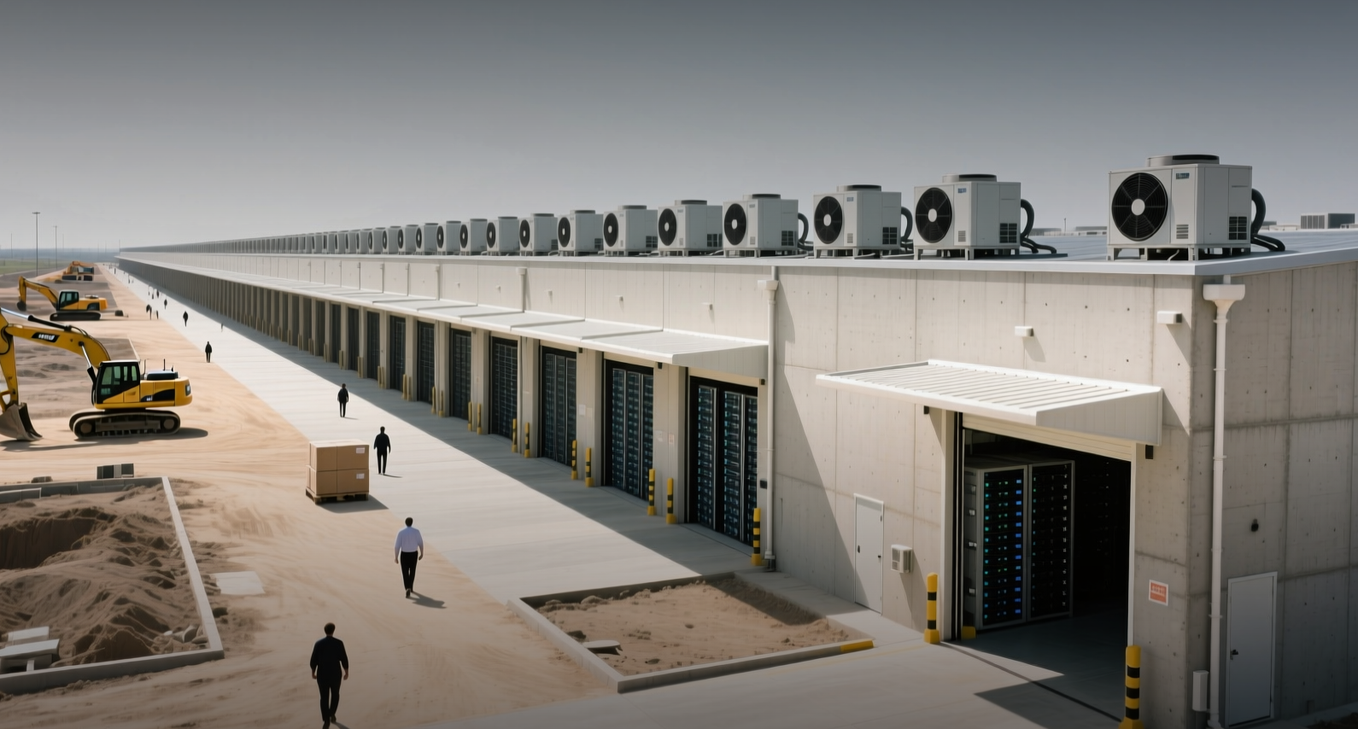
Oracle reported $638 billion of remaining performance obligations at fiscal 2026 year end, up 363% year over year, exceeding its roughly $430 billion market value.
Management said on the June earnings call that it expects 12% of the backlog to be recognized as revenue over the next 12 months, with another 34% arriving between 13 and 36 months.
Cloud infrastructure revenue grew 55%, 68%, 84%, and then 93% year over year across fiscal 2026's four quarters. Operating cash flow hit a record $32 billion, up 54%, but free cash flow came in at negative $23.7 billion as the company spent on data centers.
The stock trades at about 26 times earnings and about 19 times the $8.05 of adjusted earnings per share management guided to for fiscal 2027. Fiscal first-quarter results on September 10 will test whether capacity delivery keeps pace.
The backlog itself grew $85 billion in the fiscal fourth quarter alone, driven by demand for cloud infrastructure to train and run artificial intelligence models. That works out to about $77 billion arriving within a year and roughly $290 billion inside three years, with more than half of the total sitting further out.
Oracle confirmed guidance for about $90 billion of total revenue in fiscal 2027, up from $67.4 billion in fiscal 2026, with fiscal first-quarter revenue expected to grow 27% to 29%. The company raised $43 billion in debt and $5 billion in equity during the fiscal year, and it expects to raise approximately $40 billion more in fiscal 2027 through a combination of debt and equity, including a previously announced $20 billion at-the-market stock program.
Customers are helping carry the load. Oracle said the prepaid and customer-supplied hardware portions of its large AI contracts now total $75 billion, which "substantially reduces the amount of capital Oracle must raise to build out our AI datacenters." The company delivered more than 1.2 gigawatts across fiscal 2026 and guided fiscal first-quarter delivery approaching 1 gigawatt.
The older businesses held up through the buildout. Cloud applications revenue grew 10% in the fiscal fourth quarter, and the cloud database business grew 29%, with multi-cloud inside it up 404%. Oracle AI Database@AWS is now available in 22 AWS Regions.
The move is Oracle's own, not the sector's — Amazon slipped 1.6% and Salesforce rose 34% over the same three-month stretch. The contracted demand is enormous, but the economics of serving it are still being proven, and the balance sheet is absorbing tens of billions of dollars of strain. Investors will watch the September 10 fiscal first-quarter report for updated segment margins and capacity delivery.
This article is for informational purposes only and does not constitute investment advice.